


Eight years ago, when the “Ear Hustle”podcast launched from San Quentin State Prison’s media lab, the producers agreed to submit each episode to the prison’s public information officer for review.
Some journalists and news organizations might consider such a demand an act of government censorship, such as when dozens of media outlets covering the Pentagon rejected a similar mandate by the Department of Defense, many walking out earlier this year.
Nigel Poor, one of the cofounders of “Ear Hustle,” saw agreeing to the policy as the only way to get stories told from inside one of America’s most notorious prisons. “We’re not journalists, we’re not trying to change [the] system in an overt way... That might surprise or disappoint people,” Poor told the Columbia Journalism Review in 2017.
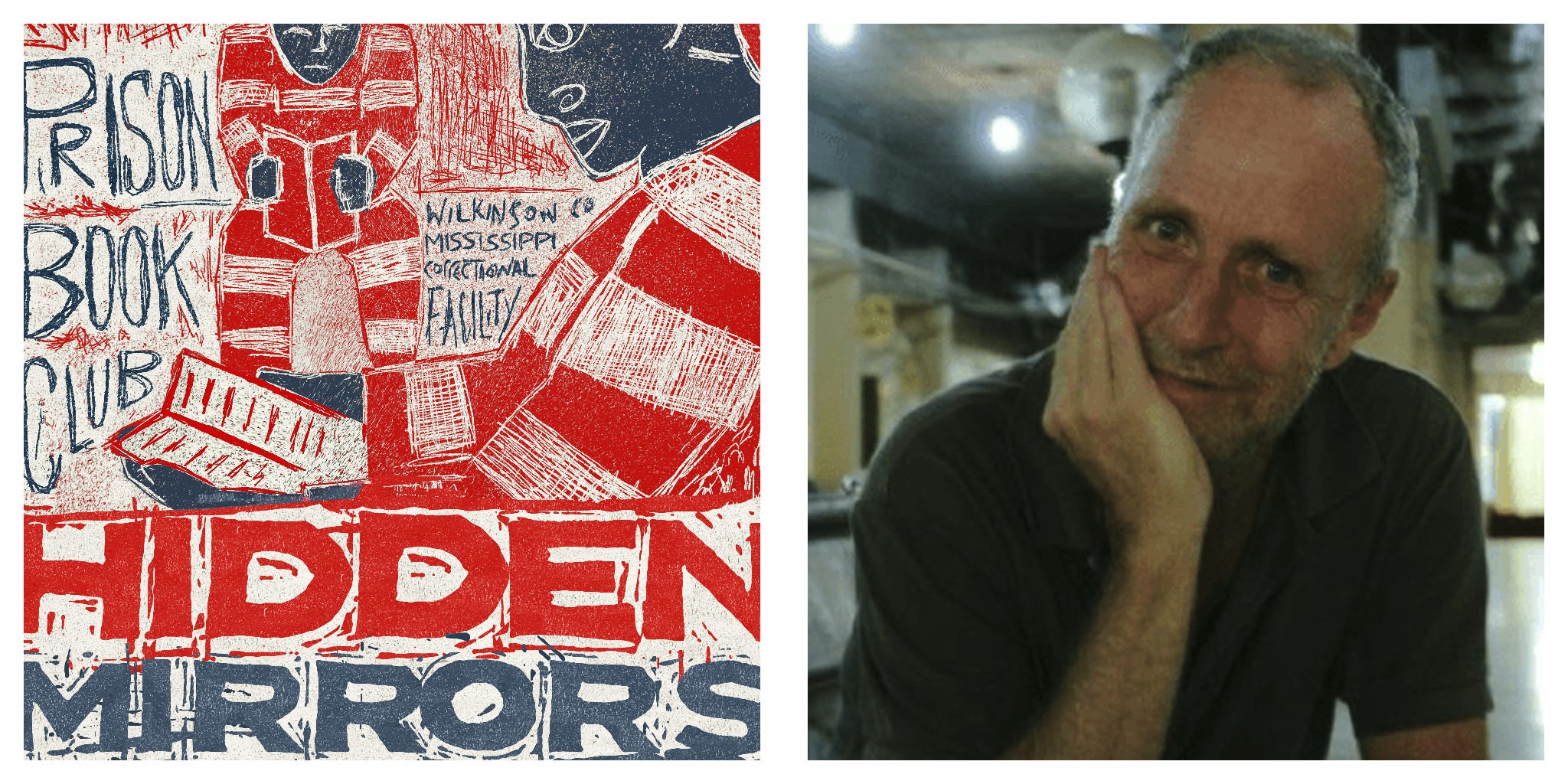
Although Alan Huffman is a journalist, he likewise wasn’t trying to reform the prison industrial complex when he agreed to facilitate a Mississippi Humanities Council–sponsored book club at Wilkinson County Correctional Facility in Woodville and helped create “Hidden Mirrors,” a podcast partly inspired by “Ear Hustle.”
But what started for Huffman—an author of five nonfiction books and an editor at The Mississippi Independent—as a vehicle for talking about books with people whose perspectives he might not otherwise access may very well turn into journalism. Late last year, after a local newspaper published a positive story about “Hidden Mirrors” and the book club, prison officials abruptly and inexplicably issued an edict quashing further recording of book club sessions for the podcast and attempting to impose a mandate prohibiting any future publicity.
“If I could sit down with them, I would really like to know what went into that decision. Because I’ve not even been able to talk with the warden directly since this came about,” Huffman told me in an interview.
Season 2 of “Hidden Mirrors” debuted in January. Despite his recent departure as book club facilitator, Huffman had garnered official approval to undertake the podcast and was provided recordings of club sessions by the prison for that purpose. So, Huffman plans to complete the season with previously recorded material from book club meetings. He’s also planning another project, unrelated to the book club itself, in which he’ll put on his reporter’s hat and explore issues at MDOC more broadly.
Huffman and I recently spoke about the end of his tenure with the book club, what’s upcoming for “Hidden Mirrors,” and what he wants listeners to take away.
“I hope that we have educated some people about the humanity of people behind bars,” he said.
R.L. Nave
You covered some of this in your Substack “What Happened,” but you had some theories about why you thought they shut down the podcast. What are they?
Alan Huffman
It’s kind of a mystery because it came out of left field and because we had gotten all the approvals and everybody was enthusiastic about it and the support was there. And then this article in the Natchez Democrat came out, and I knew they would be excited about it. So, I called the prison. I was like, have y’all seen the article? And they’re like, no, we haven’t. So I told them where to find it. And then, the next thing I know, the corrections commissioner has flagged the article and they told me: Don’t come back to the prison until we work this out with the warden. So, I’m like, what is going on? Because everybody was so into this podcast. I knew that [corrections commissioner] Burl Cain had some run-ins with the media when he was warden at Angola in Louisiana, and I didn’t know [if] that influenced him to be sensitive to media coverage. I just, I have no way of knowing because I haven’t talked to him directly about it. I only talked with [Cain aide] Grace Fisher about it, and she didn’t really give me any indication for why, except that she said he didn’t know about the podcast. I guess the implication being he doesn’t like being surprised by it. But in fact, we had told his staff about it. So that didn’t really make sense.
The warden also said he didn’t know about the podcast, even though I had talked to him personally about it. So that didn’t make any sense either. You’re just sort of left to try to figure out where is this coming from? What is it? Is it that they don’t want the inmates to have a public voice? I had told them they could review [the episodes] and I gave the warden the first episode to review before it aired. Then they said that they didn’t get that either, even though I handed it on a thumb drive to his secretary. With the “Ear Hustle” podcast at San Quentin, they have to get approval. They submit the episodes to the prison officials and they sign off on it. So, the point being, there was no risk of anything being in the podcast that they might be uncomfortable [with].
So, it just makes you think they just don’t like the idea of these guys having a public voice. That’s all I can assume. Obviously, there’s a lot of problems with all of the prisons in the state. But we don’t talk about that kind of stuff in the book club. We don’t talk about the unexplained deaths at multiple prisons, including Wilkinson.
That’s not why we’re there. We’re there to talk about books. And sometimes the club members may reference something that happened in prison years ago or an oblique reference to their own crime, but it’s always just context, and it’s not ever anything sensitive. So, I can’t see that the podcast really posed any kind of threat. So, we were just left to wonder why support turned to hostility overnight.
Have you been in touch with any of the guys since? Do you know what they’re saying about the fact that you’re no longer there? Or could you speculate about how they’re processing this, what they’re saying about it?
Yeah, I have. After the warden issued his edict, I explained to the guys what was happening, and they were as mystified as I was. This is all positive publicity. Why would they not want to do this? Ultimately, I told them that I might have to withdraw as facilitator of the book club because I felt like I was on thin ice with the warden if we continued with the podcast. And I felt like that was important, that we already had episodes in the pipeline. The men were excited about it, and I’m going to continue to do it. Then, I don’t think that the warden is going to tolerate my presence. And in fact, the next time I went back to the prison, after we were no longer allowed to record, we have 25 members and there were only four people there. And they came in and they were like, oh, we didn’t think you were going to be here today. And I was like, hmm. Sounds like the scuttlebutt is that Alan’s on the way out, you know?
I told them I probably am not going to be able to continue doing this, being caught in the controversy with the warden and the corrections commissioner. But I feel like the podcast is more important, and they can find someone else to facilitate the club. And as much as I love doing it, and I really enjoyed these conversations with these guys, I felt like the one thing that I needed to do was continue to air the podcast episodes that had all been approved and based on recordings that the prison provided. So... I have heard from some of them. I’ve written letters to them and gotten letters back. They have to be circumspect, obviously, because everything that they say can potentially come back to haunt them. So, they’re not going to discuss what they’re hearing in the prison about why this happened.
I understand that, and I don’t ask them to. But they were sorry, basically, because we had a good rapport. And we were just fortunate that the Mississippi Humanities Council found a guy who sounds like a really good person for the role to take over. So, there was very limited interruption in the book club sessions. That was an issue for me.
Even if I was allowed to stay on, which was a big question, continuing to air the episodes that were in the pipeline had the potential to compromise the Humanities Council’s relationship with the Department of Corrections—I just couldn’t risk doing that. They’ve got 16 prison book clubs. Very, very important. And so I just had to weigh a lot of factors in the decision. And that’s what I came up with.
You said that you thought the podcast was more important than facilitating the book club. Why?
Two reasons: One, [it’s] very important for these men to have a voice. They’re marginalized people who have absolutely no power. So, to be able to present to the public that they’re—despite the things that they did that landed them in prison—that they’re human beings who are trying to turn their lives around and that they’re not just bad people and not stupid, was very, very important to the guys. The other reason is that I felt like it was important to society to know that and to hear these guys. Because what I’ve heard from a lot of listeners, ‘Oh, you must have really handpicked these guys because they’re all so smart.’
No, this is a totally random cross-section of people who, obviously, have expressed an interest in being in the book club and they’re vetted within the [Wilkinson prison] education department. But they have a broad range of experiences, with some of them reading books for the first time in their lives. And so there’s a sort of a purity about it that I think you can listen and [know] you’re hearing something authentic. It’s not something staged, like a lot of podcasts are. And that’s why we decided that the point of the podcast was not to have polished production values, but to enable listeners to be a fly on the wall in this sort of rare meeting. I think that’s part of what, as a listener, you get: You get to hear these people talking in unrehearsed ways that really give insight into the humanity of people who have, in some cases, done some truly inhumane things.
But they’re trying to right wrongs and they’re trying to find some sort of redemption and prepare for eventual release and becoming members of society again. One of the members has even been working on a project to set up a victims’ dialogue to train the inmates in how to sit down, if given the opportunity, with the victims or the loved ones of the victims. So, there’s a lot going on there that I think the public should know about. But our vehicle and our common language is books. It just gives us a way to explore a lot of things together.
One of the guys said something to the effect of wanting people in Mississippi to not be afraid when somebody is paroled in their community.
The whole point of the book club is to reduce recidivism. It’s not just out of the goodness of [our] hearts. The guy you’re talking about—who goes by Hopper— he made a good point that: If you listen to me, you understand that I’m a human being and that I’m trying to get my life in order so that I won’t be a risk when I am released, assuming that happens. That’s kind of the whole point. And, I mean, the sort of side effect is positive publicity for the prison because they’ve obviously been getting a lot of negative publicity lately.
It occurs to me that because of this controversy—it was authorized but now it’s not—there might be more interest in this season. That occurred to you at all?
I mean, yeah. You know what I thought initially? Because we got approval for this “CBS Sunday Morning” episode to film inside of the book club—everyone, the corrections commissioner, the warden approved it—and my thought was, okay, now you’ve killed that because you’re not going to allow anybody to come in and record... The likelihood was that they would be more interested because now they hear there’s an effort to quash this. Before, it was a human-interest story, and now it seems to point to something else that we don’t really know what it is. We sort of alluded to some of these issues in the last episode of the pilot season, but at that point, I was still hopeful that they would change their minds and allow us to resume.
When it became apparent that wasn’t going to happen, I thought, okay, the best route to follow at this stage is just to lay it out for the listeners. And I do think that it has made people more interested in it. Any effort that they make to try to stop us would only amplify that. Because it does raise other questions that have been off screen about their approach to rehabilitation and reducing recidivism and public transparency. All of these things come into play that are a different sort of context than we started out with.
You tease that after this season, you would be looking at other issues. You want to preview any of that for us?
Well, I mean, I do think that this has raised a lot of questions that I don’t want to address within the context of the book club because that’s not our purpose and that’s not the purpose of the podcast. But it does make me want to know more about how this came about. And so, outside of the “Hidden Mirrors” podcast and the book club program, I definitely intend to revisit that issue and find out what brought it about and what underlying factors that we may not know about contributed to it. I mean, it’s just logical. There is a question in your mind when someone tries to stifle public access. You wonder—do they have something to hide? If you’re a journalist, it’s a logical question to ask. I don’t have any reason to believe that they do. But I would like to find out what it is that prompted this and what are the underlying reasons for it.
Assuming MDOC officials read this, is there anything else besides what we’ve already talked about that you want them to know or questions that you have for them?
The obvious question is: What prompted you to try to put an end to the podcast recordings? Because nothing that I was told made sense. I’m also curious about why you would take what was just straight-up positive publicity and turn it into something else. That we would rather absorb the negative blowback from having done this than allow something that puts the prison and the Department of Corrections in a positive light, which is something that isn’t happening a lot right now.
Similarly, assuming the Wilkinson guys see this, other folks in Mississippi facilities read this, is there anything you want to tell them?
I think the main thing—it was the guiding light of the book club for me—was that everybody knows something you don’t know. I feel like this is a way, for the podcast and the club [members] themselves, to explore that. Books are the common language, the vehicle for doing that. So, if you’re a reader and you want to learn new perspectives, you’re also going to learn new perspectives among the incarcerated. And so, I feel like it’s productive for all concerned. I guess the message that I have is that, going back to the whole idea that everybody knows something you don’t know, and you should listen.
Season 2, Episode 2 of “Hidden Mirrors” is now available. Listen on Spotify or wherever you listen to podcasts.
Images: “Hidden Mirrors” logo (credit Houston McIntyre); Alan Huffman (credit Andre Liohn)