


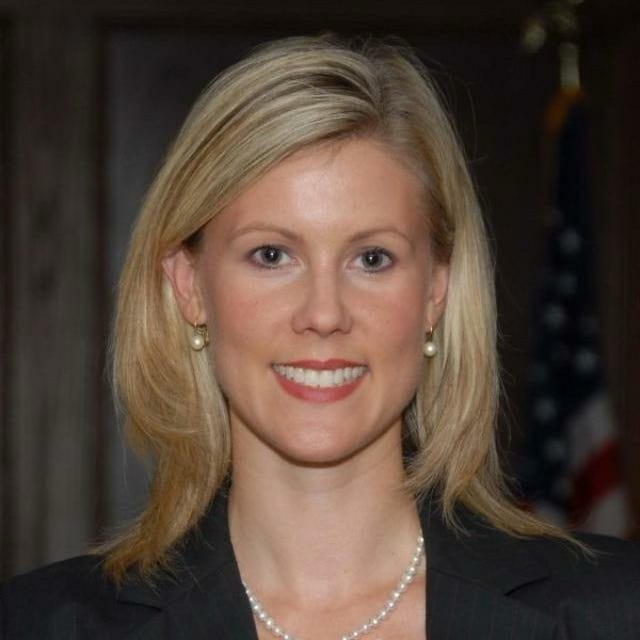
Gov. Tate Reeves appointed a DeSoto County circuit judge to the Mississippi Supreme Court on Monday, filling one of two vacancies in a northern district that a federal court has found dilutes Black voting strength.
Celeste Embrey Wilson will take the seat Aug. 1. The election that is intended to make the appointment permanent cannot be scheduled because the map that defines her district has been enjoined and the Mississippi Legislature has not yet drawn a new one.
Wilson replaces Robert Chamberlin, who left the court in December 2025 after the U.S. Senate confirmed him to a federal judgeship in northern Mississippi. Wilson has served as a circuit judge in DeSoto County since 2017, when Gov. Phil Bryant appointed her, and as a county judge before that. She worked as an assistant district attorney in the 17th Judicial District, and Reeves, who has repeatedly named prosecutors to judicial vacancies, cited her prosecutorial and judicial experience. She is the second woman on the nine-member court. One vacancy remains, the seat James Maxwell left when he too joined the federal bench in December.
Both seats sit in District 3, the 33-county northern district that elects three of the court’s nine justices. That district is one of the three whose lines a federal court has ruled unlawful. In August 2025, U.S. District Judge Sharion Aycock found that Mississippi’s Supreme Court districts, unchanged since 1987, dilute the strength of Black voters, and she barred the state from using the map in future elections. The suit, brought in 2022 by a group of Black voters and elected officials, argued the lines fracture the majority-Black Delta.
That ruling is what leaves Wilson’s seat without an election. Under state law, a gubernatorial appointee to the court serves until the next general election, when voters choose someone to finish the term, in this case through 2032. Aycock has said those special elections cannot proceed until the legislature adopts a new map, and that she will not decide which seats appear on the ballot until one exists. The legislature had the 2026 session to redraw the districts and produced no map. The case has since slowed further, after the U.S. Supreme Court’s decision in Louisiana v. Callais raised the standard for proving a Voting Rights Act violation and sent the Mississippi case back to Aycock for more proceedings, with discovery running into the fall.
The appointment adds to a court that the litigation has left in flux. With Wilson seated, one District 3 seat remains vacant. The map that governs how all three District 3 justices reach the bench is unenforceable, and no election under it can be held. For now, the governor is the only route onto the seats. Reeves fills one by appointment while the path that runs through voters stays closed.
The appointment power has a particular history on this court. In her 2025 ruling, Aycock noted that only four Black justices have served on the Mississippi Supreme Court, that all four held the same Central District seat, and that each first reached the court by gubernatorial appointment rather than election. Mississippi is nearly 40 percent Black and has never had more than one Black justice on the court at a time. The plaintiffs’ aim in the case is a map that would give Black voters in the Delta a realistic chance to elect a justice of their choice. Until that map exists, the composition of the court is determined by the governor’s office—not the voters.
When, and under what lines, the voters of District 3 will have their say remains with a federal court in Aberdeen and a legislature that has yet to act.
Image: Celeste Wilson (via BallotReady)
