


A list of every Mississippi county where Choctaw-language voting materials are provided to Native American voters has surfaced in a contentious lawsuit seeking to uncover the full extent of the federal government’s plans to deploy law enforcement and soldiers to polling places and election offices during the 2026 midterm election.
The 11 counties are contained in newly disclosed Department of Homeland Security court records that identify every county nationwide legally obliged to provide non-English language materials, according to District of Columbia District Court records. The list was circulated among high-ranking Trump administration officials, where the subject line notes “DOJ Criminal Checklist – Voter-Related Prosecution Requirements.”
Mississippi’s Choctaw and other Native American communities have not been a primary target of the immigration and voter-fraud directives issued during Donald Trump’s second term. But the administration’s sweeping efforts to expand the White House’s role in elections have raised concerns about a chilling effect on minority voters, including Native Americans, who have a long history of discrimination at the ballot box.
DHS’s legal disclosures don’t specifically mention that the administration intends to target any voters or send federal agents to polling places. But amid accusations that the Trump administration is actively pursuing voter suppression and fraud prosecutions ahead of the Nov. 3 midterms, the appearance of Mississippi’s Choctaw communities in unexplained records connecting language-minority jurisdictions and potential election prosecutions has drawn scrutiny from attorneys seeking the records.
“The logical inference that I think anyone would make is that they are thinking about the prosecution of federal election crimes in jurisdictions where elections are conducted in a language other than English,” said Dan Freeman, the Democratic National Committee’s litigation director and a former Department of Justice voting section attorney.
The Democratic National Committee obtained the heavily redacted records through a lawsuit against the DHS, Department of Justice, and Department of Defense.
The case has already forced the administration to turn over thousands of pages detailing the extent of election enforcement. But recent filings indicate that thousands more pages remain outstanding and may not be processed before the Nov. 3 election. DNC attorneys have also challenged extensive redactions in the records already produced.
Among the records is President Trump’s March 25, 2025, executive order, “Preserving and Protecting the Integrity of American Elections,” part of a broader administration effort to identify and prosecute noncitizens suspected of registering or voting illegally.
In a statement, DHS said a lack of English proficiency should not shield anyone who violates federal election law from prosecution.
James Percival, DHS general counsel, is among the officials named in the records. Percival has been closely involved in the second Trump administration’s immigration agenda, an enforcement effort that has increasingly intersected with the administration’s focus on elections.
Noncitizen voting, however, is rare. Multiple studies, state audits and the administration’s own enforcement campaign have identified few confirmed cases among the tens of millions of ballots cast in U.S. elections. Some suspected noncitizen registrations have also been traced to administrative or data errors.
Claims of widespread illegal voting became a central feature of Trump’s effort to overturn his 2020 election loss and have remained prominent in his political rhetoric. Since returning to office, his administration has used concerns about noncitizen voting to justify a series of federal initiatives involving voter rolls, citizenship verification and election administration, many of which have faced legal challenges. Critics say the president might resort to draconian measures, threatening the democratic process, to ensure that Republicans do not lose control of the U.S. House and/or the U.S. Senate.
Homeland Security Secretary Markwayne Mullin said in September that his department had more than 1,600 open voter-fraud investigations and had made 151 arrests. He said the department was examining more than 300,000 additional cases. Those figures describe suspected cases and investigations, not findings that 300,000 people voted illegally.
The DNC lawsuit argues that the administration is using federal power to interfere with the 2026 elections in ways that could benefit Republicans. The administration disputes accusations that its election initiatives are improper and says its efforts are intended to enforce federal law and protect election integrity.
At the same time, the federal government’s traditional election-security apparatus has been substantially diminished. The administration has cut staffing and programs at the Cybersecurity and Infrastructure Security Agency, which has historically worked with state and local election officials on cybersecurity, foreign threats, physical security and election-risk assessments. He also cut three of the four commissioners from the independent Election Assistance Commission.
The administration has separately sought restrictions on mail voting, proposed a larger USPS role in handling election mail, used federal citizenship and passport data to identify potentially ineligible voters, and sought voter-registration data from states, including unredacted information in some cases.
Those efforts represent a significant expansion of federal involvement in an election system that the Constitution largely divides between the states and Congress, with Congress possessing authority to regulate federal elections.
Why Mississippi is on the list
Mississippi law does not independently require counties to provide voting materials in the Choctaw language. Federal law does.
Attala, Carroll, Jackson, Jones, Kemper, Leake, Neshoba, Newton, Noxubee, Scott and Winston counties are covered by Section 203 of the Voting Rights Act, which requires certain jurisdictions to provide language assistance to voters who belong to designated language-minority groups and have limited proficiency in English.
Congress added Section 203 in 1975 after concluding that the original Voting Rights Act had not adequately addressed another barrier to the ballot, specifically that American citizens eligible to vote had difficulty participating because of limited English proficiency.
Lawmakers at the time had documented discrimination affecting American Indian, Alaska Native, Hispanic and Asian American citizens and concluded that language barriers were often intertwined with broader histories of discrimination, including unequal educational opportunities that contributed to lower literacy, registration and voting rates.
The formula requires language assistance wherever five percent of a county’s voters speak another language. However, federal law contains a separate provision for American Indian and Alaska Native populations living within American Indian areas. If the statutory threshold is met within such an area, a county containing all or part of it can become subject to Section 203 even when the Native population does not make up five percent of the county as a whole.
That distinction helps explain why 11 Mississippi counties must provide Choctaw-language assistance even though only three have Native American populations comprising more than five percent. More than 17 percent of Neshoba County’s population, for example, identifies as Native American.
The number of Choctaw speakers in Mississippi has more than doubled since 2011. Carroll County was added to the Section 203 list in 2021.
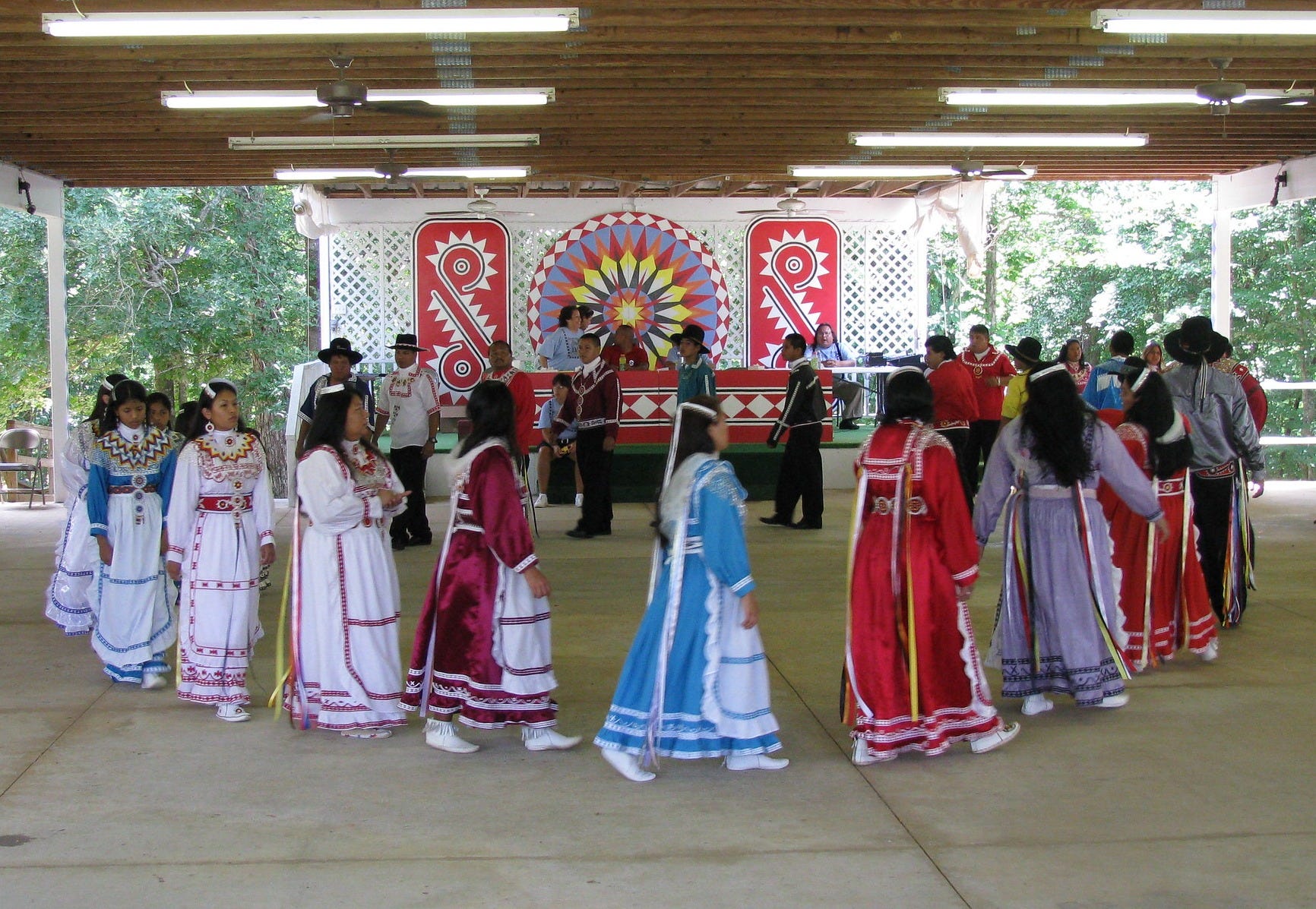
The Mississippi Band of Choctaw Indians has about 11,000 members spread among communities across rural Mississippi, and the tribe has previously undertaken substantial efforts to overcome barriers to voting.
In 2020, a $55,000 grant helped the tribe reach younger voters through social media and peer-to-peer texting, canvass communities and provide transportation to the polls for elderly tribal citizens. Childcare was offered to parents on Election Day, while Choctaw-language interpreters were made available at polling places on tribal lands.
“For decades, minority voices, which include the Choctaw people, have been suppressed,” Tribal Chief Cyrus Ben said at the time.
Voting barriers
For Native American voters, barriers to participating in elections have persisted long after they formally obtained voting rights.
Research has documented difficulties ranging from geographic isolation and unreliable mail service to inadequate polling locations, limited internet access, nonstandard residential addresses and voter-identification requirements. The particular obstacles vary widely among tribes and states.
Mississippi accepts tribal identification as a valid form of voter ID. But voting barriers do not necessarily have to be designed with Native Americans in mind to affect Native voters disproportionately.
Mississippi’s recent effort to maintain its voter rolls provides one example.
Beginning in 2025, the Secretary of State’s Office supplied county election officials with addresses derived in part from Experian data as part of an effort it said would strengthen election integrity. A Mississippi Today analysis found that at least 50,000 voters were subsequently made inactive because of it.
Experian itself had cautioned that the commercial information did not verify where a person legally resided.
A study by the U.S. Election Assistance Commission also found that Experian was more likely to suggest new addresses in counties with larger populations of certain racial minorities, including Black and Native American residents. The study did not determine whether the Experian addresses or the addresses already contained in voter files were correct.
The disparities extend well beyond Mississippi.
The Native American Rights Fund, a national nonprofit legal organization representing Native American tribes and citizens, noted in an Aug. 2026 report that Native voters continue to encounter disproportionate barriers at virtually every stage of the voting process. Using federal election-administration data from 30 counties where Native Americans constitute more than a quarter of the population, researchers found that new voter registrations fell 59 percent between 2020 and 2024, while voter-address confirmation notices increased 178 percent. Nine out of 10 of those notices went unanswered in 2024.
Registration problems accounted for 60 percent of provisional ballots cast in those counties, and provisional ballots were rejected at a rate nearly twice the national average.
“For Native Americans, the right to vote has been obstructed, delayed and denied across two centuries of United States history,” Native American Rights Fund Senior Staff Attorney Jacqueline De León said in an Aug. 26 statement. “Closing that participation gap is not simply a technical problem. It’s a question of whether American democracy is willing to extend its guarantees to all its citizens, including the first peoples of this land.”
Image: Choctaw dancers in Neshoba County (via Natalie Maynor, Flickr)
