


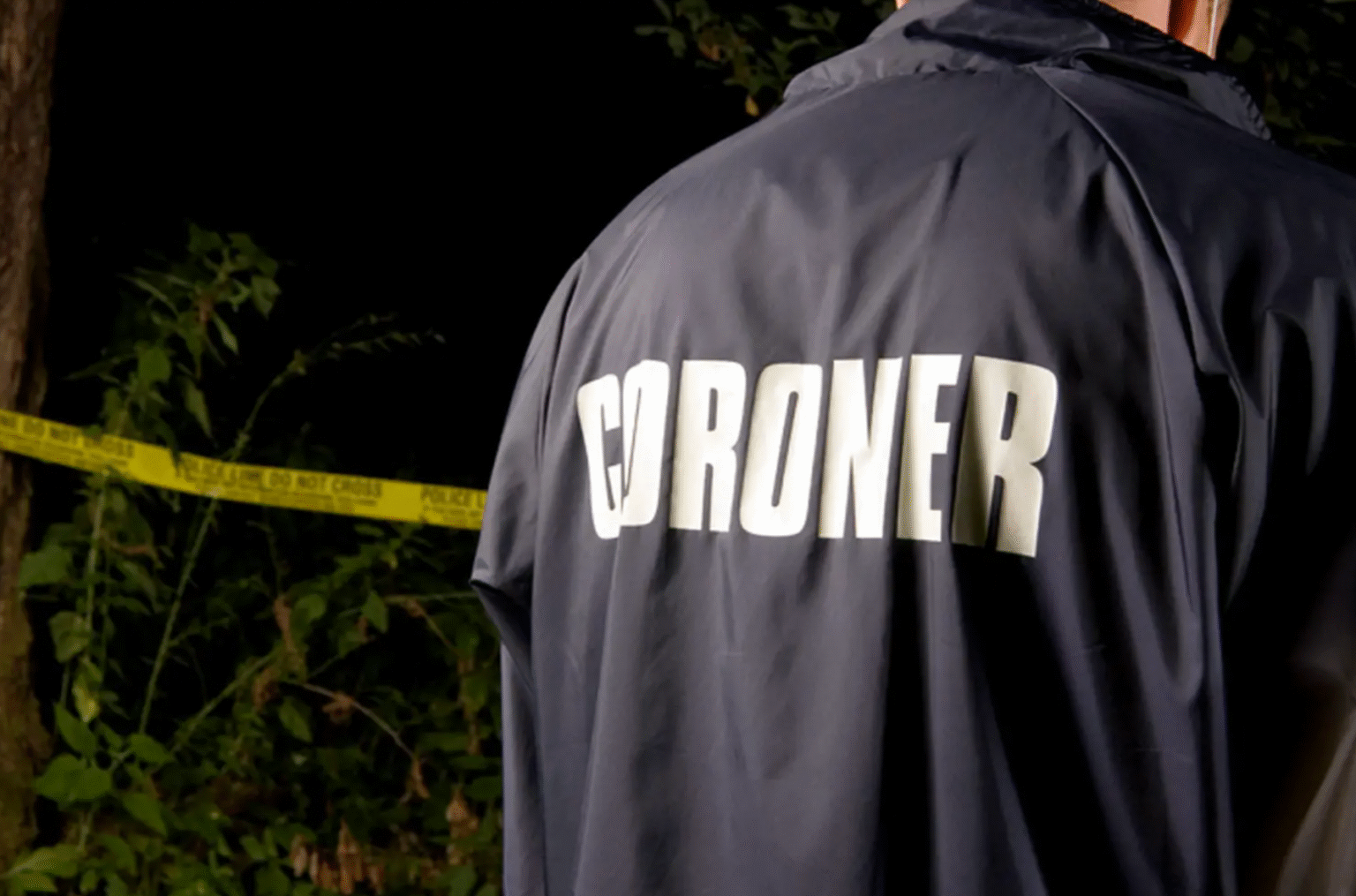
During the past 20 years, there has been much debate about Mississippi’s elected coroner system among forensic pathologists, government researchers, academics and state law enforcement who have brought fraud and embezzlement charges against death investigators.
One prominent case involved former Hinds County Coroner Sharon Grisham-Stewart, whose office came under scrutiny after at least seven people were buried in the county paupers’ cemetery between 2022 and 2023 without their families being adequately notified, which is one of the core responsibilities of a Mississippi county coroner.
Other serious failures are not unique to coroners. For about two decades, Mississippi pathologist Dr. Steven Hayne performed an estimated 80 to 90 percent of Mississippi’s criminal autopsies, sometimes working alongside forensic dentist Dr. Michael West, whose discredited bite-mark analysis helped secure wrongful murder convictions, including a death sentence, and left innocent men imprisoned for up to 16 years while the actual killer remained free.
Unlike the more than 10 years of higher education and specialized training required to become a forensic pathologist, Mississippi’s county coroners face modest educational and training requirements. And in a state where rural counties lack the budget or draw to attract highly qualified medical professionals, elected coroners have been the status quo for 209 years.
There have been a few major changes along the way. Mississippi lawmakers overhauled the state’s death-investigation system after Hayne was removed from the state’s list of approved medical examiners in 2008. The state revived the State Medical Examiner’s Office after going without a permanent medical examiner since 1995, creating a partially centralized system that shares death-investigation responsibilities with county coroners. The medical examiner was given a stronger supervisory and specialist role, including responsibility for forensic autopsies and setting professional standards.
Some coroners later tried to retain Hayne by exploiting a gap in state law that would have let them create coroner districts where they could hire their own medical examiners. State lawmakers passed a new law to prevent it.
More recently, Jackson County Coroner Bruce Lynd Jr. found himself in the national news after the death of Nolan Wells on Horn Island, though Lynd’s role in the case was largely overshadowed by widespread conspiracy theories and accusations of racism directed at law enforcement.
The Mississippi Independent reported on that case, noting that Lynd had publicly suggested drowning as a possible cause of Wells’ death before the state autopsy was complete. Lynd’s comments further fueled public discontent over the case and ran counter to national death-investigation best practices.
Dr. Victor Weedn, a forensic pathologist, professor at George Washington University and former president of the American Academy of Forensic Sciences, criticized states with elected coroners, describing them as “butchers, bakers and candlestick makers.”
“It really homes in on the fact that they don’t have real qualifications to do the job,” Weedn added.
No county coroners responded to requests for comment for The Mississippi Independent’s reporting on the Wells case, but recently, Lee County Coroner Carolyn Green agreed to answer questions by email about the criticism elected coroners face, the training they receive and whether Mississippi would be better served by replacing them with a more centralized system. Green did not answer all of The Mississippi Independent’s questions, including those that specifically related to the Wells death investigation. She instead focused her comments on defending the current model, describing it as “a very well-balanced system with excellent training on the part of the coroners with oversight by our Medical Examiner’s office directly.”
The following exchange has been lightly edited for clarity and length. Questions submitted by The Mississippi Independent are in bold, followed by Green’s answers.
What do you think people misunderstand most about what a coroner in Mississippi actually does?
“It’s a misconception that coroners just ‘pronounce the deceased.’ In actuality, we do much more. We review the decedent’s medical history/medical records. We complete the death certificate. We complete a death investigation report in every case. In cases of criminal deaths, we photograph the scene and the injuries and work alongside law enforcement to make sure that the investigation is thorough.”
Someone with a high school education can be elected coroner and complete the required state training after taking office. What would you say to people who question whether that’s enough education and training for such an important job?
“I would invite those who question it to look at the state training curriculum. A whole lot of material is covered in a 40-hour course. Also, it’s mandatory (by law) that coroners and deputy coroners around the state maintain at LEAST 24 hours of continuing education annually. They usually earn those hours through educational seminars, online courses, conferences presented by the Mississippi Coroner-ME Association, attending autopsies, etc.”
What would Mississippi lose if elected coroners were replaced?
“You would lose your scene investigators, the actual ‘boots on the ground.’ You’re not going to find a doctor to attend death scenes in the county at all hours and in all sorts of weather conditions for $185 per call. Coroners serve as the eyes and ears at the scene for the state forensic pathologists.”
Because there are 82 county coroners and possibly even more deputy coroners, similar deaths can potentially be handled differently. If you and a coroner in another county encounter essentially the same unexplained death, what ensures standardization or is that an impossibility?
“Coroners and deputy coroners around this state have an excellent collaborative working relationship. We meet twice annually at the MS Coroner-ME Association conferences, and state agencies and other nationally recognized forensic speakers provide excellent training for all. We coroners who have been in for many years are always readily available to consult with another coroner and/or deputy if he/she needs advice as well.”
If you were designing Mississippi’s death-investigation system from scratch, would you keep elected county coroners? If so, what would you change?
“I most definitely would keep the coroner system. As stated above, we are well-trained, rapid-response investigators who strive for professionalism on each and every call.”
Among the questions that Green did not answer were two with significant ramifications. One was about elected coroners’ discretion in deciding whether a death requires an autopsy—what information is considered, with whom they consult, and what safeguards exist to prevent an inexperienced coroner from missing something that would have been discovered through an autopsy.
The other was particularly pertinent: “The Nolan Wells case illustrates how much weight the public can place on a coroner’s actions and comments. What should a coroner tell the public in the first hours or days after a high-profile unexplained death?”
Image: Unidentified coroner (via Marshall County Coroner’s Office website)
