


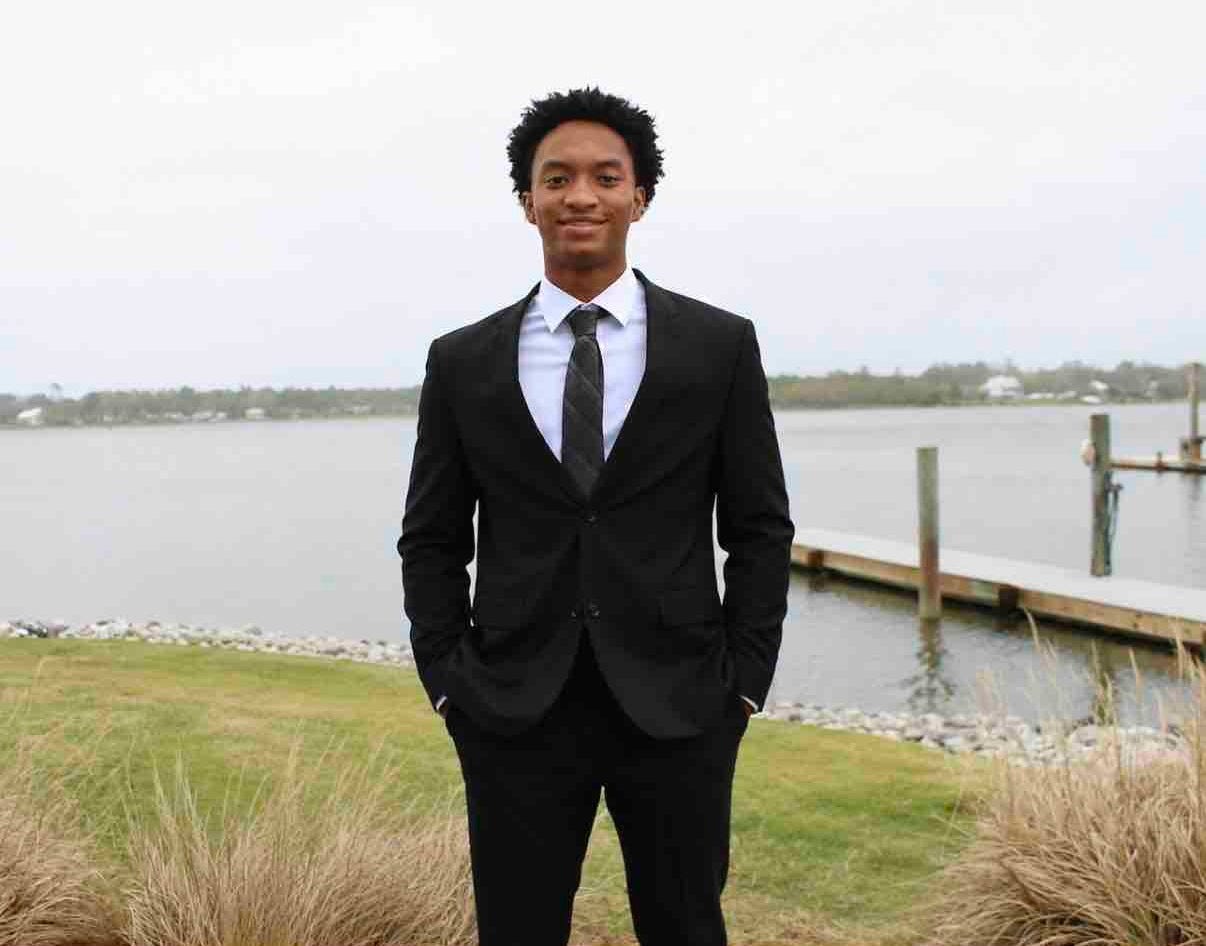
Weeks before Nolan Wells’s autopsy and toxicology results came in, Jackson County’s coroner had already told the public how he believed the 18-year-old probably had died. His comments, made days after he examined Wells’s body on Mississippi’s Horn Island, added to the resulting international controversy surrounding his death.
Coroner Bruce Lynd Jr. told reporters on July 10 that he saw no immediate, obvious signs of foul play or trauma and raised the possibility that Wells had drowned in the unpredictable waters off the Gulf Coast island. His speculative remarks fed directly into an escalating, volatile debate over Wells’s death that has since produced conspiracy theories, accusations of defamation, racial tensions, death threats and attention from civil rights activists.
Lynd’s remarks also contributed to confusion over what a Mississippi coroner actually does, and exposed an odd feature of the state’s death investigation system: The first public judgments about a death often come not from forensic pathologists with years of training but from elected coroners who need only a high school diploma and a 40-hour course to hold the job.
“I usually say the coroners are butchers, bakers and candlestick makers,” Dr. Victor Weedn, a forensic pathologist, professor at George Washington University, and former president of the American Academy of Forensic Sciences, told The Mississippi Independent. “It really homes in on the fact that they don’t have real qualifications to do the job.”
An imperfect system
Wells’s body was found on Horn Island on July 6 after he and several friends traveled there from the mainland to celebrate the Fourth of July. When his friends decided to leave, Wells allegedly chose to stay, but his cellphone and keys went with them. Lynd began a death investigation and later ordered the State Medical Examiner’s Office in Pearl to conduct an autopsy. The results of the autopsy have since gone to the Jackson County District Attorney’s office, which will present them to a grand jury. They will likely remain sealed until after that decision.
Lynd’s speculation may not have stood out among the thousands of deaths Mississippi’s 82 coroners handle each year, but offering public speculation about foul play or cause of death is considered bad practice under national guidelines. Since 2012, the federal government’s Scientific Working Group for Medicolegal Death Investigation has warned that public information “should contain ONLY facts, never speculation,” and that preliminary cause or manner of death should not be released “in suspicious circumstances or when active investigation is ongoing.”
Weedn said coroners don’t always practice that restraint, and deciding what does or does not count as foul play is not a judgment they should be making publicly. “You’re really limited in what can be said before you have finalized a death investigation,” he said. “Generally, the comment that ‘no foul play is suspected’ is really what the police are supposed to assess and ordinarily meant for a medical examiner to assist in what they’re thinking as they perform the autopsy and form an opinion afterward.”
“These types of mistakes,” Weedn added, “are usually mistakes made by coroners.”
That points to a broader fault line in American death investigation, where the quality can depend as much on geography as on science. A 2025 federal report about strengthening the U.S. death investigation system notes that part of the imbalance is due to “variations in the level of resources (funding, staff, and infrastructure), credentialing, and enforceable standards.”
Some states rely on county or regional medical examiner systems led by forensic pathologists, while others have centralized systems. Mississippi still vests substantial authority in elected coroners who are largely independent of the State Medical Examiner’s Office but can order an autopsy if they choose to. Mississippi has considered switching to a different system in the past, but the decades-long shortage of forensic pathologists remains a barrier, along with budgetary restraints, the report found.
State coroners are authorized to investigate a broad array of suspicious, violent, or unexplained deaths. With few exceptions, the coroner alone decides whether an autopsy is done. That gives them enormous responsibility as the first death investigation official to reach the body and then determine—often without any medical training—what happened to the person and if an autopsy is required.
Forensic pathologists, by contrast, are physicians who completed medical school, residency and specialist training and are then subject to continual outside review. They are normally hired by a government entity. Coroners are not. They only answer to the electorate.
When it comes to missed details or a botched death investigation, how would the average voter ever know when something is amiss?
“In almost every place you go, citizens have no idea if they have a good medicolegal death investigation system or not,” Weedn said. “They probably assume that they do, but they often have to wait for an election to vote them out.”
Professional credentialing is thin in states like Mississippi. A legal analysis published in the Vanderbilt Law Review found that death-investigation offices in elected-coroner states are less likely to hold national accreditation and are associated with more autopsy-related litigation than offices led by appointed medical professionals.
Of the 2,639 people certified by The American Board of Medicolegal Death Investigators, only one is from Mississippi. The State Medical Examiner’s Office is also not accredited by the National Association of Medical Examiners, one of the leading organizations working to improve medicolegal standards nationwide.
The consequences of the state’s sometimes chaotic coroner system have surfaced before. In Hinds County, a former coroner buried more than 200 unclaimed bodies in paupers’ graves behind the county jail beginning in 2016 without notifying the families. She later resigned.
But the overall death investigation system was in turmoil for decades.
Mississippi went 13 years without a permanent state medical examiner. During that time, one doctor, Steven Hayne, who was never board-certified in forensic pathology, performed roughly 80 percent of the state’s autopsies for nearly two decades before the state fired him in 2008. He was performing more than 1,500 autopsies per year. It was later discovered that his autopsies contained questionable bite mark evidence and produced false convictions, including some that sent people to death row.
After Hayne was removed from Mississippi’s approved list of forensic pathologists in 2008, a large group of county coroners sought to create regional medical-examiner districts that would allow them to hire him again without going through the state’s normal approval process. The Mississippi Legislature intervened by mandating that only certified forensic pathologists could work for the state. A new state medical examiner was appointed in 2011.
The rebuilt office has struggled at times to keep pace since. It once carried the worst autopsy backlogs in the United States: about 1,300 cases in 2022, roughly 800 of them homicide-related. The state opened a new medical examiner’s office in Oxford in August 2026 and is recruiting more forensic pathologists to staff it. Mississippi Commissioner of Public Safety Sean Tindell said earlier this month the state is now aiming to finalize autopsy reports within 90 to 180 days, still well past the 30-to-90-day window the National Association of Medical Examiners considers standard.
The delays have worn down the coroners who are left to absorb the fallout. “More and more coroners, or long-term coroners, are saying, ‘I’m done,’” Clayton Cobler, a former Lauderdale County coroner who decided not to seek reelection because, he said, of how disorganized the State Medical Examiner’s Office was, told the Associated Press during the 2022 autopsy backlog. “Families call the medical examiner’s office for updates and often don’t hear back. It’s too heartbreaking.”
Race and trust
There is no evidence that race affected Lynd’s investigation. But Wells was Black and his family has publicly expressed distrust of the officials investigating his death—a distrust rooted partly in Mississippi’s troubled racial history and in the recent deaths of three Black people found hanged in the state during the past year. One of those cases remains open; the other two were ruled suicides by the state medical examiner.
“The family has distrust of the Mississippi law enforcement officials giving them a fair investigation where their Black son ended up dead after going out on a boat with three young white men,” said civil rights attorney Ben Crump, who represents the Wells family, in July.
While officials involved in the investigation have denied that race is a factor, research says that it is often a key indicator of bias in death investigations.
A 2022 Journal of Forensic Science article found that death investigations in the United States are far less uniform and objective than might be suggested in the official categories of homicide, suicide, accident, natural and undetermined.
The paper summarizes disparities identified in previous research findings, includng that suicides among Black and Hispanic Americans are more likely to be underreported, while deaths involving women, Black Americans, Asian Americans and Native Americans are more likely to receive an undetermined classification. The research notes that the fragmented American death investigation system creates wide variations in standards, expertise and decision-making, meaning that two similar deaths in separate jurisdictions can be investigated differently and potentially end up with disparate official conclusions.
Findings
Even after an independent forensic pathologist found a large area of red discoloration in tissue at the back of Wells’s head, there still wasn’t enough information for a definitive conclusion, which is a reminder of how limited early statements can be, regardless of who makes them.
“The autopsy is not going to give you the definitive answers that you need,” Weedn said. “Those answers are really going to come from the police investigation because we just don’t know the circumstances on the boat.”
Unlike Lynd, Jackson County District Attorney Angel Myers McIlrath was far more guarded when asked about public information. “Our restraint in communicating facts and evidence is not an effort to keep the truth from the public; it is an effort to protect the integrity of this investigation and the grand jury proceeding,” she said.
Even if Mississippi had a more professionalized system, it would not eliminate uncertainty or all the distasteful things that happened in the wake of Wells’s death. But it could eliminate the vast variation that has troubled American death investigation for decades. National reform proposals generally call for independent medical-examiner leadership, uniform statewide standards, professional credentialing, and insulating medical conclusions from law enforcement or prosecutorial pressure.
Replacing every county coroner with a forensic pathologist is not a realistic solution. Specialists are in short supply nationally, and a rural state with 82 counties would need to staff one in every county.
Lynd may ultimately prove to have assessed the situation surrounding Wells’s death correctly. The investigation may conclude that Wells drowned, establish another cause, or leave the death unresolved. Nothing in the public domain shows that Lynd failed to perform the duties that Mississippi’s death investigation system asked of him. But the question remains whether Mississippi’s current system is trustworthy.
Image: Nolan Xavier Wells (via the Wells family’s GoFundMe)

It's deeply affirming to read a story that answers questions I didn't know to ask, but that I someone felt were unanswered. Great job shedding light on systemic operational issues with death investigations, making the important point that medical conclusions and criminal ones not only require different standards but also quality specialists.