


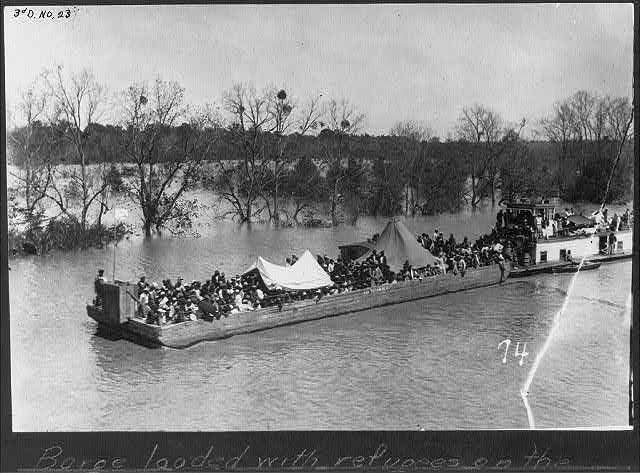
On April 21, 1927, much of Mississippi’s low lying western region was inundated by the most destructive flood in U.S. history. That day, the Mississippi River broke through the Mounds Landing levee in Bolivar County, flooding much of the Delta, reclaiming its entire natural floodplain and sparking a mass migration that ultimately changed the course of American music.
Among the hundreds of thousands of people displaced by the flood were farm workers in the Mississippi Delta who swelled the ranks of the Great Migration from the Deep South to northern cities, carrying with them the Delta blues, which later sired rock music. Citing Led Zeppelin’s cover of “When the Levee Breaks” by Kansas Joe McCoy and Memphis Minnie,” Forbes magazine described the 1927 event as “the flood that made rock and roll.”
Today, Mississippi is in the throes of a protracted drought. The river is at a stage of about 25 feet at Vicksburg. In 1927 the river rose to more than twice that—52 feet. As the flood marks on the levee wall in Vicksburg project, the river would have reached a stage of 62.2 feet if the levees had held. Instead, the overflow poured through hundreds of crevasses from Illinois to the Gulf of Mexico, killing an estimated 500 people, most of them in Arkansas, Louisiana and Mississippi.
At its height, the flood created a muddy, inland sea covering 27,000 square miles to depths of up to 30 feet and 80 miles wide, which lasted through the summer. Uprooted, with no crop work that year, and often having been pressed into levee protection work without pay while living in tents on the levee, many Black Delta residents headed north.
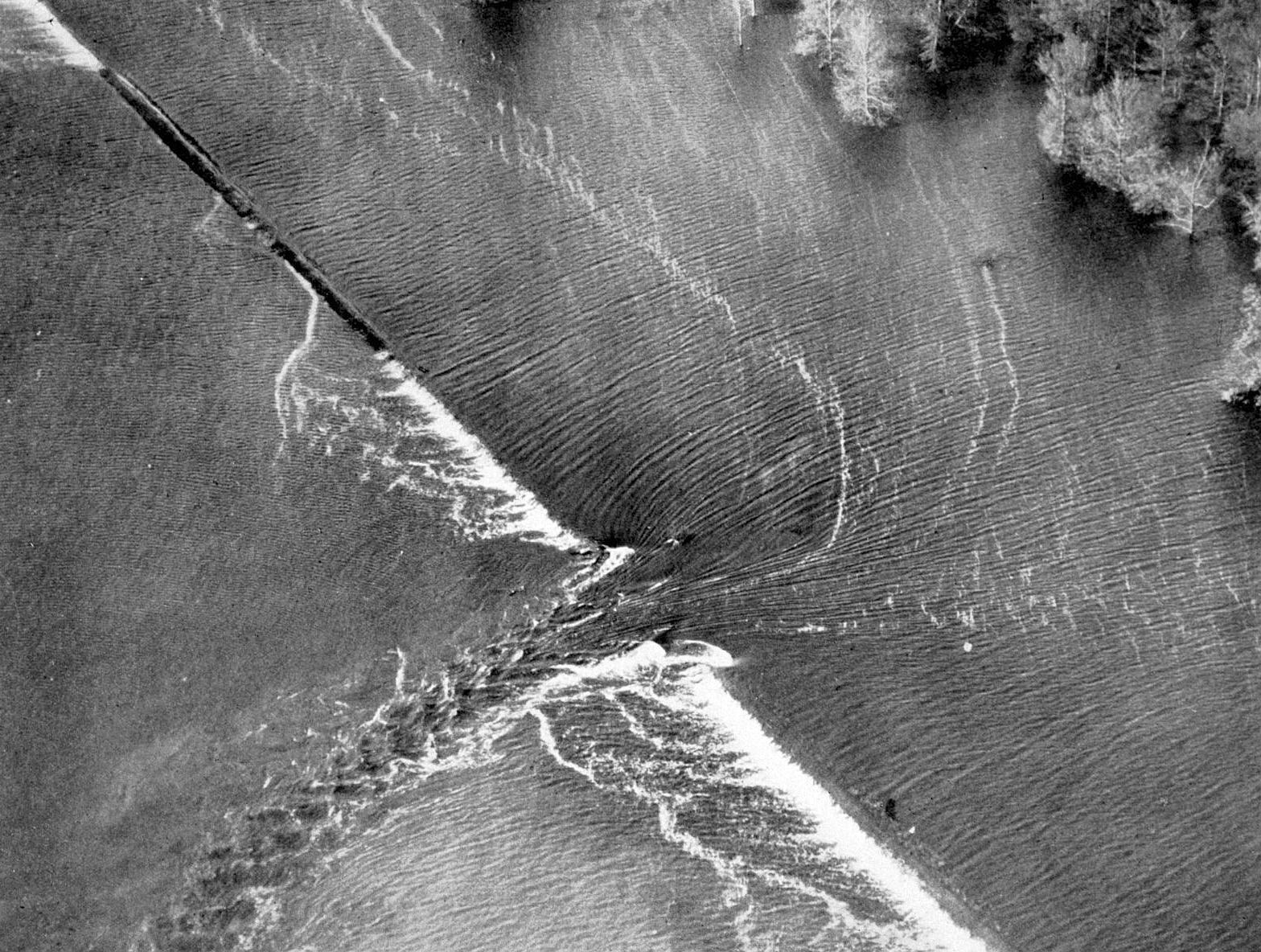
Images: Barge loaded with refugees plies the Delta’s Sunflower River, April 26, 1927; Mound Landing crevasse, April 21, 1927 (both via Library of Congress)
Now, what did the drought of '88 sire?
I remember reading somewhere that when that happened it was possible to get to Monroe by boat because there were other breaches. Whether that is true I really cannot say but obviously that even changed a lot of things.