


Nearly 300 bills, including measures that legislative leaders in both parties had described as priorities at the start of the session, are dead after a key legislative deadline last week.
March 3 was the deadline for House and Senate committees to pass general bills originating in the opposite chamber, which effectively kills hundreds of bills every legislative session; many other bills survived in amended form.
Teacher pay: Both chambers passed a raise but neither advanced the other’s
The session opened with public commitments from both House and Senate leadership to raise teacher pay. Mississippi teachers are, on average, the lowest paid in the country at $53,704 annually, with starting salaries just above $42,000. The legislature last enacted a meaningful pay raise in 2022, and educators have said the gains were quickly offset by rising insurance premiums and inflation. A Mississippi Department of Education survey released earlier this year counted nearly 4,000 vacant teaching positions statewide.
The Senate moved first. Senate Bill 2001, passed on Jan. 7, 2026, proposed a $2,000 raise for teachers. The House passed House Bill 1126 on Feb. 4 with a $5,000 raise, an additional $3,000 supplement for licensed special education teachers, a cap on superintendent salaries tied to teacher pay, and provisions addressing the gap in paychecks teachers experience across the December holiday period.
Neither bill received a committee vote in the opposite chamber before the deadline. House Education Committee chair Rob Roberson (R-Starkville) said weeks before the deadline that he would not call another meeting, and he did not. Senate Education Committee chair Dennis DeBar (R-Leakesville) told reporters that the ball had been in the House’s court, noting that SB 2001 had been with the House since the second day of the session. Each chamber blamed the other.
The stalemate developed during a session already defined by a confrontation over school choice. House Bill 2, Speaker Jason White’s omnibus school choice package, passed the House 61-59 in January and was killed by the Senate Education Committee in under two minutes on Feb. 4. After that vote, most education bills in the House were double-referred, a procedural tactic that makes passage more difficult. White claimed the double-referrals were not retaliatory; Senate leaders were unconvinced.
Educators have not hidden their frustration. Jason Reid, a DeSoto County teacher who drives a school bus before and after school to supplement his income, told reporters the outcome was a disappointment after both chambers had appeared committed to addressing the teacher shortage and the pay gap with other states. Roberson said on March 5 that he had not given up on a raise before the session ends. One path forward would be for Gov. Tate Reeves to call a special session. Another would be a one-time teacher bonus approved before the regular session adjourns April 5.
Campaign finance online filing: recurring failure
A bill that would have required all state, county and municipal candidates to file campaign finance reports online died in the House Elections Committee when chair Noah Sanford (R-Collins) chose not to call a meeting before the deadline. The bill, Senate Bill 2589, had passed the Senate and carried support from Secretary of State Michael Watson, who has made modernizing Mississippi’s campaign finance disclosure system one of his central priorities this session, in part because federal officials have accused several local Mississippi officials of campaign finance-related bribery during the past year.
Mississippi is the only state that does not require candidates to file campaign finance reports electronically. State candidates currently file with the secretary of state’s office, county candidates with circuit clerks, and municipal candidates with municipal clerks, producing a fragmented paper-based system that advocacy groups say makes it nearly impossible for the public to search or analyze contribution data. All surrounding states have online filing requirements.
The debate in the House Elections Committee exposed a division over technology access. Sanford raised concerns about requiring elderly candidates in rural areas to file online. Rep. Shanda Yates (I-Jackson) pushed back, arguing that anyone seeking elected office should be expected to know how to use the internet. Tom Hood, director of the Mississippi Ethics Commission, told Mississippi Today that his agency moved to online filing for statements of economic interest in 2010 and that only a handful of filers have ever opted for paper alternatives. The bill would not have taken effect until 2028, giving candidates time to adjust.
A broader campaign finance reform bill, Senate Bill 2558, which would have clarified enforcement authority between the secretary of state and the attorney general, capped cash donations at $1,000, and required candidates to maintain a campaign bank account, also failed earlier in the session. It advanced out of the Senate Elections Committee but did not have enough support to pass the full Senate. A comparable House bill was killed in committee before that.
Medical cannabis bill dies after two committee votes
House Bill 1034, known as the Compassionate Access to Medical Cannabis Act, or Ryan’s Law, would have required hospitals, skilled nursing facilities and hospice facilities to permit terminally ill patients with valid medical cannabis cards to use cannabis during inpatient stays. Smoking and vaping would have been prohibited. The patient or a designated caregiver would have been responsible for acquiring, storing and administering the cannabis, not facility staff.
The Senate Public Health Committee voted to kill the bill in late February. Sen. Brice Wiggins (R-Pascagoula) moved to reconsider, and the committee took it up again on March 3. Sen. Angela Hill (R-Picayune) had argued at the earlier hearing that the bill created an unworkable situation for hospital physicians and suggested that patients who want to use cannabis should seek out facilities already willing to accommodate it. The committee again declined to advance the bill.
Mississippi’s medical cannabis program, signed into law in February 2022 and operational since January 2023, does not authorize cannabis use in hospital settings. The program now has more than 52,000 enrolled patients.
Two narrower cannabis bills survived, though both were amended
House Bill 895, authored by Rep. Lee Yancey (R-Brandon), originally proposed several program changes: extending patient card validity from one year to two; eliminating the mandatory six-month follow-up appointment; removing the concentration cap on cannabis oils and tinctures; and extending caretaker card validity from one year to five years. In the Senate committee, Sen. Kevin Blackwell (R-Southaven) amended the bill to retain only two provisions: the concentration cap removal and a two-year caretaker card extension. The amended version passed committee, but most of Yancey’s original language did not survive.
House Bill 1152, also authored by Yancey and titled the Right to Try Medical Cannabis Act, passed the House 104-7 in early February. It would create a petition pathway for patients with serious conditions not currently listed among the program’s qualifying diagnoses to seek case-by-case approval from the state health officer. The patient’s treating provider must document that all conventional treatments have been exhausted. The state health officer’s decision is final and not subject to appeal. The bill was referred to the Senate Public Health Committee, where its fate remains pending.
Early voting blocked again; absentee overhaul still moving
A Senate bill that would have established no-excuse early voting for all registered Mississippi voters died in the House Elections Committee when House Elections Committee when chair Sanford declined to call a meeting before the deadline. Mississippi is one of only three states without no-excuse early voting or no-excuse absentee voting.
Sen. Jeremy England (R-Vancleave), who chairs the Senate Elections Committee, has advanced early voting legislation for three consecutive sessions. In 2024, his bill passed the Senate with bipartisan support and died in Sanford’s committee without a vote. In 2025, an early voting bill passed both chambers overwhelmingly, but Senate leaders declined to send it to Gov. Reeves after England received word the governor would veto it. Reeves has been publicly opposed to no-excuse early voting. England has noted that the Republican National Committee encouraged GOP voters to cast early ballots in states that allow it during the 2024 presidential election.
What did survive the deadline was a more limited measure. Both chambers have passed bills to overhaul the mechanics of in-person absentee voting, replacing the ballot-envelope system with direct machine tabulation. The House bill, HB 447, retains the existing 45-day in-person absentee window. The Senate version compresses it to 22 days. A conference committee will negotiate the final version. Neither bill expands who qualifies to vote before Election Day.
What remains
Bills that cleared the March 3 deadline now face floor votes in the opposite chamber and a second round of committee deadlines in mid-March. The absentee voting bills, the Right to Try cannabis bill, and the SHIELD Act voter registration measure are among those still in play. The teacher pay raise bills, the hospital cannabis bill, the campaign finance online filing bill, and the early voting measure are not, absent a special session or a procedural revival.
The 2026 legislative session is scheduled to adjourn on April 5, 2026.
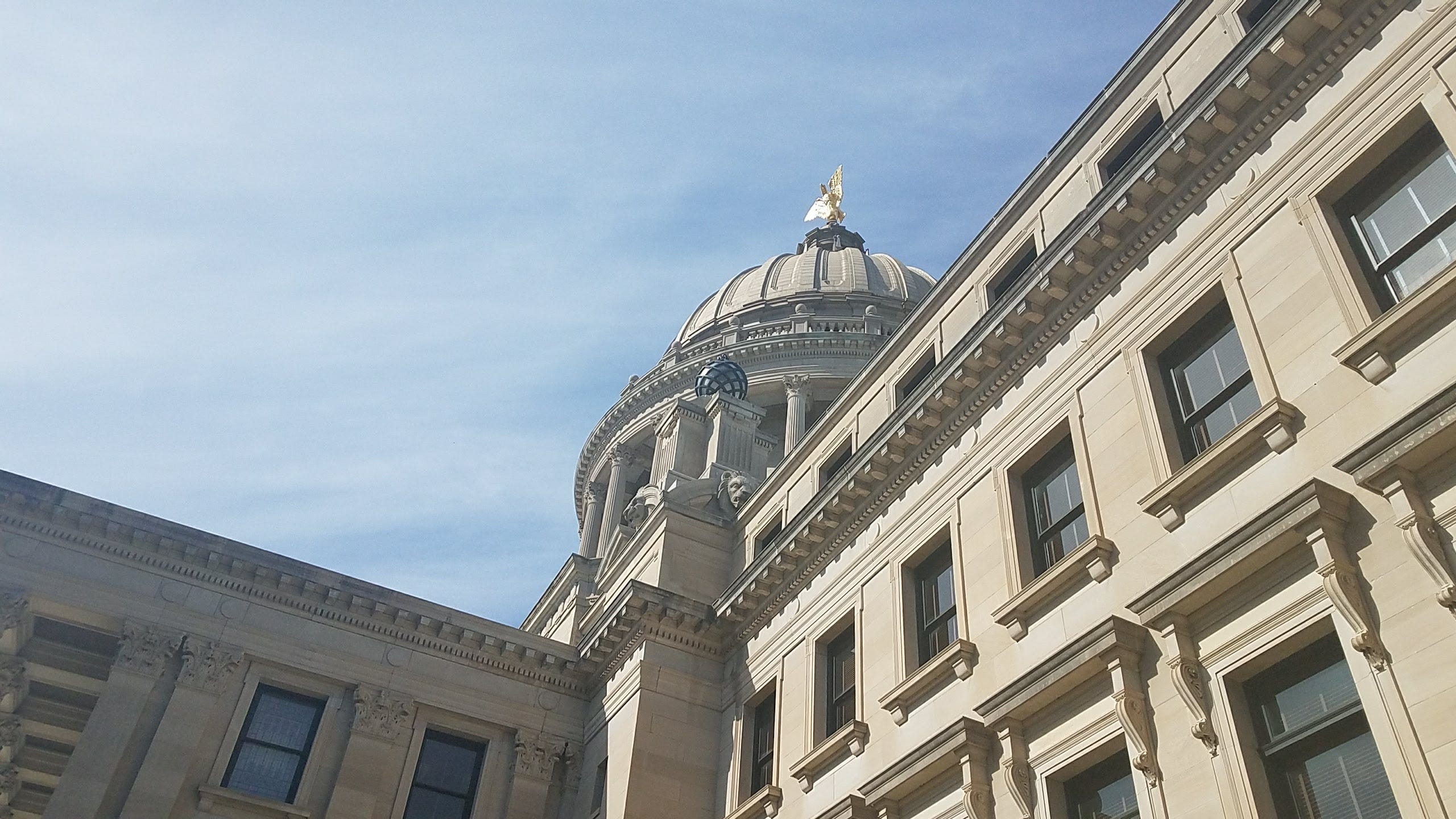
Image: Mississippi State Capitol building (Ryan Nave)
