


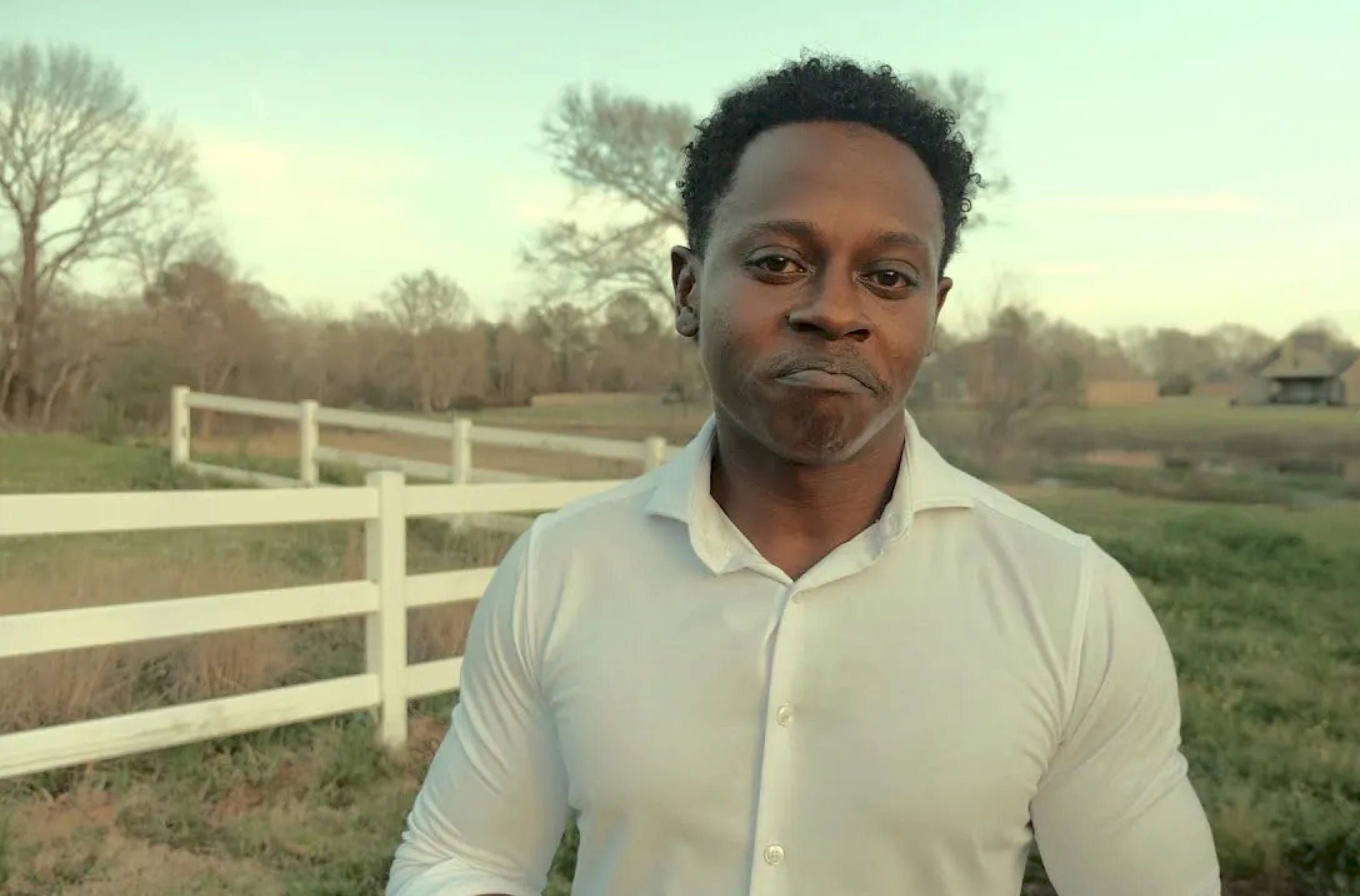
In 2024, Quentin Anthony Anderson ran for Congress in Louisiana’s 6th District, which the state had drawn, after years of litigation, to give Black voters a majority. Anderson, a Baton Rouge Democrat who owns a marketing firm and founded the social-justice nonprofit The Justice Alliance, finished behind state Sen. Cleo Fields, who won the seat outright in the November 2024 primary.
Then, this spring, the district map fell prey to the U.S. Supreme Court’s ruling in Louisiana v. Callais, which eviscerated key components of the Voting Rights Act. Within days, the Louisiana Legislature moved to erase the district in which Anderson had run.
That prompted Anderson to testify against the new map before a state Senate committee about a bill to eliminate a majority Black voting district—even as campaigns for the seat are underway and some citizens have already submitted absentee ballots.
“This is not normal,” Anderson told lawmakers. “Nothing about this is normal.”
The video of Anderson’s testimony quickly spread beyond Louisiana on social media, resonating at a time when the GOP is actively engaged in reducing Black-majority voting districts and, some argue, in making voting itself more difficult.
Versions of the same fight are unfolding across the South, including in Mississippi, where Republicans have long sought to unseat U.S. Rep. Bennie Thompson in the state’s only majority-Black district and have now moved to redraw legislative lines in response to Callais, which ties these fights together across state lines.
Anderson has watched his corner of the fight from the inside, as a candidate whose target seat is now in the GOP’s crosshairs.
A map redrawn after ballots were mailed
Candidates who ran in 2024 expected the map to change eventually, but by the spring of 2026 they believed the current window had closed, Anderson told The Mississippi Independent. In 2024, the courts had ruled that it was too late to redraw the district in the middle of an election season. Primaries were underway and candidates had qualified and paid their fees.
“We were well beyond the point where you could redo it,” Anderson said. “Then the Supreme Court ruled, and Republicans said, no, we still can.”
The day after the Callais ruling, Louisiana Gov. Jeff Landry suspended the state’s U.S. House primaries. The state legislature then passed Senate Bill 121, which reduced Louisiana’s two majority-Black congressional districts to one and is expected to give Republicans five of the state’s six seats. Lawmakers also rescheduled the suspended primaries to Nov. 3, 2026.
On the Senate floor, Louisiana state Sen. Jay Morris (R-West Monroe), the bill’s sponsor, said the map was drawn to “maximize Republican advantage for the incumbent Republicans that we have in Congress.”
By then, more than 42,000 people had already cast absentee ballots.
The Mississippi fight shares the Callais underpinnings but covers slightly different terrain. Louisiana was forced to act because the court found the state had illegally used race in drawing its map and ordered a new one, and Republicans used that opening to eliminate a Black district. Mississippi’s post-Callais battle centers on its legislative maps, where a 2025 court-ordered redraw created new Black-majority districts that Republicans are now positioned to challenge, alongside the long-running effort to dislodge Thompson. The ruling loosened the same constraints in both states, though Louisiana’s redraw was compulsory and Mississippi’s maneuvering—like most of the ongoing wave across the South—is voluntary.
Anderson said his objection centered on the timing, given that ballots for the race had already gone to every precinct. Voters saw the congressional candidates in front of them while the state told them the votes would not count.
“When the government tells you, ‘We know you can see it, but we won’t count it,’ that shows it was done at the last minute without a plan, just to reach a predetermined outcome as fast as possible,” Anderson said.
But, Anderson added, the precedent concerns him more than the actual map. States have long redrawn districts once every decade, to coincide with the census and reflect population changes. Now, in his view, Louisiana was setting a new rule. “If you are in power, you can change the maps before the next election,” he said.
Because the courts allowed Louisiana to act after ballots were printed, there is no clear limit on how late a state could change an election, in Anderson’s view. “If a court is fine with mailing out ballots it knows will be voided, why couldn’t you close a polling place the week before an election, or the day before?” he asked.
The dilution question
The district Anderson ran in existed because a court had found that the previous map diluted Black votes. Its defenders called it a remedy rather than a gerrymander. Critics countered that both parties draw maps for advantage. Asked how he weighs creating a district to correct dilution against eliminating one, Anderson gave an answer that cut across the usual lines.
“This might surprise you, but I empathize with that view,” Anderson said. Even in 2024, he said, he had considered the district’s shape less than ideal, yet he defended its purpose. “The hard truth in Louisiana and Mississippi is that without majority-Black districts, Black voters get shut out,” he said. In areas with the largest Black populations, people still count the splits by race as readily as by party: “Five white, four black. That’s how they talk about it,” he said.
Anderson said he dislikes the remedy. “I don’t like that the only way Black folks get represented in the South is by drawing districts shaped like spiders,” he said. Instead, he would prefer that his own Democratic Party renounce the practice. “I wish the Democratic Party would say plainly that if it ever holds the majority, it will outlaw political gerrymandering, that it’s fine with fair districts and with a 50-50 race being a 50-50 race,” he said. Few competitive districts remain, he said, “and those are the ones on the chopping block.”
Testimony fails to move lawmakers
In his testimony, Anderson told the committee that a rigged outcome “does not become more honorable because we’re all wearing suits.” Asked what a legitimate process would have looked like, he said it would have started with lawmakers listening to the people who came to oppose the bill. He said he understood that most lawmaking is settled before a bill reaches the floor and that much that takes place during hearings is performative. Yet every day that the government runs on inside information and its own private language, he said, the public’s faith is diminished. “When everything feels like it’s done in a back room in a language foreign to the people it affects, that’s when people start to say a pox on both houses,” he said.
Anderson told The Mississippi Independent that during the hearing he sat beside an older woman who had grown up under Jim Crow and testified that she never expected to testify at the state Capitol, yet get no interest from lawmakers whom she had thought would listen and perhaps ask questions. As it happened, the legislators listened in silence and posed no questions. “She was bewildered,” Anderson recalled. “That’s most people. They don’t understand why the government is so casually corrupt, so they stop showing up. SB 121 was one more blow to their confidence in their own democracy.”
Anderson’s message to the public: Don’t just vote, run for office
Anderson used the final minutes of his testimony to address the young people watching, telling them he did not expect the lawmakers to move. The most useful thing he could do, he later told The Mississippi Independent, was speak to the people who could actually change it, “the ones who know what’s right and would do it from the right seat but keep waiting for someone else to step up.” He had run without the party or major donors asking him to, and, “I learned more doing it than I ever would have staying out,” he said.
The right candidates are rarely recruited, Anderson said, because power does not embrace people who might oppose its agenda. He said his closing words were aimed at anyone close deliberating whether to run for an office like the school board, city council or mayor. “If I could light a fire under them, then maybe I helped push them there. I was more confident I could do that than move a single vote in that room,” he said.
“All we have is to vote and to run, and we don’t know how much longer we’ll have either,” Anderson said. “There’s not going to be some white knight who comes to save us. That person is one of us.”
Image: Quentin Anderson (via Ballotpedia)
