


The U.S. Supreme Court on Monday upheld a Mississippi law that counts absentee ballots postmarked by Election Day and received within five business days, rejecting a challenge brought by the Republican National Committee and turning back an effort that could have ended similar grace periods in more than a dozen states before the November midterms.
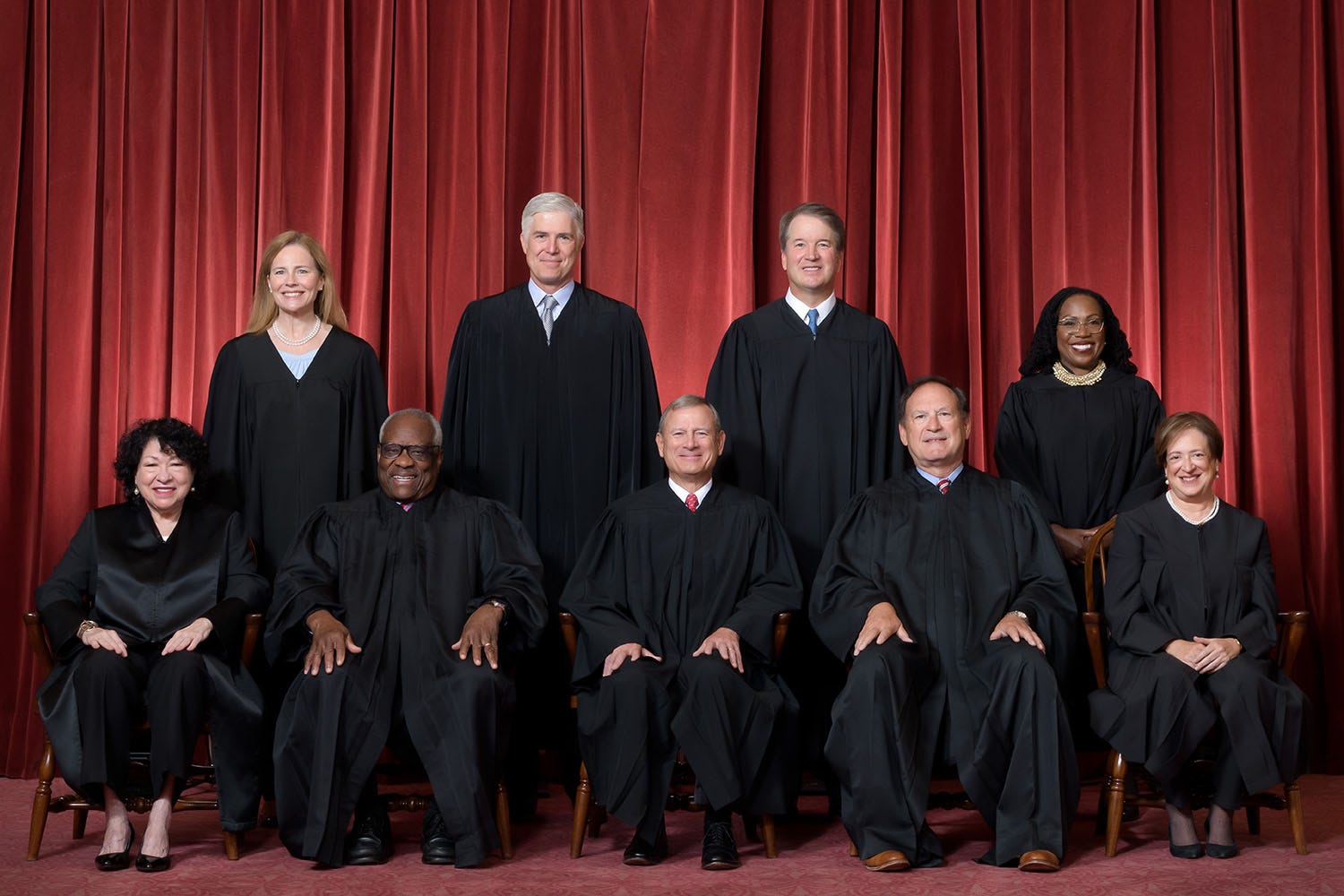
The 5-4 decision in Watson v. Republican National Committee split the court along unusual lines. Justice Amy Coney Barrett wrote the majority opinion and was joined by Chief Justice John Roberts and the court’s three liberal justices, a coalition that crossed the usual ideological divide to side with the state. The four remaining conservatives dissented.
The case turned on whether the federal statutes that fix a single national Election Day override a state’s decision to count ballots that arrive afterward. Barrett wrote that they do not. The federal laws require the electorate’s choice to be made on Election Day, she reasoned, and that requirement is satisfied so long as Election Day is the deadline for voters to cast their ballots, as it is in Mississippi. Federal law sets when a ballot must be cast, in other words, not when it must be received.
The ruling is a defeat for the RNC, the Mississippi Republican Party and the Libertarian Party of Mississippi, which brought the suit, and for the Trump administration, which backed the challenge. President Trump has repeatedly attacked mail voting and moved to curtail it. The law they sought to strike down was defended by a fellow Republican, Mississippi Secretary of State Michael Watson, who argued that the state’s grace period protects voters who rely on the mail, including military and overseas voters, older voters and rural voters.
Mississippi is one of 14 states and the District of Columbia that count mail ballots arriving after Election Day if they were postmarked in time; 29 states and D.C. allow it for at least some military and overseas ballots. A ruling for the RNC would have wiped out those windows for federal races. Instead, the law stands, and the decision affirms that states retain the authority to set their own ballot-receipt rules.
The case reached the court after a split in the lower courts. A federal district judge upheld the Mississippi law in July 2024; the 5th U.S. Circuit Court of Appeals reversed that October, holding that federal law requires ballots for federal office to be both cast and received by Election Day, and the Supreme Court heard argument March 23, 2026. At argument, several justices had appeared skeptical of the state’s position, making Monday’s outcome a surprise.
“Common sense prevailed today,” said Bradley Heard, deputy legal director for the Southern Poverty Law Center, in the organization’s news release. “When a voter mails a ballot postmarked by Election Day and it arrives within the allotted window of time, they have done what the law requires—laws which have been on the books since as early as the Civil War. Votes cast by mail are valid votes, and all valid votes should be counted.”
Image: U.S. Supreme Court justices (via supremecourt.gov)
