


The response to a recent U.S. Supreme Court ruling that rejected key provisions of the Voting Rights Act has been starkly divided in Mississippi, the state with the highest percentage of Black residents in the nation.
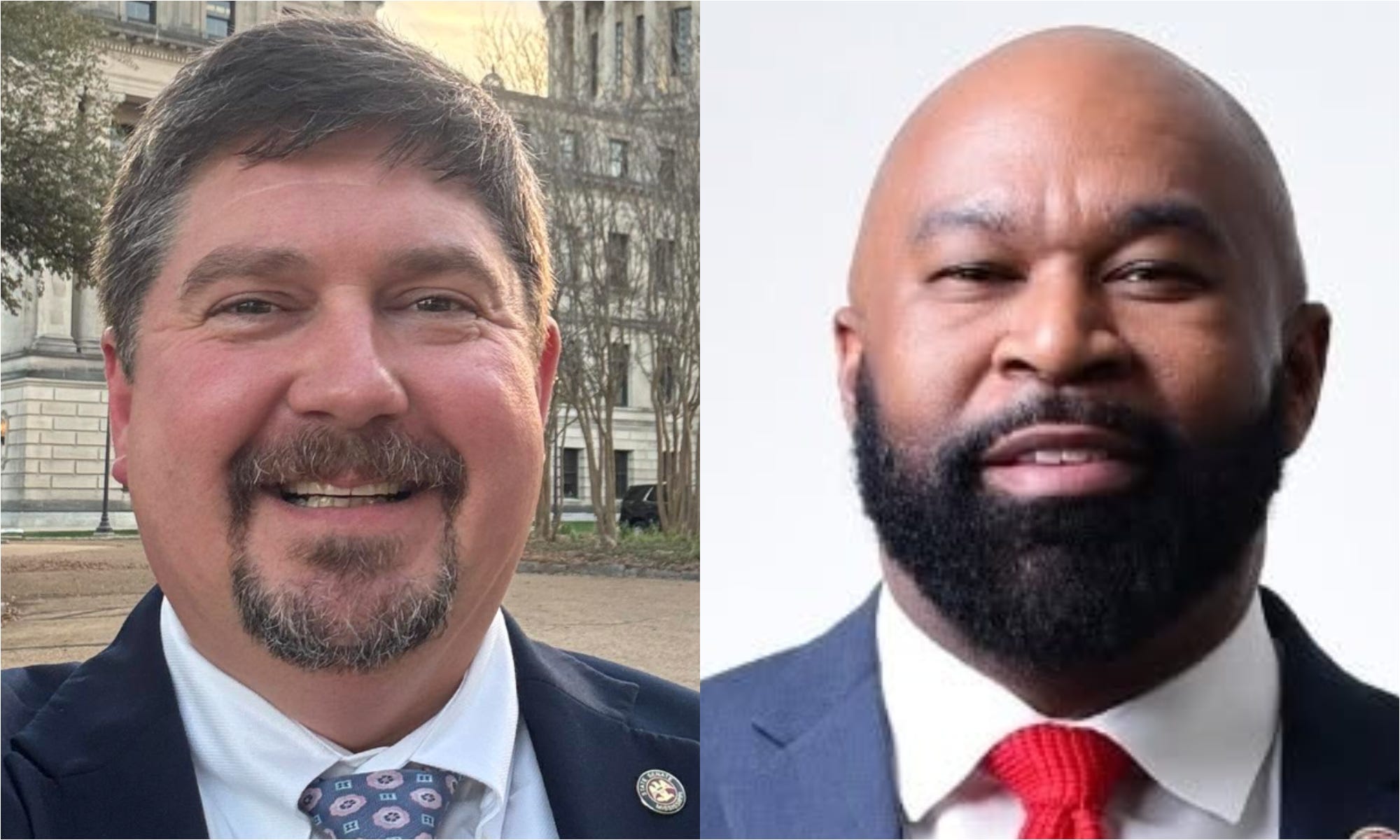
Mississippi Democratic Party chair Cheikh Taylor sees state redistricting efforts underway following the ruling as an attempt to override the wishes of voters to preserve Republican majorities.
Taylor described a resulting move by Secretary of State Michael Watson to prepare for district revisions as part of a partisan effort. “Let’s be clear about what Michael Watson is doing,” Taylor told The Mississippi Independent. “He is laying the administrative groundwork to hand Republicans a political windfall before a single public hearing has been held, before a single map has been drawn, and before Mississippi voters have had any say. The 2024 elections proved that when Black Mississippians have fair representation, Democrats win. That is exactly why Republicans are in such a hurry to turn back the clock.”
The court-ordered legislative districts that Taylor pointed to delivered for Democrats in the state’s 2025 special elections, with the party’s candidates winning all three of the newly drawn majority-Black seats.
Republicans have read the same results and assumed a different posture. State Sen. Jeremy England, a Vancleave Republican on the Senate Redistricting Committee, believes that the urgency around redistricting had eased and that the state could afford to wait on the courts.
“As I’ve said before, we’ve kind of seen some of the rhetoric die down, and I think that’s helped maybe cooler heads prevail,” England told The Mississippi Independent. “Now what we’re waiting on is if that court is just going to vacate that order. That may reinstall those maps without us having to take any action.”
It is not yet known whether the courts will order the state to revert to its previous maps or draw new ones, but Watson has instructed his staff to begin preparing the state’s election system to revert to the legislative maps that Mississippi used before a lower federal court ordered them redrawn, according to a June 9 letter he sent to Lt. Gov. Delbert Hosemann and House Speaker Jason White.
“In light of the recent ruling by the United States Supreme Court in Louisiana v. Callais et al. and its direct impact on the existing legislative district maps, coupled with my statutory duty as Mississippi’s Chief Elections Officer, I write to inform you I have instructed my team to begin preparing the Statewide Elections Management System (SEMS) for a reversion to the original 2022 legislative district maps adopted by the Mississippi Legislature,” Watson, a two-term secretary of state and former state senator who is now running for lieutenant governor, wrote in his letter.
In July 2024, a three-judge panel ruled that the legislative districts the legislature adopted in 2022 diluted Black voting strength and ordered the state to draw additional majority-Black districts in the DeSoto County area and the Pine Belt. The legislature redrew the lines in 2025. In the special elections held that November, Democrats flipped two state Senate seats and a House seat, ending a Republican supermajority that the party had held in the Senate for 13 years. In May 2026, weeks after deciding Callais, the U.S. Supreme Court vacated the order behind those elections. Reverting to the 2022 maps would restore the districts that the lower court had found unlawful.
Watson framed the move as administrative preparation required by his official duties, not a decision that the maps will change. He laid out a timeline that narrows the window for redrawing districts before the next elections. No changes to the election system may be made while an election is underway, he wrote, which for 2026 bars changes from 60 days before Election Day (Nov. 3, 2026) until the election is certified in mid-December, and for 2027 from early June through mid-December. His staff estimates circuit clerks would need at least a month to reinstall the 2022 maps and meet their other legal duties.
Whether a reversion is legally clean is unsettled. Though the Supreme Court vacated the order that forced the 2025 redistricting, the laws the legislature passed in 2025 to draw the new districts remain on the books, which leaves open the question of whether reverting to the 2022 lines would conflict with statutes still in force. The committees that Hosemann and White formed to study redistricting have not drawn any maps, and two of the three Mississippi redistricting cases remain in court.
If the courts do not resolve the legislative maps on their own, lawmakers could be called into a special session later this year, before the period for 2027 candidate qualifying begins on Jan. 1, 2027.
Images: Side-by-sides of Jeremy England and Cheikh Taylor (via their official Facebook pages)
