


The state legislature ended its 2026 session without restoring suffrage to Mississippians barred from voting for life as a result of convictions for crimes cited in the state’s 1890 constitution.
A bill that would have enabled automatic restoration of voting rights for those who complete their sentences for nonviolent disenfranchising offenses, along with proposals to educate incarcerated people about their status and to build a public restoration portal, died in committee during the same session that passed the state’s new voter-citizenship law. There is no indiction the issue will be revisited during the special legislative session Gov. Tate Reeves called on July 14.
For the roughly 48,000 Mississippians who have served their sentences and remain disenfranchised, the only potential remedies have been the same since 1890: a pardon from the governor or a bill passed for one person at a time.
The state and the people it has disqualified disagree about the reasons for the ban. The state maintains that it is a neutral rule for deciding who may vote, no different from age or residency requirements. Opponents argue that it is a punishment built into the constitution to keep Black men from voting, and that nothing since its adoption in 1890 has changed its original purpose. The two sides do not dispute that race shaped the provision. They disagree about whether it still governs by race today.
The disparity relates to how the state enforces its criminal law. A justice system that arrests, charges and convicts Black residents at higher rates for the same conduct funnels more Black defendants into felony convictions covered by the ban, which is the mechanism the 1890 delegates counted on. The drafters of the constitution chose the offenses expecting a discriminatory system to deliver Black defendants into them, and it did. The larger Black share among the disenfranchised reflects that enforcement, and the document’s Section 241 converts each conviction into the loss of a vote.
The courts have settled the central dispute in the state’s favor. In January 2025, the U.S. Supreme Court declined to hear Hopkins v. Watson, leaving in place a full Fifth Circuit ruling that upheld Section 241. The order left tens of thousands of Mississippians barred from voting, most of them Black.
Secretary of State Michael Watson has put the state’s case in plain terms. Section 241 amounts to a “nonpenal regulation of the franchise,” he told the court in urging it to deny review, imposing no punishment at all. The full Fifth Circuit agreed. Article XII of the constitution, the majority wrote, “outlines the procedures for elections in Mississippi, not criminal punishments,” and the provision “merely defines the franchise in such a way as to exclude” people convicted of the listed crimes, the way it also excludes noncitizens and people under 18. Striking the provision down, the majority added, “would thwart the ability of the State’s legislature and citizens to determine their voting qualifications.”
The disenfranchised Mississippians who brought the case describe something else. Mississippi is “one of only two states that continues to punish first-time offenders who commit non-violent and non-voting-related felonies with lifetime disenfranchisement,” they told the court, pointing to the provision’s origin and to what has survived of it.
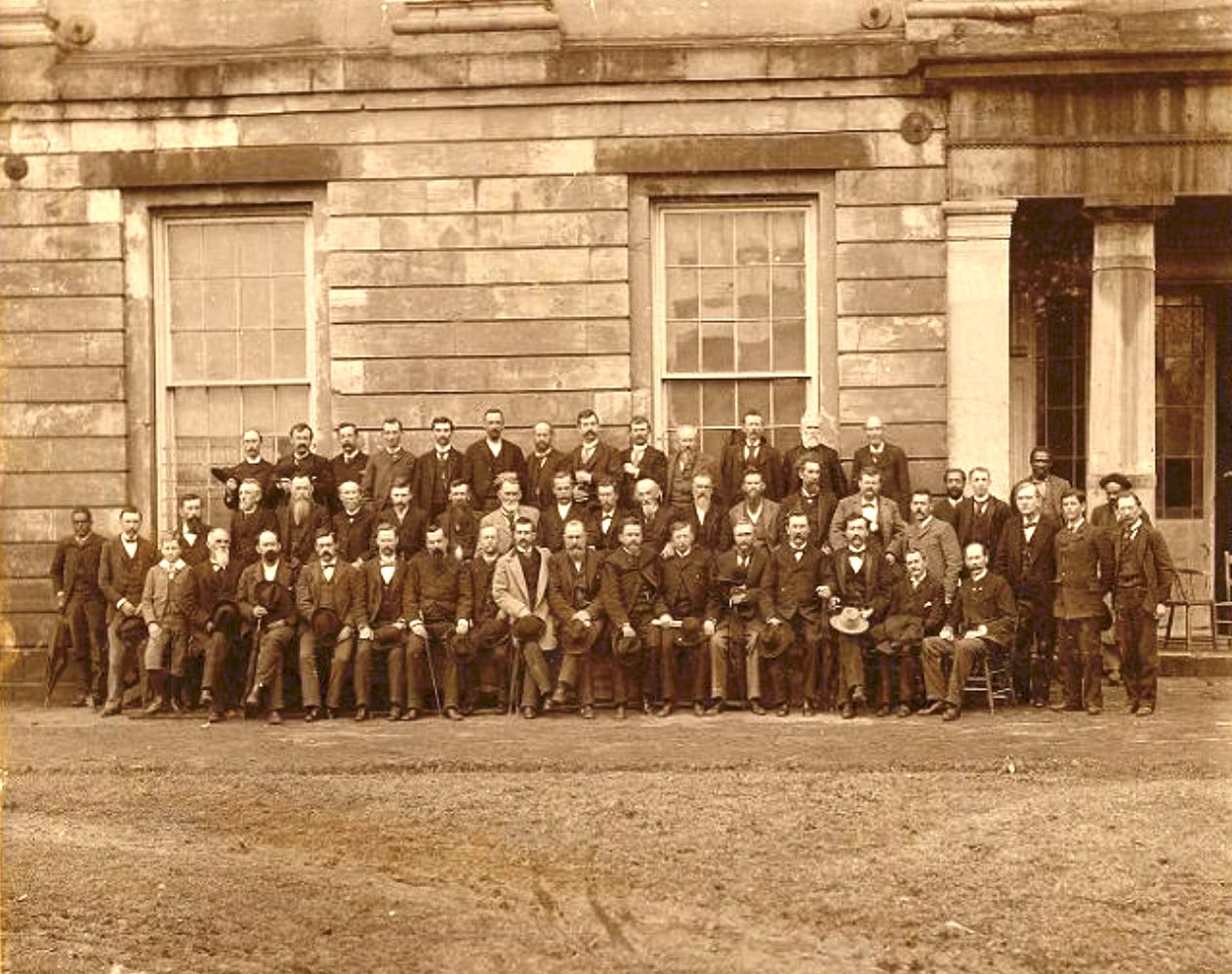
The 1890 constitutional convention met to remove Black Mississippians from the electorate by law, and it chose disenfranchising crimes accordingly, listing bribery, burglary, theft, arson, false pretenses, perjury, forgery, embezzlement and bigamy while leaving off murder and rape. All but one of those original offenses, the challengers wrote, remain in Section 241 today, so the convention’s design “remains almost completely intact.”
The state’s answer is that two amendments broke that link. In 1950, Mississippi removed burglary from the list, and in 1968 it added murder and rape. The courts that upheld the provision treated those changes, and the voters who ratified them, as evidence that a race-neutral electorate had since adopted the rule as its own. The challengers call that insufficient, arguing that adding two crimes and removing another cannot cleanse a scheme built for a discriminatory purpose when nearly all its original terms still stand.
The historical record tracks the challengers’ account of the origin. The Mississippi Supreme Court itself described the design in 1896, in Ratliff v. Beale, the same case that called the state’s poll tax “a clog upon the franchise.” The court wrote that the convention had aimed the disenfranchising crimes at the offenses to which it believed Black Mississippians were prone. The crimes were selected for who was thought to commit them, and the state has never disputed that beginning. The courts that upheld the provision rested instead on the changes since, treating the 1950 and 1968 amendments as enough to carry it forward.
A person who commits timber larceny by cutting down a $250 tree loses the vote for life. A person convicted of a drive-by shooting does not. State Rep. Noah Sanford, the Republican who chairs the House Apportionment and Elections Committee, made the point to a legislative panel. “You can marry two people, commit bigamy, you’ve lost your right to vote permanently,” he said. “If you kidnap someone, you don’t lose your right to vote.” The list is the surviving logic of the 1890 convention, widened over the decades by attorney generals’ opinions to include some 23 categories of crime and about 100 charges.
A disenfranchised Mississippian can regain the vote in one of two ways. Under Section 253, the governor can grant a pardon, or the legislature can pass a bill for that person alone by a two-thirds vote of both chambers. One estimate puts the number restored at close to zero in any given year. The burden falls hardest where the 1890 convention aimed it. Black Mississippians make up about 37 percent of the state but close to 60 percent of those disenfranchised under Section 241.
The federal challenge has ended, though not every justice let it pass quietly. When the court declined an earlier challenge to Section 241 in 2023, Justice Ketanji Brown Jackson wrote that the court had “missed yet another opportunity to learn from its mistakes.” The majority, for its part, pointed the challengers toward the state capitol, writing that any change should come from the legislature and not the courts.
After watching the broader restoration bill die, state Rep. Zakiya Summers (D-Jackson) said the failure and the testimony lawmakers had heard were “proof the system is broken.”
The legislature, the only body left that could change Section 241, declined to take it up, leaving the crimes selected during the 1890 convention to determine whether many Mississippians have the right to vote.
Image: The Mississippi Legislature poses before the Old Capitol, circa 1890 (courtesy Mississippi Department of Archives and History)
