


The public response to the 250th birthday of the United States has been largely muted, in stark contrast to the nation’s bicentennial in 1976, which was defined by an outpouring of national pride.
Celebrating the bicentennial got underway even before the official year, with a decade of planning and events leading up to it beginning in 1975. When 1976 rolled around, there was an onslaught of red, white and blue, with endless parades, festivals and expositions, Revolutionary War reenactments and pioneer wagon trains, commemorative tchotchkes and the spectacle of tall ships visiting harbors on the East Coast. Even Queen Elizabeth showed up for the national party. An official bicentennial logo adorned everything from soft drink labels to the Kennedy Space Center and team jerseys at the Super Bowl.
The semiquincentennial is a different story. The date arrives at a time when the nation is deeply divided and threatened by authoritarianism, which has left many Americans wondering what, exactly, there is to celebrate. The biggest official attractions are a lightly attended, second-tier fair on the National Mall and an extravaganza that has had difficulty attracting performers.
Yet something worth celebrating can be found within the nation’s conflicted history, and it is less about the founders’ intentions than the record of what the country has actually done, including hard-won correctives prompted by a long series of bad national decisions.
America’s historical record is basically two stories braided together. Beyond the impressive list of achievements, which include crafting the Bill of Rights, winning World War II and landing on the moon, one thread is that long series of flawed decisions by those in power, most of which turned on conquest, exclusion and repression. The other thread is the dissent those decisions inspired—the people in every generation who refused to sit idly by, who forced the nation toward the ideals it proclaims yet has often failed to deliver. Together, the entwined threads make up a bewildering, inspiring, uniquely American narrative.
Progress has come almost entirely from the second thread: the refusal to tolerate wrongs. There is uncertainty about whether that will continue to be the case—or how effective any form of resistance will be, which is no doubt part of the reason for the lack of commemorative enthusiasm, yet uncertainty and unpredictability are also defining national characteristics.
No state illustrates the pattern more clearly than Mississippi, which has served as the nation’s proving ground for both its worst instincts and the movements that ultimately overcame them. The state’s tendency to test the nation was there from the outset: The colonists who occupied future Mississippi were on the wrong side of history at the founding, with the majority taking a staunchly conservative position against the nascent United States.
In 1776, the Natchez District was a loyalist refuge in British West Florida that was drawing other settlers loyal to the Crown, on lands that were forcibly taken from indigenous people, a dynamic that would accelerate in the next century when the majority of Native Americans would be expelled from the state under forced treaties. The Revolution reached the region only once, in 1778, when an American raiding party led by Capt. James Willing forced the colonists to swear an oath not to take up arms against the United States, a pledge they abandoned the moment the raiders left. The following year Spain, at war with Britain but no friend of the American revolt, seized the lower Mississippi and held the Natchez District until ceding it to the United States under the 1795 treaty that fixed the nation’s southern border, with American officials taking control in 1798.
The founding itself carried a fatal flaw that would shape Mississippi’s later history: human enslavement. For all the nation’s achievements and its advancement of many rights, the land of liberty was built on Indigenous dispossession and slavery, the latter of which remained legal in the U.S. long after it was abolished across most of the developed world. Among Western nations, only Brazil practiced legal slavery longer, until 1888. For most of America’s first century, millions of people were held in bondage, and among the states, Mississippi held the highest share of its population, more than half, enslaved.
Dissent over human bondage ran nationwide, from slave revolts led by Gabriel Prosser, Denmark Vesey and Nat Turner to the abolitionist movement and, finally, the Civil War that brought emancipation. There were a few Mississippi outliers: Revolutionary War veteran Isaac Ross, who immigrated to the Mississippi Territory in 1808 and directed in his will, decades before emancipation, that his enslaved workers be freed and allowed to emigrate to a colony in present-day Liberia known as Mississippi in Africa, and Newt Knight, who formed the Free State of Jones in what is today Jones County, which renounced the Confederacy during the war.
Overall, though, the tenor was set by those fateful bad decisions. Mississippi was the second Southern state to secede from the Union in 1861, once again choosing to oppose the American nation, this time declaring its position “thoroughly identified with the institution of slavery.”
The founders’ declaration of independence had set the stage for dissent, which, in a bitter irony, would include both southern secession and the nation’s first great internal correction, Reconstruction, when the Thirteenth, Fourteenth and Fifteenth Amendments wrote emancipation, citizenship and the vote into the Constitution. For a few years after the war, a genuine multiracial democracy took shape in the South.
The reaction against that was swift and violent. Across the former Confederacy, white Democrats used terror and fraud to overthrow the multiracial government, including through the Mississippi Plan of 1874 and 1875, a campaign explicitly designed to restore white rule “peaceably if we can, forcibly if we must.” The federal government, exhausted by the war and its aftermath, let the reaction stand.
What the reaction could not complete by force it finished by law. Across the South, states wrote disenfranchisement into their constitutions through poll taxes, literacy tests and understanding clauses that never mentioned race because they did not have to. Mississippi’s 1890 constitution, under which the state still operates, was the template the rest of the South copied, and the Jim Crow architecture it built held for three-quarters of a century. The decision to exclude people was codified, the dissent against it driven underground for a generation, and the gains of Reconstruction rolled back almost entirely. It would be decades before the pendulum swung back.
The pattern repeated into the new century, and not only over race. The 1910s opened with the bombing of the Los Angeles Times building in 1910, when union ironworkers detonated explosives that killed 21 people and the newspaper’s anti-union owner used the attack to brand all organized labor as anarchist, helping break the city’s labor movement for a generation. Industrialists of the era wielded enormous influence over the government, which often answered labor unrest with brutal force and supplied bombs to subversives so they could be arrested for setting them off. In 1914, in one of the period’s more notorious episodes, company guards and National Guard troops attacked a tent encampment of striking miners and their families at Ludlow, Colorado, massacring roughly two dozen people, many of them women and children. Nationwide, courts and police were routinely turned against strikers and radicals, and even advocates of birth control were prosecuted under obscenity laws.
When the U.S. entered World War I, the federal government criminalized opposition to the war through the Espionage Act of 1917 and the Sedition Act of 1918, jailing socialists, pacifists and immigrants for the content of their speech. Presidential candidate Eugene Debs went to prison for an antiwar address and the post office banned use of the mail for dissenting newspapers along with periodicals about contraception. The decade closed with the anarchist mail bombings of 1919, which targeted officials including the U.S. attorney general and triggered the Palmer Raids, a nationwide dragnet that arrested roughly 10,000 people without warrants and ended with the deportation of hundreds. The raids were justified by warnings of an imminent revolution that never came, and as the government’s excesses became clear, public opinion turned against them.
Out of that backlash came a wave of new organizations devoted to social justice, labor reform, racial equality, public health and voting rights, among them the National Urban League, the organization that became Planned Parenthood, and the American Civil Liberties Union, founded in 1920 to fight the kind of abuses the Palmer Raids embodied.
Yet the same machinery that branded dissent as treason would return under Joseph McCarthy, alongside lynchings that terrorized Black communities and a series of assassinations that punctuated the midcentury. It was in this stretch that Mississippi assumed its preeminent role as a national proving ground.
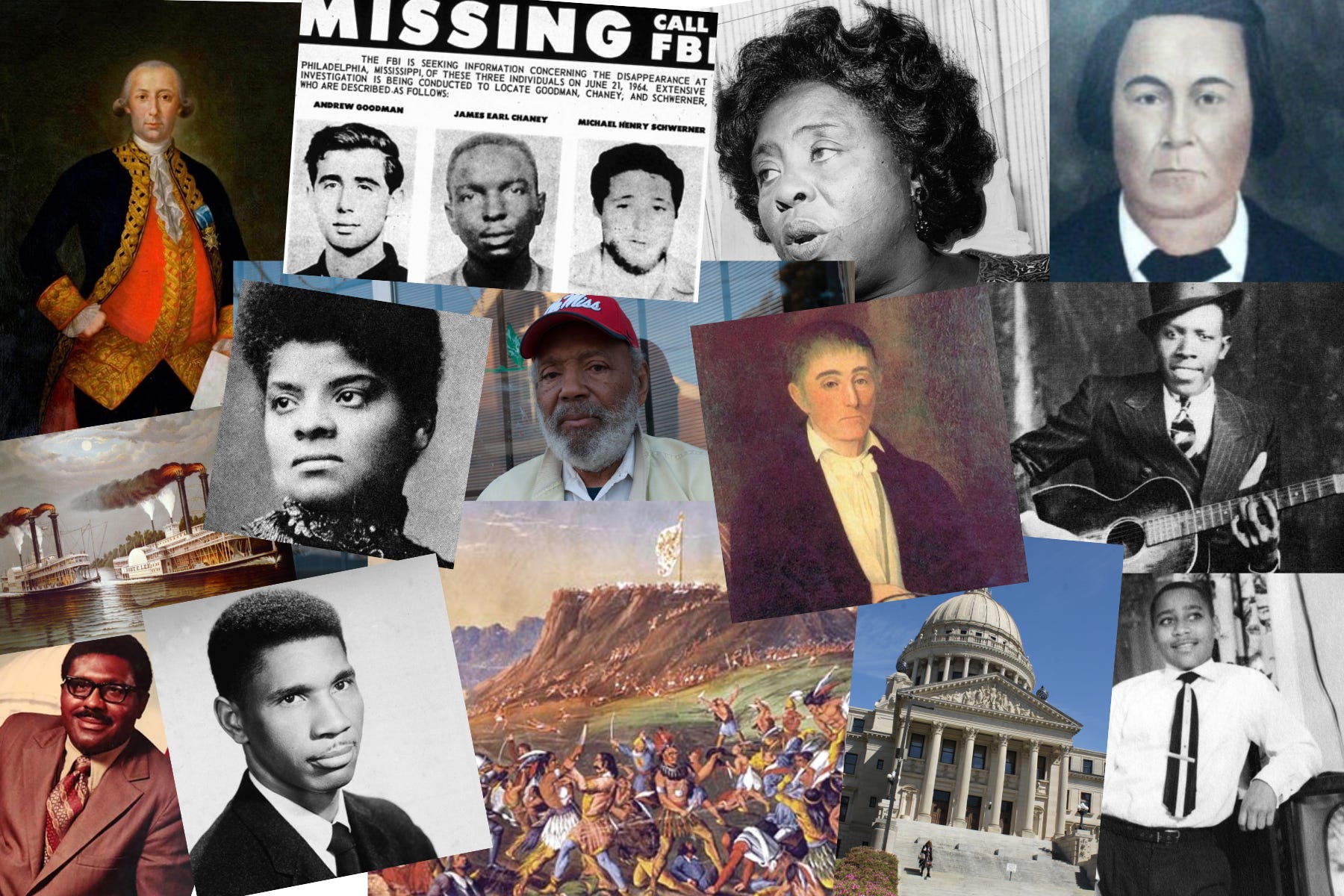
The American story of dissent surfaced most powerfully during the civil rights movement. The murder of Emmett Till, the assassination of Medgar Evers, the killings of Chaney, Goodman and Schwerner, the Freedom Summer registration drives and the Mississippi Freedom Democratic Party’s challenge at the 1964 Democratic convention were the movement at its most exposed and most consequential. The people who forced the nation to honor the Fifteenth Amendment did it against the worst the states could do to them, and the Voting Rights Act of 1965 was in large part a result of their work. This correction is among the clearest advancements in the entire 250 years that the country can unequivocally celebrate, and it belongs entirely to the dissenting story.
The temptation at an anniversary like this one is to flatten the two stories into a single comfortable one, about a nation that simply argues with itself and always has. But to flatten the story is to diminish it, and carries real perils. Secession and the Freedom Rides were both, in a sense, Americans defying the federal order. They were not morally equivalent. One defended slavery, the other demanded the right to vote. American history means nothing if the distinction between the decision and the refusal is allowed to dissolve.
The present looks less unprecedented held against that record. The nation is again arguing over who counts as a citizen and who gets to vote, again watching a government turn its power against citizens and others whom it treats as enemies, again seeing protests met with reactionary force. The killing of George Floyd in 2020 put millions in the streets demanding the country honor the equality it advertises—the same demand the marchers of 1965 and antiwar protesters in the latter part of the decade made. The assault on the Capitol on Jan. 6, 2021, sought to overturn an election by force—the same refusal of a lawful result that the Mississippi Plan perfected in 1875. Last year’s No Kings protests against executive overreach belong to the older tradition of dissent, not the reaction against it. The arguments of 2026 are the arguments of 1865 and 1919 and 1965 in new dress, and the threat to democracy that many describe as unprecedented has 250 years of precedent.
So, the question of what there is to celebrate has an answer, though it is not about sentimentality or forced national pride. Neither is it about decisions relative to slavery, secession, disenfranchisement or repression, nor the long national habit of choosing exclusion and calling it order. What is worth marking at 250 is the recurring fact that those decisions were never the last word, that someone in every generation refused them, and that what the country can take the greatest pride in was won by the people who did the refusing.
That is the part of the story that reads as true progress, and on the Fourth of July, it is the part worthy of fireworks.

Image: Montage of images of historical Mississippi figures and scenes, including, left to right, Spanish military leader Bernardo de Gálvez; Chaney, Goodman and Schwerner; civil rights leader Fannie Lou Hamer; mixed French and Choctaw chief Greenwood Leflore; steamboats racing on the Mississippi River; pioneering journalist, educator and civil rights activist Ida B. Wells; James Meredith, who integrated Ole Miss; Revolutionary War veteran Isaac Ross; blues musician Robert Johnson; Mississippi’s first Black congressman after Reconstruction, Robert Clark; Medgar Evers; Natchez Indians fighting French colonial forces; the Mississippi State Capitol; and Emmett Till (all via Creative Commons); woman with sparkler (Gerd Altmann via publicdomainpictures.net)
