

“Look around.”
“Pay attention.”
“Be mindful of where you are and who you are with.”
“Check in. With us. With yourself.”
For parents of Black children, these four statements represent routine guidance they give, part of “the talk,” a well-worn ritual of racial socialization that shapes how Black children and adults learn what it means to live and get by in a white-dominated society.
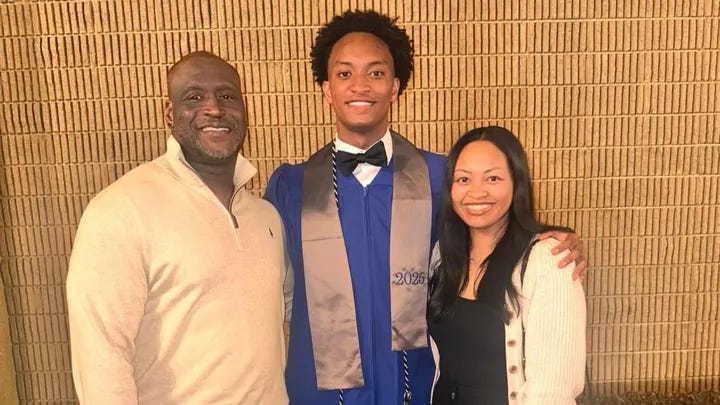
The recent death of 18-year-old Nolan Wells has brought the importance of the talk to the forefront of public discussion. Wells, who was Black, was on a boat trip along the Mississippi Gulf Coast with a group of white friends when he disappeared on July 4. Wells’ mother reported him missing later that evening, and a park ranger found his body on July 6.
Mississippi’s history of racist violence casts a long shadow and has fueled intense online speculation about what happened to Wells. So far, investigations are ongoing and the nature and cause of Wells’ death remain undetermined.
Alongside this speculation are reminders to parents of Black children about the importance of the talk.
“There is a unique burden that comes with raising Black children,” wrote blogger Maui Bigelow. “We spend years preparing them for situations we pray they never encounter.”
Yet, for all the discussion now about the importance of “the talk” in Black families, the research I and others have done shows that there is no analogous discussion in white families about race. In fact, research finds that white parents have few, if any, direct conversations about race and racism with their children.
When white parents do talk with their children about race and racism, research finds those parents often minimize and ignore the role of racism in daily life, or discuss it in vague and superficial terms.
Making sense of white racial status
I’m a sociologist of race and racism. For the past five years I’ve been studying white people to understand how they make sense of their white racial status. My research focuses on white people living in the U.S. South because that region, more than any other, is responsible for creating and sustaining Americans’ shared ideas about race and its significance, including what it means to be white.
My team of graduate student researchers and I have interviewed well more than 100 white Southerners between 18 and 88 years old, the majority of whom live in Mississippi. With a median age of 42 years old, about a third of those we spoke with were raising children of their own. Another third had children who were grown and living on their own.
In our interviews we asked these white Southerners to tell us whether and how they talked about race with their children, including what it means to be white. We also asked everyone we spoke with whether and how their own parents talked with them about race and what it means to be white.
About 30 percent of those we spoke with said they never talked about race, either with their parents or with their own children. Gail, 56, said she “never wanted to make it a thing” for her six children. And 41-year-old Michael said that he and his wife don’t talk to their kids about race because his parents did not talk with him about it when he was a child. “Race is just a descriptor,” Michael told us.
Jayne, 63, also said she never talked about race with her parents or her own children. But as we talked more, it became apparent that Jayne’s parents did talk with her about race.
Jayne recalled her mother being “scared of Black men” because of a lynching that took place in her hometown when her mom was a child. “She heard stories about what this Black man had supposedly done,” Jayne told us. “It left her with that fear.” Jayne knows this story because her mother told it to her, putting the same fear in Jayne that was put into her.
Race-neutral language obscures reality
Jayne’s recollection of what her mother taught her was similar to the explicit racism received and taught by about 10 percent of those we spoke with.
Seventy-one-year-old Shirley didn’t remember her own parents talking with her about race. When it came to her own children, though, Shirley taught them “to always be polite and treat people well.” But when it comes to marriage and family, she told them to “stay with your own.”
Antonio, 87, raised three children. He taught them that “they don’t need to go anywhere or do anything with Black kids, just to stay with the whites.”
The largest share of those we spoke with—about 44 percent—recalled conversations with their parents or their own children where racism was minimized in favor of language that encouraged seeing people as “just people” and not as members of racial groups.
Lyle, 68, taught his children that, “We’re all God’s children, there’s nothing special about us.” Fifty-year-old Leanna teaches her children that everyone is created “equal in dignity” and that race doesn’t matter. And 45-year-old Ned tells his children, “We’re all humans. And just because I come from a different place, or have a different skin tone… we’re all different in some way. You’re unique.”
On the surface, this race-neutral language appears nonjudgmental and even ideal. Yet Americans live in a social world in which racism remains powerfully stitched to the daily fabric of their lives, structuring where people live, the schools they attend, the places they work and the people with whom they interact.
In this context, I and others argue that race-neutral language obscures the reality of racism and works directly against efforts to meaningfully address concrete racial inequalities.
Functionally speaking, race-neutral lessons have the same effect as the more explicit racism taught by a smaller share of white parents to their children.
When white parents tell their children that race does not matter, they are implying that racism does not exist. And so their children may fail to understand how their own life chances are shaped by the same racist forces that limit opportunities for others who are not white. Importantly, they may fail to understand the role they can play in challenging racism within their own lives.
The talk for white children
Would things have been different if Wells’ friends had been well versed in Mississippi’s history of racial violence, including violent backlash toward integration? Or if they had considered the concerns many Black parents have of their children navigating all-white spaces? We don’t know the answer, nor whether their parents did talk to them about this history.
To be clear, this is not to claim that Wells’ death was the result of racial violence, but rather to acknowledge that the minute Wells stepped onto a boat as the only Black person in his group of friends, the underlying racial context was established. Based on my research and the research of others, that context was also likely misunderstood or not understood at all by his white friends.
Having “the talk” with white children entails talking plainly with them about what it means to be white. This includes explaining to them why they grow up in mostly white neighborhoods, attend mostly white schools and have few nonwhite friends.
Having this kind of plain talk with white children can better equip those children to recognize white-dominated spaces, the challenges Black children face while navigating them, and what white children and adults can do to help.
This article is republished from The Conversation under a Creative Commons license. Read the original article.
Maybe parents of any race, anywhere, ought to let children figure out race issues for themselves as opposed to "talking about race" and instilling personal bias. Race relations or whatever maybe the contemporary term, varies greatly from one location to another. If you have been around the numerous communities in Mississippi you would know that. Let children who become adults figure out race and how they wish to conduct their lives according to their circumstances. With regard to Mississippi's history of racial violence, its the failure of the school systems not to teach that history or the history of other inhumanity towards those that are different. Let us learn from all the bad histories and not assume present relations, behavior and actions are endemic.