


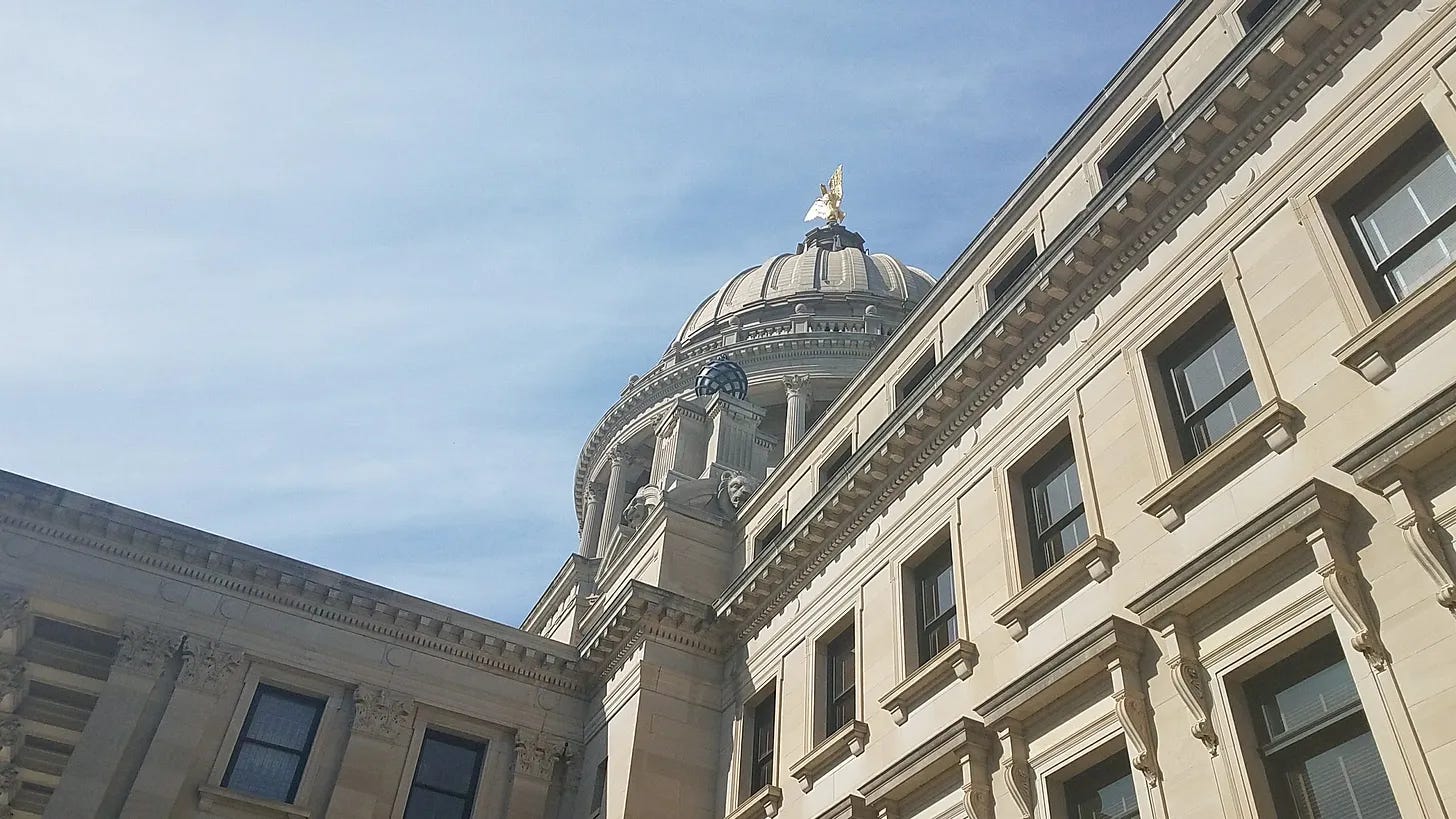
Mississippi legislators worked through Sunday evening on March 29, 2026, to adopt the bulk of a roughly $7.4 billion state budget for Fiscal Year 2027, advancing dozens of appropriations conference reports ahead of today’s deadline for final adoption and averting a repeat of last year’s budget collapse.
The Senate reconvened Sunday afternoon and unanimously approved funding for a $2,000 teacher pay raise—the first salary increase for K-12 educators since 2022—as part of an education appropriation expected to total approximately $3.4 billion.
Both chambers also approved $1.17 billion for the Mississippi Division of Medicaid, which had warned lawmakers for months that the exhaustion of federal COVID-19 relief funds left the agency facing a funding cliff without a significant increase in state dollars.
The budget work came during what is typically described as “conference weekend,” the annual stretch of late-session negotiations when House and Senate conferees reconcile competing versions of the appropriations bills that comprise the state budget.
Conference reports on appropriation and revenue bills were due by Saturday at 8 p.m., with March 30 set as the deadline for final adoption. The regular session is scheduled to adjourn by April 5.
Smaller teacher pay raise than either chamber initially proposed
The $2,000 teacher pay raise represents a significant retreat from the ambitions both chambers expressed earlier in the session. The House had proposed a $5,000 immediate increase, with an additional $3,000 for special education teachers. The Senate countered with a $6,000 raise phased in over three years at $2,000 annually. Each chamber killed the other’s proposal before reviving its own through procedural maneuvers—a pattern that has defined the 2026 session. The final compromise settled at $2,000, with competing budget demands, including the Medicaid appropriation, cited as the constraining factor.
The outcome disappointed educators. Mississippi teachers are the lowest paid in the nation on average, and the Mississippi Department of Education has reported rising teacher vacancies statewide. The last meaningful raise, approximately $5,100 in 2022, was quickly offset by inflation and health insurance premium increases.
Special education teachers, assistant teachers, speech therapists, and school psychologists will receive the same $2,000 increase. Special education teachers will receive an additional $2,000 supplement, totaling $4,000. School attendance officers will receive a $5,000 raise, with funding for nine additional positions to bring the ratio to one officer per 4,000 students statewide.
Medicaid drove the budget math
The Medicaid appropriation was among the more closely watched line items of the session. The Division of Medicaid’s own January budget presentation to the Senate Appropriations Committee put its FY 2027 state support request at $1.36 billion—roughly $390 million more than its current-year appropriation—after exhausting a reserve of pandemic-era federal dollars that had cushioned the agency’s budget in recent years. The governor’s office proposed a lower figure of approximately $969 million, close to last year’s appropriation, while the Senate initially proposed $1.07 billion. The $1.17 billion figure approved by both chambers Sunday represents a substantial increase but still falls short of what agency officials said they needed.
Senate Appropriations Chair Briggs Hopson had called Medicaid the session’s biggest wildcard. Federal Medicaid law does not allow states to negotiate the prices of services, leaving the legislature to estimate costs that fluctuate with enrollment and utilization. The agency’s enrollment peaked at 904,000 during the pandemic before falling to approximately 697,000 by December 2025 as post-pandemic redeterminations took effect.
Avoiding last year’s failure
The Sunday votes marked a departure from the dysfunction that has plagued budget-setting in Jackson for three consecutive years. In 2025, the House and Senate could not agree on a budget during the regular session, forcing Gov. Tate Reeves to call a special session that cost taxpayers an estimated $100,000 per day. House Speaker Jason White had refused to participate in “conference weekend” last year in protest of what he described as a broken process. This year, appropriations leaders signaled optimism earlier in the week that the two chambers were negotiating in good faith, and WLBT reported that behind-the-scenes discussions on teacher pay and PERS had been ongoing even as bills appeared stalled on the calendar.
The FY 2027 budget of approximately $7.4 billion represents a slight increase from the $7.3 billion enacted for FY 2026. The Joint Legislative Budget Committee’s initial recommendation had left $449.7 million in General Fund dollars available for appropriation beyond the committee’s baseline spending plan. The state had entered the session with approximately $1.5 billion in cash reserves plus another $700 million in the rainy day fund, though legislative leaders have warned against increasing recurring spending as the flow of federal pandemic dollars dries up.
What remains
Several major policy items were still being negotiated or had died by Sunday evening. Efforts to address the Public Employees’ Retirement System’s $26.5 billion unfunded liability stalled after the House and Senate failed to agree on a funding mechanism. The Senate had proposed a $500 million cash infusion followed by $50 million annually for a decade. The House pushed for a dedicated recurring revenue stream, including a proposal to legalize online sports betting and earmark the proceeds for PERS. The legislature did create a new fifth tier in the retirement system for state employees hired on or after March 1, 2026, with reduced defined benefits and no cost-of-living adjustment.
House Speaker White’s signature priority—expanding school choice to allow public dollars to flow to private schools—was killed by the Senate Education Committee on the first day that it was eligible for a vote. Reeves, who had championed the effort, saw school choice stall amid uncertainty about whether it might resurface in a potential special session.
The Mississippi Legislature still faces deadlines this week on general bills and constitutional amendments before the session’s scheduled close on April 5.
Image: Mississippi State Capitol (R.L. Nave)
