


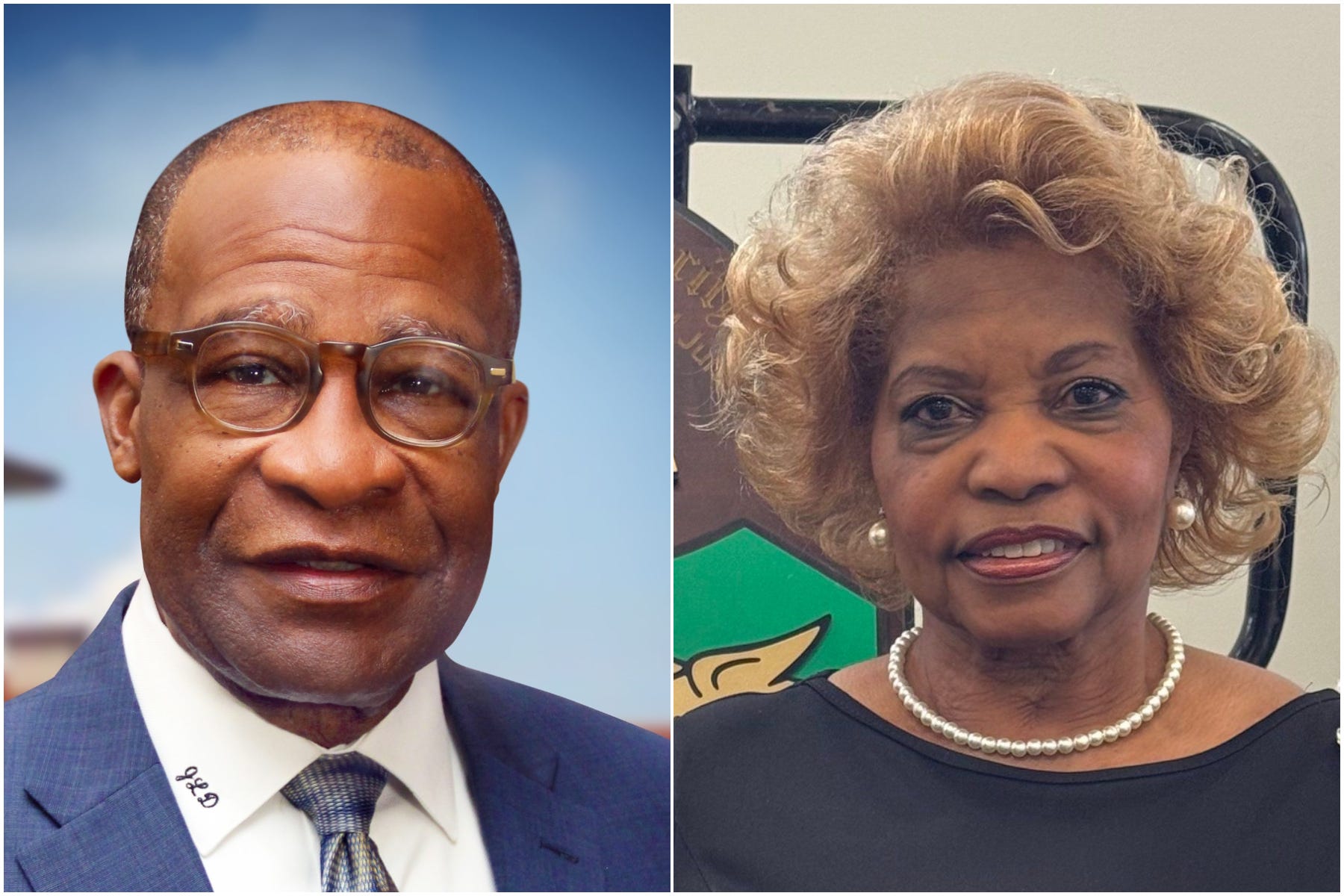
A Republican state senator filed a resolution that would rescind the election of two Black state senators if the Supreme Court guts Section 2 of the Voting Rights Act.
The move, which failed in committee, illustrates how the pending Supreme Court decision in the Louisiana v. Callais case could be used to disempower minority voters.
Sen. Jeremy England, a Republican from Vancleave, filed a joint resolution Sunday that would have automatically reverted Mississippi’s Senate district maps to the lines a federal court already ruled violated the Voting Rights Act—eliminating the districts held by senators Johnny DuPree and Teresa Isom—if the U.S. Supreme Court rules against the VRA in Callais.
Joint Resolution 201, which was killed in the Rules Committee the day it was filed, proposed to amend the 2025 remedial redistricting plan that a three-judge federal panel ordered after finding that the Mississippi Legislature’s 2022 maps diluted Black voting strength in violation of Section 2 of the VRA.
Video: What dismantling of Voting Rights Act could mean for you
The resolution reproduced the full text of the current court-ordered maps but added a single trigger provision at the end: If the Supreme Court issues a final decision in Callais holding that Louisiana’s congressional redistricting plan “violates the U.S. Constitution or is nonjusticiable,” then the current state Senate districts “shall be superseded” by Joint Resolution 202 of the 2022 Regular Session—the maps the court struck down.
The 2022 maps did not include the majority-Black districts in DeSoto County and the Pine Belt that DuPree and Isom now represent. Reverting to those maps would eliminate Senate District 2, won by Isom with 63 percent of the vote in DeSoto and Tunica counties, and Senate District 45, won by DuPree with 71 percent in Forrest and Lamar counties. Those victories broke the Republican supermajority in the Senate for the first time since 2019. Both senators were sworn into office on Jan. 6, 2026, less than three months ago.
Callais was reargued before the Supreme Court on October 15 and a final ruling is widely expected to limit or eliminate Section 2’s application to redistricting. The Court’s August 2025 supplemental briefing order asked parties to address whether the intentional creation of majority-minority districts violates the Fourteenth and Fifteenth Amendments. Mississippi has separately appealed the three-judge panel’s ruling to the Supreme Court.
England’s resolution was the first legislative action to explicitly tie Mississippi’s redistricting to the outcome of Callais. Under the Mississippi Constitution, legislative redistricting is accomplished by joint resolution and is not subject to the governor’s veto. The constitution also permits redrawing state legislative lines at any time mid-decade. That the resolution was killed in Rules does not preclude the effort from being revived in the remaining days of the 2026 session, a special session, or the 2027 session that coincides with statewide elections.
On election night last November, the Mississippi Republican Party called the court-ordered districts the product of “a misapplied federal statute that has been weaponized by interest groups.”
This is a developing story that we will update with comments as we get them.
Image: State Sens. Johnny DuPree and Teresa Isom (via Facebook)
