


A tangle of winter rules and utility-run charity programs governs how Mississippi’s poorest residents keep the lights and heat on—policies that often intensify hardship while reinforcing utility companies’ bottom lines.
As dangerously cold temperatures have returned to parts of Mississippi, the nation’s poorest and most energy-insecure state has entered the season when thousands of low-income people and families brace for the moment their electricity might flicker out. The Mississippi Emergency Management Agency issued a cold weather alert for Dec. 14-15 with wind chills as low as the single digits.
Household budgets are stretched thin by inflation, Christmas shopping and heating bill increases, while assistance to keep the power on from federal, state or charitable sources becomes harder to secure because of high demand. This is when Mississippi’s winter protections against its residents’ power being shut off kick in, ensuring that electric and gas customers who are behind on their bills aren’t left in potentially freezing and dangerous conditions.
Energy utilities are barred from disconnecting their customers in extreme financial difficulty between Dec. 1 and March 31 if those customers qualify for what’s known as the mid-winter rule, according to the state’s Public Service Commission (PSC), an elected body of three officials that regulates essential public utilities and acts as a watchdog to balance consumer and corporate needs.
But what looks like a progressive safety net designed to give struggling low-income families a break can actually increase the financial pressure on them.
“Policies like this are weaponized against families who have already endured years of suffering without basic necessities,” said Nsombi Lambright-Haynes, executive director of One Voice, a Jackson-based nonprofit that works with vulnerable communities. “They’re already getting paid the lowest wages in the poorest state and enduring some of the highest power bills in the country.” She added: “It’s one thing after another for working families in Mississippi.”
Regardless of when the customer applies for the mid-winter rule during the four coldest months, they must first pay off every dollar they owe their energy provider accumulated before Nov. 11, according to PSC rules. Once they’ve done that, the customer must agree to pay 133 percent of their average monthly bill until they’ve paid off any debts accrued after Nov. 11. One missed payment triggers a five-day cutoff notice.
In effect, the poorest customers in one of the poorest states must pay more to keep the power on at the moment they can least afford it.
Nation’s epicenter of energy hardship
Mississippi’s energy insecurity is more extreme than other states.
Federal data show that 44.5 percent of Mississippi households—the highest share in the country, report making major financial sacrifices to pay their energy bills. Roughly 33.4 percent of Mississippians—also at the top of the list nationally—say they were unable to pay part or all of a utility bill during the past year. State residents are the third most likely to keep their homes at unhealthy or unsafe temperatures. Most are in low-income Black families, according to a 2025 national study published by Energy Research & Social Science.
And the high costs are getting worse. Utility rates have risen substantially nationwide due to a number of political and industry-related issues, while fuel volatility and the increasing burden of modernizing aging grids adds to customer costs. But Mississippi also faces another, more modern pressure: the power demands and infrastructure needs of datacenters. Those added costs, which include subsidizing highly favorable industrial and commercial energy rates, are often spread across all ratepayers, even those who can scarcely afford to pay for their own energy use.
The main federal safeguard against winter shutoffs is the Low Income Home Energy Assistance Program, or LIHEAP, which is chronically underfunded, reaching only about 17 percent of eligible households, many of which also face food insecurity. This winter, it’s even more fragile: The Trump administration fired the entire LIHEAP staff and has sought to fully cut the program in the president’s budget. While Congress has indicated it will continue funding the program, it’s currently only funded through Jan. 30, 2026. Any further federal shutdowns could leave Mississippi families in crisis before help arrives.
For middle-income families, the cost increases may sting, but for low-income households, they can be the difference between heat and being cut off.
“When you look at energy policy as a whole, politicians have failed to hold our utility companies accountable to making sure families come first,” Lambright-Haynes said. “Everything about this state says that businesses and corporations come first, and families come below that.”
There is currently no data collection of who and how many people are cut off from their power each year, so it’s hard to gauge how these rules, programs and charitable donations help people get back on a steady footing. In the offices of county-level nonprofits, it comes down to firsthand observation.
“People are really struggling right now,” said Ron Collier, executive director at the Meridian-based Multi County Community Service Agency, a private nonprofit that assists low-income people in nine Mississippi counties with a range of services, including tax assistance, FEMA applications and accessing the Low Income Home Energy Assistance Program. “But we know things are bad when there’s an inflection point and we start helping people who have never needed help before and are above the poverty guidelines for certain programs. We can’t easily help them,” Collier said.
The state also has a winter temperature-based protection against losing power. Customers cannot be cut off for non-payment if, before 8 a.m. on the scheduled disconnection day, a freeze warning has been issued by the National Weather Service for the specific county they lives in, note PSC rules. But the protection lifts as soon as the warning does and the power isn’t coming back on if another freeze warning is issued in the days and weeks ahead.
Mississippi also has some summer protections, but as Collier pointed out, winters are usually when people are in greatest need. “The winter months are the worst because of the severity of the weather,” he said. “In the summer, you can raise a window and get a breeze.”
“But cold is cold,” Collier added, noting that when some people have a problem with their heating, which he said is quite common, they often turn on the oven, which costs more and can move them closer to being cut off in the winter. Using an oven for heat is also unsafe.
There is a medical emergency brake if a customer fails to stick to the winter-rule repayment plan. If a licensed physician certifies that disconnection would create a medical emergency, utilities must delay termination between Dec. 1 and March 31.
There’s a similar all-year round cut-off protection known as the Life Threatening situation rule. That protects customers for 60 days if there’s written notice from a doctor certifying that disconnection would create a life-threatening situation for the customer or someone who lives at that residence.
In practice, all these protections are inconsistently explained on utility websites and sometimes narrowed in scope by the utilities themselves. In some cases, utilities don’t mention any of them, or how to get help.
“I don’t think it’s deliberate,” Lambright-Haynes said. “But they certainly don’t go out of their way to put the right information online. That’s part of what makes these cutoffs so punitive. They don’t tell vulnerable families about the rules and then don’t give any leeway.”
Several utility companies, including Spire, Delta utilities, Starkville Utilities and Mississippi Power, either have nothing online about the winter cutoff assistance or use language that appears at odds with the PSC’s general cutoff protection rules or notes completely different eligibility.
Many smaller utilities and cooperatives offer little publicly accessible guidance at all.
These inconsistencies and lack of visibility matter. If a customer applies for a benefit after the cutoff deadline or their power is already cut off, they are ineligible. The help must be requested proactively, ahead of the crisis. To get the power back on, they’ll need to pay up.
“Utilities must follow PSC rules on disconnection protections, but the commission does not dictate website format or placement,” said Rachael Ring, director of public affairs for the Mississippi Public Service Commission, who noted in an email that clarity and consistency vary among utilities. “However, we strongly encourage all utilities to publish these protections and make them readily accessible to the public.”
Customers are free to negotiate payment plans, Ring said. “Nothing prevents the utility or customer from agreeing to a payment plan more acceptable for the customer.”
Utilities turn charity into revenue
When winter rules fail, many Mississippi families turn to utility-sponsored charitable programs, help that can keep someone warm or safe but also reveals a structural irony.
Entergy’s Power to Care and Mississippi Power’s Project Share invite customers and employees to donate toward helping elderly or disabled residents in crisis. Those donations are collected by the utility, then given to contracted nonprofits, such as the Salvation Army, United Way, the New Orleans Council on Aging, or Project C.A.R.E. of Texas.
The nonprofits ultimately decide whose utility bills to pay off with the donations.
But here’s the kicker: The nonprofits only pay off the bills of customers who have an account with the utility that donated the money. In all verifiable examples, those charitable donations are routed back to the same utility that promoted the program and collected the customer donations.
Entergy notes that it charges no administrative fee and receives no compensation for this service in its terms and conditions. Its shareholders match donations up to $1 million. The customer donations from the utility are only tax-deductible for the customer, not the utility.
But the practical reality is clear: Utility customer donations become utility company revenues, while the venture is framed as corporate benevolence.
In a state where more than a third of people struggle to pay their utility bills, does it really matter how the money is funneled into struggling customers’ accounts?
“If you have a client that’s willingly donating to a program and they have a clear understanding of what is going to occur with those dollars, why not?” Collier asked. “It would cause an adverse situation if the utility didn’t gather those funds, the nonprofits take no dollars, and the client gets no money and the power gets cut. You have to look at it from more than just one perspective.”
Mississippi’s patchwork of winter rules, medical exemptions and charitable programs can give the appearance of a substantial safety net. But to the advocates who work closest with families in crisis, the pattern is disturbingly familiar. The system is built to protect the utilities’ bottom lines and leaves the poorest residents to navigate a maze of requirements that most will never be able to meet.
“There used to be a better system,” Collier said. “One that didn’t abandon impoverished people.” He noted that politicians and regulators could help by curbing how quickly utilities push fuel costs onto customers, while also modernizing cutoff protections and ensuring that people are paid a fair wage so a cold front doesn’t become a financial emergency. At least, he said, there should be basic clarity on the utility’s websites about who can get help and when.
But, Lambright-Haynes observed, “It’s not likely to get better. There’s less assistance than ever and often no way out of this utility poverty cycle.”
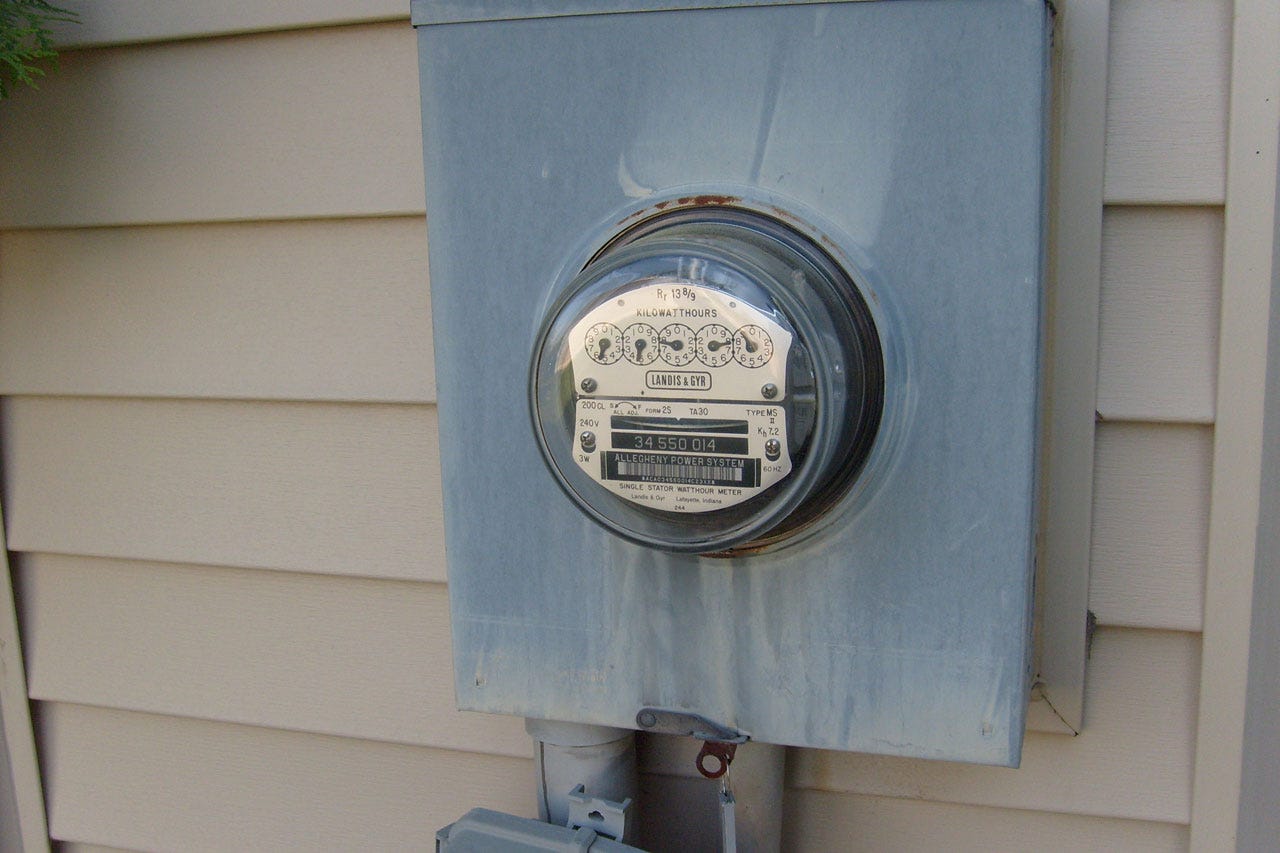
Image: Electric meter (via Creative Commons)
