

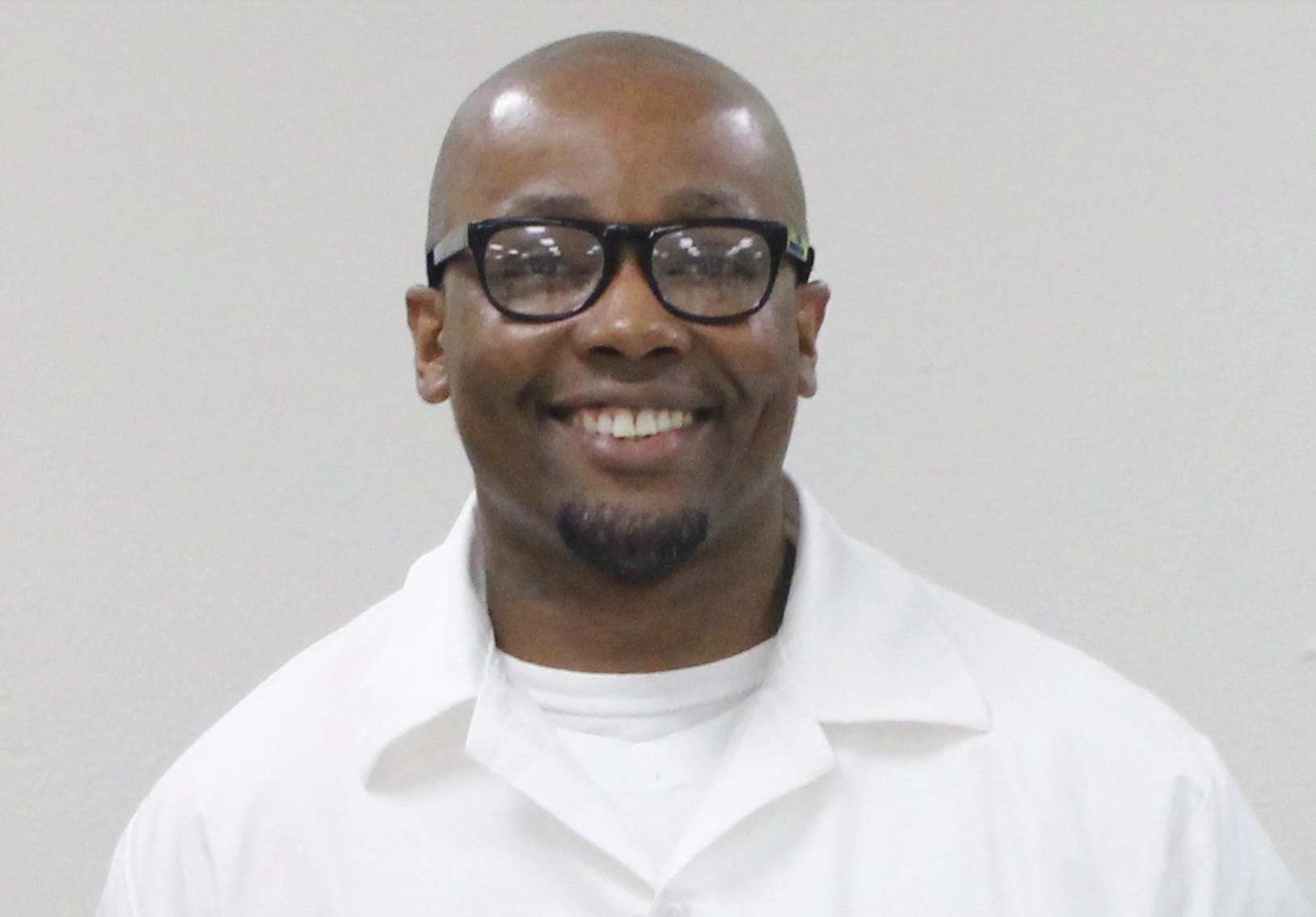
by Wesley Ellis Jr.
I saw X-Man walking back toward his cell, shaking his head. There was something different about his expression. I smiled and asked, “You OK, man?”
With a look of frustration he said, “No. And you’re not, either.”
I smiled again and asked, “What’s wrong with us, then?”
He let out a deep breath and said, “The lawmakers killed a bill that would have helped us get to a parole hearing. As soon as it hit the floor, it was snuffed out.”
The bill, he explained, would have provided the possibility of parole for people like us who have spent years, even decades, trying to prove to ourselves and to society that we are not the same people who committed the crimes that landed us in prison. X-Man pointed out that many of us have changed the course of our lives. We have taken responsibility and worked to better ourselves and others, and we simply want the opportunity to stand before a parole board and demonstrate who we have become.
Yet a measure to provide that possibility had failed.
Even hearing about the bill, I felt a familiar, brief spark of excitement. There were still possibilities. Then, just as quickly, it faded. I have lived with that feeling for decades. For people serving long sentences, it is not so much “wars and rumors of wars” as “progress and rumors of progress.”
Every legislative session prompts conversations inside the prison walls about criminal justice bills. Someone hears about a new bill. Someone says lawmakers are finally looking at sentencing reform. Someone says there may be an opportunity for people serving life or lengthy mandatory sentences to have their sentences reevaluated. Hope begins to spread. Men begin to wonder. Families begin to dream.
Then the session ends without any change and many of our hopes and dreams evaporate.
For 25 years, I have watched this cycle repeat itself. I have seen men cling to the hope that Mississippi will recognize what many of us have spent decades trying to prove: that people can change. The Mississippi Second Chance Act, House Bill 1517, was the latest failure. Introduced during the 2026 legislative session, it would have granted violent offenders and others who face long sentences, including life, the chance to appear before a parole board, with certain stipulations. But it died in committee. For people like X-Man and me, it would have provided an opportunity to demonstrate that we have turned our lives around, and its failure was deeply disappointing.
I understand and respect the responsibilities that Mississippi lawmakers carry. Criminal justice decisions are not easy. Legislators must consider public safety, victims, communities and the concerns of the people they represent. For that reason, I am particularly grateful to the legislators who supported this measure and were willing to fight for it, specifically its cosponsors, state Rep. Cheikh Taylor and state Rep. Fabian Nelson. Regardless of the outcome, they were willing to start a difficult conversation, to ask whether Mississippi’s criminal justice system should recognize the possibility of transformation after decades of accountability and change.
A second chance does not mean forgetting the past. It does not erase victims or minimize the pain caused by crime. It does not discount responsibility. A second chance means recognizing that accountability is not only about punishment—it should also address growth, change and the process of transforming convicted criminals. I am acutely aware of this process. I am not the same 21-year-old man who committed the crime that landed me in prison. The choices I made damaged many lives, including my own, and I have spent the last 25 years accepting responsibility for those choices and working to become a different man. Through faith, education, ministry, mentorship and service, I have tried to make my life mean something beyond my most grievous mistake, which I do not seek to minimize. I have watched other men do the same. I have seen them pursue education, mentor younger offenders and dedicate themselves to ministry, rehabilitation and helping others to avoid the mistakes they made.
We cannot change the past, but our hard-fought accomplishments should matter when considering the future. Rehabilitation is based upon the belief that people can change. If a person is never given the opportunity to demonstrate that change, we must ask ourselves what rehabilitation—and, on a more profound level, what redemption—truly mean. The Mississippi Second Chance Act did not ask society to forget. It asked society to evaluate new possibilities—for itself and for people like us who strive for the opportunity to become productive members.
I have spent enough time in prison to understand that people do change within these walls. Some change for the better. Others change for the worse. Some lose pieces of themselves that they may never recover. Some become harder, more suspicious and more willing to respond to everything with anger. Others spend years trying to undo the thinking that brought them to prison in the first place. That process is not easy. Sometimes the hardest part is learning how to live differently in an environment that does not always reward change.
Mississippi stands at a critical crossroads in its criminal justice system. While other states have embraced bold reforms that recognize the power of rehabilitation, Mississippi has chosen instead to double down on outdated policies that keep behind bars the very people who have proven they are capable of change while releasing others who are far more likely to return.
The irony is clear: Mississippi has a three-year inmate recidivism rate of a little more than 34 percent, which means that more than one in three individuals who leave prison will come back. National research shows that recidivism declines significantly with age and that lifers who have served 20 years or more and maintained strong institutional records are among the least likely to reoffend. Many of these people are men and women who have spent decades reshaping their lives, mentoring younger inmates and preparing, hopefully, for a future outside the prison walls. Yet, Mississippi offers no real path for them to parole.
I know this firsthand. I am 46 years old and have been incarcerated in Mississippi since the age of 21, serving a life sentence for a violent offense. I am currently incarcerated at the Wilkinson County Correctional Facility, a privately run state prison near the town of Woodville that houses more than 900 offenders. At the time I committed my crime, I was a young man lost in the chaos of my own brokenness. But since then, like many others in my position, I have refused to let my worst mistake define the rest of my life.
By the age of 25, I had earned my GED. From there, I began a long journey of rehabilitation and growth. I entered and completed several faith-based programs, became a model inmate, and began mentoring younger men who were just beginning their sentences. I joined the prison choir and eventually became a choir director. I trained as a character coach, completed multiple vocational classes, and most proudly, earned a bachelor’s degree in Christian ministry from the New Orleans Baptist Theological Seminary.
Today, I am enrolled in Southwest Community College and serve as a program facilitator for two mentorship programs at my facility. I have had no rule violation reports during the entire 25 years of my incarceration. I have completed a restorative justice program called Bridges to Life, which focuses on helping victims heal, rehabilitating offenders and making our communities safer. I am currently working on my own victim-offender dialogue initiative aimed at healing and accountability. I serve as a field minister responsible for planting and pastoring churches inside correctional institutions and work as an editor of an inhouse magazine, using my words to speak the truth about healing and hope.
Despite my nearly two and a half decades of transformation, mentorship and service, the State of Mississippi provides no legal mechanism for someone like me—even with an impeccable record—to be considered for parole.
In Louisiana, where Mississippi’s current corrections commissioner Burl Cain once served as warden at Angola prison, he introduced innovative reentry and educational programs, faith-based initiatives, vocational training and structured release opportunities that reduced violence inside the prison and helped prepare incarcerated people for success on the outside. Other states took notice: New York and California have since established parole review processes for long-term offenders that carefully evaluate rehabilitation and community support networks. These programs are not lenient. They are pragmatic. And they work.
Mississippi has not followed suit. Despite Cain’s efforts to bring proven reforms from Louisiana to Mississippi prisons, lawmakers have consistently shut down legislation that would allow long-serving offenders even a chance at review. From the inside, it feels as if the state is disinclined to lose its “livestock”—individuals who are kept in the system, filling beds and fueling a prison economy—rather than acknowledge that they have paid their debt and turned their lives around.
Here lies the true paradox: Mississippi often releases individuals who have shown little evidence of change, who “check the boxes” in reentry programs but return to society still battling addictions, untreated trauma or criminal thinking. Unsurprisingly, many of these people reoffend, sometimes committing worse crimes. Meanwhile, people who have served two, three or even four decades with exemplary records, who have earned degrees, taught classes and mentored others, are told that there is simply no legal pathway for considering their release. I have watched this happen over and over. And each time, it reinforces a painful truth: Mississippi is releasing the least prepared while continuing to incarcerate the most reformed.
This approach carries both a financial and a moral price tag. Housing one incarcerated individual costs Mississippi taxpayers about $51 per day, which adds up to tens of thousands of dollars per year. For someone who has spent 25 years in prison without a single disciplinary infraction, the continued expense borders on absurd. More importantly, though, it ignores the very ideals of justice and redemption.
Other states provide examples of how second chances, when properly structured, do not jeopardize public safety, and in fact enhance it. California’s Elderly Parole Program allows inmates over the age of 50 who have served 20 years to be considered for release. New York has programs for granting parole hearings to those who demonstrate extraordinary rehabilitation after having served long sentences. Mississippi does not. These programs are not aimed at blanket releases. They provide for structured, evidence-based reviews.
Mississippi could take a bold step forward and change the narrative though initiatives whose success is proven by doing the following:
Creating a long-term rehabilitation review board to allow individuals with life sentences to apply for parole consideration after 20 years of clean institutional conduct.
Expanding geriatric parole and making compassionate release a meaningful public policy rather than simply a discretionary tool.
Following successful models in Louisiana, California and New York—not for leniency but for accountability rooted in fairness, financial sensibility and common sense.
At its core, this is not just a policy debate, it is a moral question. Does Mississippi believe in redemption? Does it believe that a person who has served decades, changed his life and prepared for release deserve at least the opportunity to stand before a parole board? Or will the state continue to pour resources into a system that recycles the unready and cages the reformed? Does Mississippi even care?
Lawmakers should listen to Cain. Prisons should not be warehouses of despair but seminaries of hope and redemption.
Mississippi has the opportunity to prove that rehabilitation is more than rhetorical jargon. Many of us offer living proof of its success. I have undoubtedly changed. I have lived under the supervision of the Mississippi Department of Corrections for longer than I have lived in society, and I am a better man. Yet I am left to wonder, year after year: When will people like me be seen? When will we be heard? When will we be given an opportunity to contribute to society, rather than to drain its resources through incarceration?
It is time to open the door to change, not recklessly, but through a judicious approach to those who have done the work and earned the opportunity for a second chance, and who are ready to serve their communities on the outside.
I recently found out that some of the men held here at the Wilkinson prison have been donating money to St. Jude’s Children’s Research Hospital. Think about that for a moment. Men sitting inside a prison, serving sentences so long that we sometimes refer to it as “dinosaur time,” who have been separated from society for years, even decades, are taking what they have and giving it to an organization whose mission is to help children fight cancer. Their efforts remind me that redemption isn’t always loud or dramatic. Sometimes it is personified by a man sitting in a prison cell, looking at the limited amount of money he has and deciding that a sick child needs it more than he does. Sometimes redemption looks like an inmate searching for an address because he wants to send a donation to a children’s hospital. Shouldn’t such a person at least be given the opportunity to make his case for redemption before a parole board?
I have spent the last five years at Wilkinson and during this time I have seen men arrive angry, frightened and broken, and many remain unchanged by the circumstances that brought them to prison, still ignorant of the severity of their actions in their own lives and the lives of the victims of their crimes. I have watched others leave with hope in their eyes after being given an opportunity to prove that they are no longer the people they once were. I have also watched men who have spent decades behind prison walls transforming their lives with little hope that anyone will recognize the changes that they have worked so hard to bring about. This raises a fundamental question: Why is redemption not seen as an incentive to give such people a second chance?
Mississippi is a state built on faith, family and resilience. We proudly speak of redemption in our churches. We teach our children that people deserve forgiveness when they sincerely repent. We celebrate stories of lives turned around after addiction, violence and failure.
Yet when the conversation shifts to people serving life sentences—especially those convicted of violent crimes—our belief in redemption often comes to an abrupt halt. I recognize that some mistakes deserve severe punishment. I know that better than most because I am serving a life sentence. Nothing I write here is intended to excuse anyone’s crime or discount the pain of victims and their families. Accountability matters. Justice matters. I have accepted responsibility for my actions, and I live every day understanding that one terrible decision changed countless lives forever. But I also believe something else: That people can change.
Not everyone will. Some refuse to confront the harm they have caused. Others spend years blaming everyone except themselves. But there are men and women who choose a different path, who confront their pasts honestly and seek forgiveness, even when they know it may never come. They educate themselves. They mentor others. They become better parents to children whom they can show love for only through letters, phone calls and intermittent, supervised visits. They serve in ministries, teach classes, encourage others to abandon gangs and violence, and dedicate themselves to becoming the kind of people they wish they had been before they committed the crimes that led to their incarceration.
These people exist in every Mississippi prison. I know because I live among them.
I have watched other men sacrifice comfort for growth. I have watched them enroll in every class available, earn certificates, study scripture, become mentors and pour into the lives of others without any guarantee that their efforts will ever benefit them personally. Many participate in these endeavors because they genuinely believe transformation is possible and that it is the right response to the mistakes they have made, and not simply because it offers the potential for parole. Yet parole is a powerful endorsement of transformation, and each of us quietly hopes that one day someone will notice. That possibility has been out of reach for men like me.
The Mississippi Legislature has taken some important steps toward parole reform in recent years. The Mississippi Earned Parole Eligibility Act, signed into law in 2021, expanded eligibility for many incarcerated people, including some convicted of violent offenses after they served a significant portion of their sentences. These reforms recognized an important truth: People are capable of change, and public safety can coexist with meaningful parole review.
Still, certain convictions make a person permanently ineligible for parole, no matter how much time they have served or how strong their institutional record is. The excluded categories are broader than many people realize, most of which involve murder or sentencing under habitual offender laws. As a result, many of us continue to serve time without a realistic possibility to demonstrate who we have become, as opposed to who we once were. We have no pathway to show a parole board that the person standing before them bears little resemblance to the person who was originally sentenced for their crime.
If rehabilitation is one of the purposes of incarceration, when happens when it actually occurs? If society encourages change but refuses to recognize it, what message does that send to those still striving to become better? At what point does continued incarceration stop serving justice and contribute to hopelessness—with all the negative possibilities that entails?
During my years at Wilkinson, I have watched countless men prepare for parole hearings. I have celebrated with those who received another chance. But I have also watched men who have devoted decades to changing their lives continue waiting without any realistic expectation that their transformation will ever matter. Many of the men who have labored the hardest to become examples for others know that they may never have a chance to demonstrate that they no longer pose a threat to society.
That uncertainty hangs over every prison yard in Mississippi. It affects how incarcerated men and women think about the future. It affects whether they continue believing their efforts have meaning. Hope is one of the greatest motivators for change. I have seen enough to believe hope is worth fighting for.
When Burl Cain came to Mississippi after leading the Louisiana State Penitentiary at Angola, he brought with him a philosophy that challenged traditional thinking about incarceration. He stressed that prisons should hold people accountable while also creating opportunities for transformation. Faith-based programming, education, mentoring and servant leadership became central to that vision.
Importantly, Cain brought people into the system whose lives had already proven that such transformation was possible—men who were living examples of what can happen when a prison system refuses to define a person solely by the worst decision they ever made. Most of these men had served more than 25 years in Louisiana prisons, some of whom received life sentences before being given an opportunity to prove that rehabilitation was real. Today, they serve throughout Mississippi’s correctional system as chaplains, program directors, mentors and ministers of hope. Their lives—and their contributions—are more persuasive than any statistic.
These men know what it feels like to hear steel doors slam shut behind them. They know what it is like to live with regret, to wrestle with shame and to wonder whether society will ever believe they have changed. Their message carries credibility because they have lived it. Every day, they remind others that redemption is not measured by what happened yesterday but by the choices made today.
As grateful as I am for their leadership, I cannot help wondering why Mississippi cannot produce its own examples, like these men who came from Angola. Why must Mississippi depend upon another state’s successes when our prisons are filled with people who have spent decades preparing themselves to serve their communities, if given the chance? Why should hope stop at the prison gates simply because a sentence was labeled “life” decades ago?
As a field minister, I have devoted my life to serving others. I have taught classes, served as a mentor, encouraged men who had lost hope, and tried to help create a prison culture built on accountability rather than violence. None of that erases my crime, nor should it. But it does illustrate the man I have worked to become.
That man still faces a life sentence. I have now spent more than half my life incarcerated. Prison has been my address for longer than any neighborhood I ever called home. The young man who entered prison is gone. Experience, accountability, faith and time have shaped someone entirely different.
I cannot change the past. I cannot bring back the life that was taken or erase the suffering my actions caused. Every day I live with the consequences of my choices, as do many others. Accountability is not something that ends when a sentence is handed down. It is something a person must carry for the rest of their life. Yet accountability and redemption are not enemies. They can go hand in hand.
A parole hearing is not a guarantee of freedom. It is simply a process by which evidence of change, rehabilitation, potential risk and accountability can be reexamined. We should endorse reform—both of individuals and of the criminal justice system itself. We should not conclude that people cannot change because some refuse to. We should build a system that can separate those who remain a danger to society from those who have spent decades proving they are capable of becoming productive citizens.
Among the questions Mississippi should ask is: What is the purpose of a life sentence? Is it only punishment, or should it also be a way to give a person time to change? If someone demonstrates genuine transformation, accepts responsibility, makes amends where possible, and proves over decades that they are no longer the same person who committed the crime, shouldn’t the system have a way to recognize that change?
Wesley Ellis Jr. is an incarcerated writer, field minister, mentor and program facilitator at Wilkinson County Correctional Facility. Sentenced to life in prison, he has spent more than two decades helping others pursue personal growth, faith and rehabilitation. He facilitates mentoring and faith-based programs focused on accountability, leadership, fatherhood and successful reentry. He writes about incarceration, redemption and the enduring capacity for change, and is working on a memoir that chronicles his life, the consequences of his choices and his journey toward purpose behind prison walls. He appears in the podcast “Hidden Mirrors,” about an inmate book club at the Wilkinson prison hosted by Mississippi Independent editor Alan Huffman.
Image: Wesley Ellis (credit Wilkinson County Correctional Facility)