


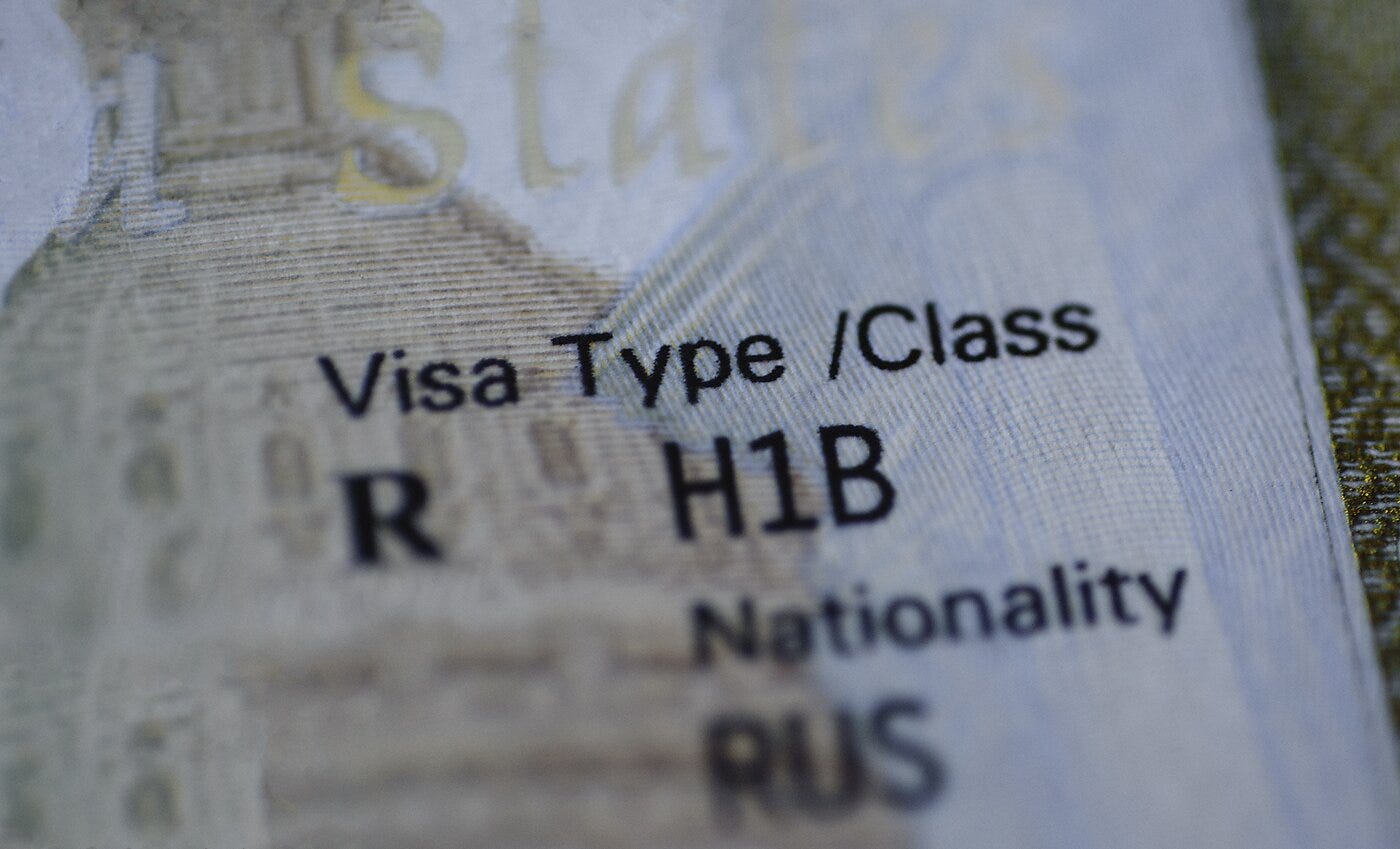
Mississippi is not a state that can afford to lose more doctors or medical facilities, and many rural hospitals are already struggling to survive. Rural hospitals, in particular, depend upon foreign doctors to survive, and new Trump-era health and immigration policies, including a $100,000 H-1B visa fee, are pushing an already fragile healthcare system toward crisis.
The state has among the fewest primary-care physicians per capita in the United States, some of the highest rates of poverty and chronic disease, and a long list of rural hospitals that face the prospect of closure within the next two to three years.
In many parts of the state, a single clinic or emergency room serves as the last line of medical care for people scattered across hundreds of square miles. Because U.S.-born physicians are often reluctant to practice in rural areas, many hospitals and clinics have little choice but to recruit from a limited pool of doctors born abroad.
That system, fragile even in the best of times, was under mounting strain even before President Donald Trump imposed draconian H-1B fees.
A bundle of policies enacted by the Trump administration spanning both immigration and healthcare have taken effect in 2025 and 2026 that are expected to deepen the financial and staffing pressures facing Mississippi’s rural medical providers. Hospital leaders and immigration attorneys say the changes come at a time when the state’s health care system has few options for addressing the crisis.
“Mississippi is almost entirely underserved and broadly dependent on foreign doctors,” said Barry Walker, an immigration attorney in Tupelo who represents hospitals and foreign-trained clinicians across the state. “Our rural hospitals desperately depend on foreign medical graduates for primary and specialty care. There may be three or four counties that are not designated as shortage areas by the federal government.”
The expiration of Affordable Care Act tax subsidies has driven up insurance premiums nationwide, leaving hundreds of thousands of Mississippians uninsured in 2026. Fewer insured patients typically translates into fewer clinic visits, more uncompensated care and tighter margins for hospitals that already operate on thin budgets. Cuts to federal research grants threaten university hospital systems, while a new $100,000 fee attached to many H-1B work visas is reshaping how, and whether, rural facilities can hire medical staff from abroad.
A workforce built on immigration
Roughly a quarter of physicians nationwide are foreign-born. But their presence is far more concentrated in places the federal government classifies as medically underserved or health professional shortage areas, where foreign-trained doctors account for about 64 percent of the workforce, with nearly 46 percent practicing in exclusively rural regions, according to an American Medical Association study. Separately, a research paper from October 2025 found that the number of H-1B sponsored physicians was four times greater in the highest versus the lowest poverty counties.
Mississippi sits squarely at that intersection.
“Our hospitals are heavily dependent on government payers, not an ideal situation for either hospitals or taxpayers,” said Richard Roberson, president and chief executive of the Mississippi Hospital Association. “Foreign-trained physicians,” he said, “remain critical to the state’s health system. More than anything, our hospitals need predictability in payment policies and revenue. Mississippi hospitals have the lowest hospital expenses in the country. Sufficient and stable revenue would allow our hospitals to continue providing care for their communities.”
The H-1B visa is a work visa that allows employers to hire foreign workers in specialty occupations that typically require a bachelor’s degree or higher. It requires employer sponsorship for the application process.
For more than 60 years, hiring foreign physicians has been a key way that rural America addresses medical gaps. Mississippi has long relied on doctors from countries such as India, Nigeria, Pakistan and the Philippines to staff clinics, emergency rooms and specialty services. That pipeline is now under threat. Mississippi is projected to face the largest physician shortage in the U.S. by 2030, according to a 2024 nationwide study by a health-care consulting firm.
The H-1B shakedown
In September 2025, Trump issued an executive order raising the fee for many new H-1B visas, the primary work visa for highly skilled foreign professionals, from a few thousand dollars to $100,000. More than 20 states have challenged the policy in court, but it remains in effect.
The administration has framed the increase as a way to discourage employers from hiring foreign workers and to push them to recruit native-born Americans instead. But in Mississippi, where decades of underinvestment and out-migration have hollowed out the supply of homegrown physicians, hospital leaders say the policy is more likely to complicate hiring altogether.
“There may be some specialties that are in such high demand, like hematology, oncology, cardiology, neurology, that some hospitals might pay that fee,” Walker said. “But then there are rural hospitals and practices that are just totally unable to pay the fee, and that may affect their ability to remain open.”
Rural clinics hire doctors through a narrow set of pathways. U.S.-trained physicians fill some positions, but many remain unfilled due to lower pay, heavy workloads and geographic isolation. The most reliable immigration route has been the Conrad 30 program, which allowed each state to sponsor up to 30 foreign-trained physicians per year after they completed U.S. medical residencies, waiving a requirement that they return home for two years. In exchange, doctors committed to three years of service in underserved areas. However, due to the 2025 government shutdown Congress failed to extend the Conrad 30 waiver provision, closing new applications after Oct. 1, 2025.
Such physicians typically transition from J-1 visas to H-1B status. As long as they remain in the country and do not allow their status to lapse, the new $100,000 fee does not apply to them. However, mistakes do happen. A single paperwork error, lapse in status, or a poorly timed international trip can trigger consular processing, which imposes the $100,000 fee.
“Some of those doctors are going to be forced out for various reasons,” Walker said. “And they may not be able to get a visa because there may not be a job available from an employer that’s willing and able to pay such a large fee, or tax, if you will.”
Over time, the number of foreign-born physicians builds through the Conrad 30 program and in-state as those from previous years renew their visas, even as others are recruited away to higher-paying urban systems.
Layered on top of this is another constraint baked into federal law. Congress limits most new H-1B visas to 85,000 per year nationwide, a cap that has been heavily oversubscribed for years with as many as 780,000 people applying in 2024. Universities and academic medical centers are exempt from the cap. Most rural clinics are not and often find themselves competing with larger hospitals for talent and technology firms that consume almost two-thirds of available H-1 B visas.
Some physicians pursue permanent residency through a national interest waiver, committing to five years of work in shortage areas. But for doctors from countries such as India and China, backlogs are long, offering little relief to clinics facing immediate staffing shortages.
“They may have to wait anywhere from 12 to 15 years before they can get a U.S. green card,” Walker said. “It’s really unfortunate because it limits their ability not only to practice medicine where they want, but to participate in other occupations or become entrepreneurs. It would enable them to contribute much more to the country and economy.”
Once permanent residency is granted, doctors are also freer to leave rural practice for higher-paying urban markets, another churn point for underserved states like Mississippi.
Strain beyond doctors
The pain is not limited to physicians. Walker said the new policy has already disrupted recruitment of medical technologists, physical therapists, nurses and occupational therapists, many of whom are traditionally hired directly from abroad under the H-1B visa program. That means they are subject to the $100,000 fee, unless they are completing some education or training in the U.S. on another visa.
“That fee is prohibitive and will really hurt rural hospitals that recruit for all the medical support roles,” Walker said. “I’ve had some rural hospitals where I’ve had to tell them, ‘You’re just not going to be able to get this recruit.’ That’s a real problem.”
Changes to the H-1B visa program, effective this year, will further complicate recruitment.
The new system replaces the old random lottery-based system to heavily favor applicants with high salaries and higher-skilled job offers. The tier-based system will give those in the top tier four entries per person, while those in the lowest tier will get one entry. That could mean the high-paying tech sector outbids rural hospitals and clinics, which may not be able to offer competitive salaries to support staff. In heavily subscribed years, the entire supply of visas could go to the top one or two tiers while those in the bottom two tiers miss out entirely.
“What this means,” Walker said, “is that your typical new hire is not going to be able to get an H-1B visa anymore. It’s really put the H-1B out of bounds for the vast majority of jobs that need to be filled in this country, including those that support rural hospitals.”
Budgetary pressures
All of this is unfolding as hospitals face tightening budgets from multiple directions.
“My institutional clients are under big budgetary pressure,” Walker said, citing Medicare cuts, the loss of Affordable Care Act subsidies, and massive reductions in federal research funding. “They rely on those grants to fund their overall operation, and they’ve lost a good bit of that money. All of that puts real constraints on these very important hospitals.”
Before the new policy, an analysis estimated that research universities already devoted about 3 percent of their federal research budgets to maintaining H-1B workforces. The University of Mississippi allocates about 4.2 percent of federal funding to H-1B hires, while Mississippi State University allocates 2.9 percent. Jackson State University sits at 3.7 percent.
National medical organizations have begun to sound the alarm. The AMA, joined by 53 other medical societies, has urged the Department of Homeland Security to exempt physicians, residents and fellows from the fee, calling them “critical to our national interest.”
With a projected national shortfall of nearly 86,000 physicians by 2036, the AMA and allied groups argue, the country cannot afford to narrow an already constrained pipeline.
Public-health experts say Mississippi is precisely the kind of place where the damage will be hardest to reverse. Physician shortages already mean longer drives and wait times for care; when hospitals lose specialists, patients are forced to travel for hours or go without care.
“At first, some of my clients wondered if they should even continue recruiting foreign doctors,” Walker said. “I told them that if they can recruit someone already in the country in lawful status, they should go full speed. But that only works for so long. We don’t know if further changes could be coming in the future.”
Training a physician takes more than a decade, and expanding medical schools and residency slots would require investments Congress has repeatedly declined to make, Walker noted. In the meantime, Mississippi’s hospitals continue to rely on a workforce shaped by its rural setting, complex immigration law, and local necessity.
Back in Tupelo, Walker worries that the system is being deliberately dismantled and will ultimately harm Americans.
“I’m just emotionally upset by the terrible enforcement of deportation against mostly people of color. It feels like the government is waging war on Black and brown people. Many of those people are the same doctors serving American citizens in rural Mississippi.”
The new H-1B policy is being sold as putting American workers first. But in Mississippi, the fear is that if rural healthcare facilities close and the doctor shortage grows, there may be no one left to put first.
“Immigrants bring so much to this country in the way of talent, energy and investment,” Walker added. “They solve our problems and make the country a better place to live.”
Image: H-1B visa (via Cato Institute)
