


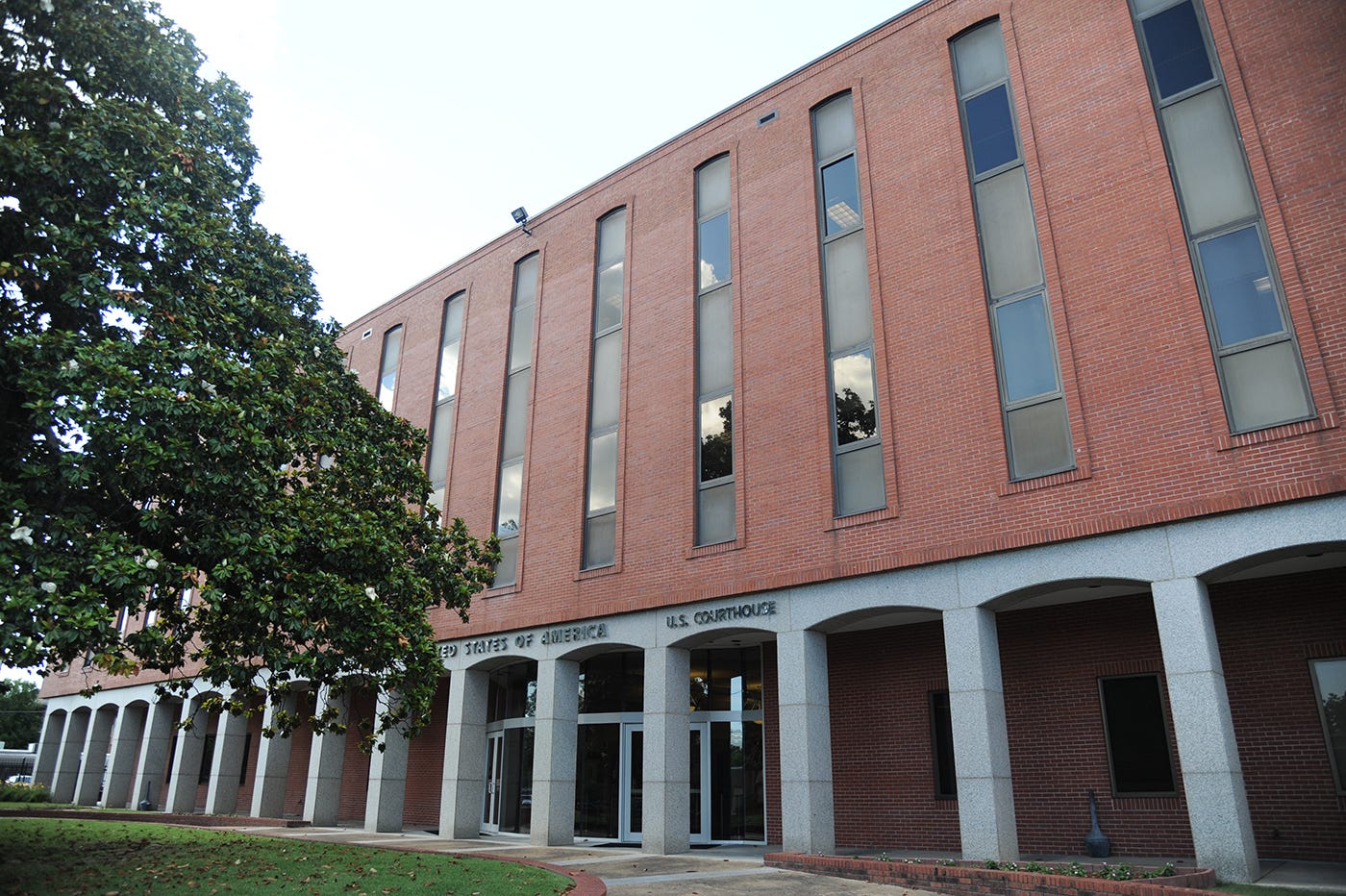
In an early example of how the U.S. Supreme Court’s Louisiana v. Callais ruling will influence voting rights cases on the ground, a federal judge in Oxford, Mississippi on Tuesday upheld DeSoto County’s challenged voting districts, ruling that Black residents failed to prove the county’s 2022 redistricting map dilutes their votes under the new standard.
Senior U.S. District Judge Glen H. Davidson found that the plaintiffs—two NAACP members, the DeSoto County NAACP’s Unit 5574 and the Delta Sigma Theta Sorority—did not meet any of the three threshold requirements a vote-dilution claim must clear under the Supreme Court’s new interpretation of Section 2 of the Voting Rights Act of 1965. The judgment, entered after a 12-day bench trial in Oxford, ends a case filed in September 2024 over districts that govern 25 elected offices across the fast-growing county.
“Plaintiffs did not present enough evidence to support a strong inference that the County intentionally drew its districts to afford minority voters less opportunity because of their race,” Davidson wrote in the June 24, 2026, ruling.
DeSoto County’s Black population grew to 31.71 percent in the 2020 census, up from 22.56 percent a decade earlier. All five members of the county’s board of supervisors, which drew the map, are white, as are all five members of its election commission. The plaintiffs argued a county that is nearly a third Black should be able to elect a candidate of its choice in at least one of five districts.
The ruling turned on Louisiana v. Callais, which the Supreme Court decided on April 26, 2026, as the DeSoto trial was already underway. The decision rewrote the test courts use to weigh Section 2 claims, and Davidson took additional briefing from both sides before applying the new framework rather than the one in place when the trial began.
Under his reading of Callais, the judge barred any use of race in drawing the sample maps that plaintiffs must offer to show a fairer plan is possible. The plaintiffs’ mapping expert, William S. Cooper, testified that he placed “green dots” over areas at least 30 percent Black to guide his work, a method he said kept race only “in the background.” Davidson held that even background use now disqualifies the maps.
The judge further found that the proposed maps failed to honor the county’s own districting goals, including keeping incumbents in their districts and avoiding splits of established communities. Crediting defense expert Sean Trende, Davidson pointed to “core retention” figures showing how much an altered map would shift incumbents’ existing constituencies—a measure the Supreme Court had downplayed in a 2023 ruling in Allen v. Milligan but which the judge found newly useful.
On the second and third requirements—whether voting in DeSoto County breaks along racial lines—Davidson found that the plaintiffs again came up short. He wrote that the new standard demands proof of racial bloc voting that “cannot be explained by partisan affiliation,” and that the plaintiffs’ expert, Jacob Grumbach, acknowledged that he did not control for party and considered it inappropriate to do so.
The judge instead credited defense expert John Alford, who controlled for partisanship and found no difference in how voters behaved based on a candidate’s race within the pool of Democratic contenders. A second plaintiffs’ expert, Christopher Bonneau, offered what Davidson called a single example, and the judge said errors corrected during Bonneau’s testimony left it of “little value.”
Because the plaintiffs failed on all three threshold requirements, Davidson did not reach the broader “totality of the circumstances” inquiry that typically anchors a vote-dilution case.
The decision lands amid a wave of litigation testing what Callais means for minority voters across the South. The opinion itself acknowledges the tension at the center of that fight, noting that the Supreme Court did not formally overrule Milligan even as it imposed a markedly tougher test—the same friction voting-rights advocates have warned would make Section 2 claims far harder to win.
The plaintiffs had pressed for an expedited trial in hopes of forcing special elections under a fairer map. Whether they appeal to the U.S. Court of Appeals for the Fifth Circuit remains to be seen. The county had argued at multiple points that no private individual or group may even bring a Section 2 suit, a position the Fifth Circuit has rejected; Davidson noted the county preserved the issue for appeal without arguing it before him.
Image: Federal courthouse, Oxford, Mississippi (via the court’s website)
