


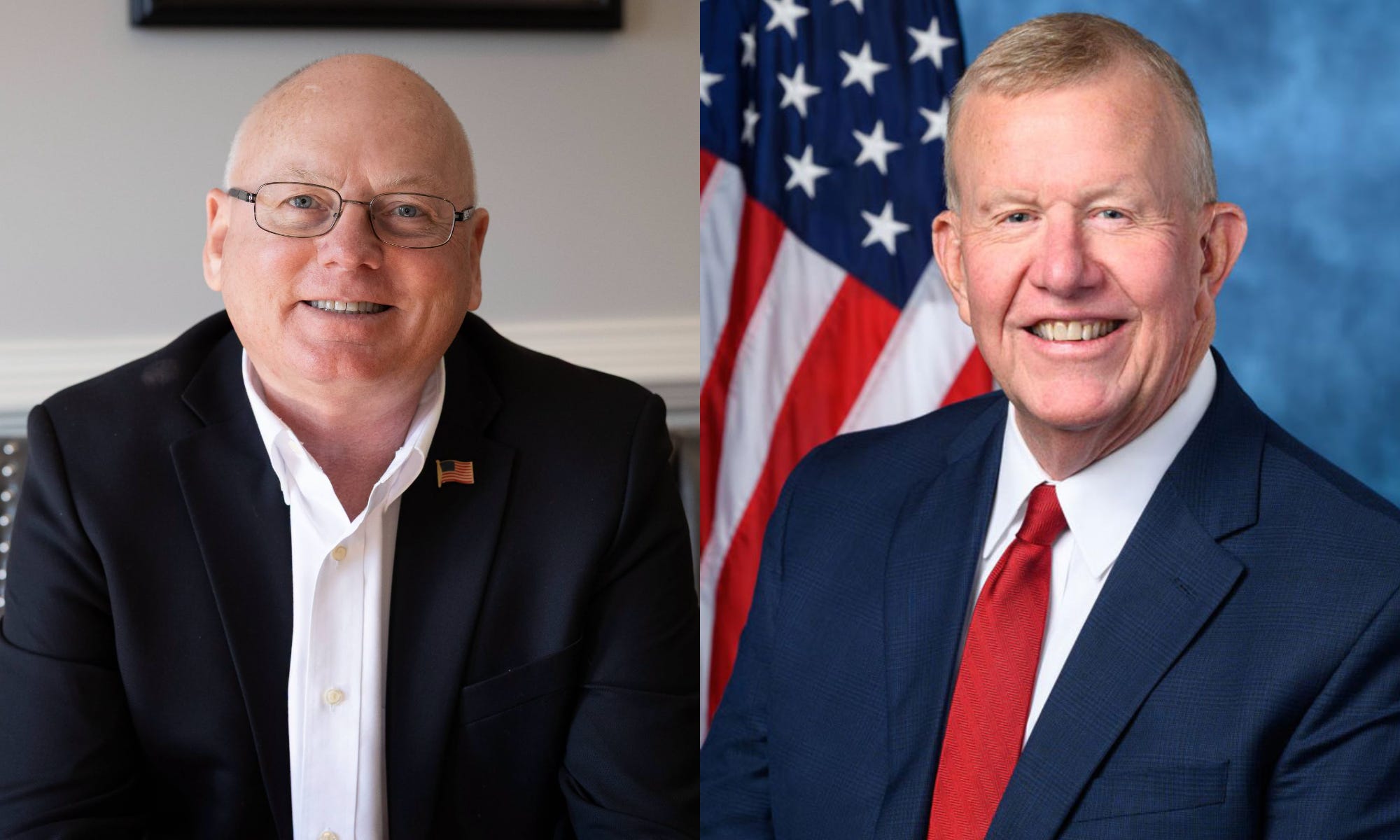
Carl Boyanton, an independent candidate for Mississippi’s Fourth Congressional District, filed a complaint with the Federal Election Commission on Sept. 21, 2026, alleging that U.S. Rep. Mike Ezell’s campaign accepted contributions above the legal limit from the family that owns two of the Gulf Coast’s largest shipbuilders.
Ezell’s campaign called the filing a political stunt in a statement issued after it was filed and said it would report Boyanton to the FEC for making false statements. The campaign did not respond to questions from The Mississippi Independent.
Boyanton has filed against this seat before. On Jan. 17, 2020, he filed the complaint that became Matter Under Review 7680 against then-Rep. Steven Palazzo, who held the same seat. The commission found reason to believe Palazzo’s committee had converted campaign funds to personal use, citing $24,000 in rent paid on Palazzo’s own property, $65,893.51 in vehicle leases and thousands more in undocumented reimbursements. Palazzo and his committee signed a conciliation agreement in January 2025, paying a $13,500 civil penalty and reimbursing $16,500. Boyanton’s allegations also triggered a House Ethics Committee investigation that found substantial evidence of wrongdoing. Palazzo lost his 2022 primary runoff to Ezell.
The current complaint rests on a single day of giving. FEC records attached to the filing show that on Aug. 26, 2025, seven members of the Chouest family each gave $7,000 to the Committee to Elect Mike Ezell, the legal maximum across the primary and general elections. The same seven gave $25,000 that day to Ezell’s leadership PAC, New Sheriff PAC, and $150,000 to the Ezell Victory Fund, a joint fundraising committee Ezell shares with the leadership PAC and the National Republican Congressional Committee.
Three weeks later, on Sept. 18, 2025, the Victory Fund sent $73,867.54 to the NRCC, $24,298.53 to New Sheriff PAC, and two transfers of $23,812.56 each back to Ezell’s campaign.
The complaint’s first count concerns that pair of contributions, totaling $47,625.12. Joint fundraising committees have to divide what they raise according to how much each donor can still legally give to each participating committee. Every Chouest who gave to the Victory Fund had already reached the ceiling with Ezell’s campaign the same day.
“They’re not allowed to go to a PAC or Super PAC or joint fundraising committee and add any more money than that $7,000 they’ve given,” Boyanton told The Mississippi Independent. He said he called the FEC repeatedly while preparing the filing. “They said, no, if you gave to him directly, you can’t. You can give to the joint fundraising committee, but your money has to, if you’re already over the $7,000, has to go to another member of the joint fundraising committee.”
The family behind the contributions is the Chouest family of Louisiana, which owns Edison Chouest Offshore and, with Bollinger chief executive Ben Bordelon, acquired Bollinger Shipyards in 2014.
Ezell chairs the House Subcommittee on Coast Guard and Maritime Transportation, which oversees Coast Guard procurement.
The Coast Guard has awarded Bollinger three contracts since early 2025. On March 25, 2025, the agency awarded Bollinger Mississippi Shipyards a $951 million contract modification for the Polar Security Cutter program. Ezell issued a statement the same day calling it “a major win for America’s maritime strength and Arctic presence.”
Six weeks later, Bollinger and Edison Chouest announced the United Shipbuilding Alliance, a partnership formed to answer the Coast Guard’s April request for information on Arctic Security Cutters. The Chouest contributions came on Aug. 26, 2025.
On Dec. 29, 2025, Bollinger signed a contract to build four Arctic Security Cutters, an award reported at $2.14 billion. Boyanton said a further $95 million contract came in September 2025, putting the total near $3 billion.
“The $951 was just the start of the money,” Boyanton said.
Boyanton’s press release named only the March award.
Boyanton stepped back from two of the complaint’s four counts when asked about them.
Count three alleges a violation of the federal ban on contributions by government contractors. Every contribution in the complaint’s exhibits came from a named individual, and FEC regulations state that nothing in the contractor rules prohibits stockholders, officers or employees of a corporation from giving out of personal assets. Asked about it, Boyanton agreed. “They are legally, independently, they can donate to the campaign,” he said. His concern, he said, is whether one person wrote the checks and distributed them under seven names, which would be a separate violation. He said he has no evidence of that.
“This would have to be investigated by the FEC, which is the reason why I filed it,” Boyanton said. “And they can figure that out.”
The complaint also names Edison Chouest Offshore and Bollinger Shipyards as respondents. No contribution from either company appears in its exhibits.
The filing’s headline figure is also wrong. The complaint alleges $217,000 in contributions, but its own itemization adds up to $224,000. Boyanton said he caught the error himself and told his publicist the day before the interview.
“I think I left out one of the Chouest families,” he said. “It’s actually 224.”
Boyanton said he prepared the complaint alone, beginning with FEC records he pulled in January 2026. He is a Diamondhead businessman who founded Farmer Fresh Produce and has run twice before in Republican primaries for the seat.
“If I could go through all 535 guys’ FEC filings, I would probably be filing violations against probably half of them,” he said. “I’m running to get rid of corrupt politicians.”
The Ezell’s campaign statement said the campaign “is in compliance with the law.”
“While Mr. Boyanton’s allegations are obviously a political stunt, making a false statement to a federal agency, such as the FEC, is illegal and we will be reporting him for doing that,” the statement said. The campaign did not answer questions about how the Victory Fund allocated the Chouest contributions or whether any portion was refunded or redesignated.
An FEC complaint is not a finding. The commission notifies respondents, takes their replies and votes on whether there is reason to believe a violation occurred, a process that in the Palazzo matter ran five years from filing to settlement.
Ezell, Boyanton and Democratic nominee Jeffrey Hulum III are all on the ballot in November.
Image: Carl Boyanton (L) and Mike Ezell (via Facebook and the U.S. House of Representatives)
