


When a group of white DeSoto County residents asked a federal court to block a new judicial subdistrict drawn to give Black voters a better chance to elect a judge, arguing that it diluted their own votes by race, the case seemed to pose an unexpected test of the U.S. Supreme Court’s controversial ruling in the landmark case Louisiana v. Callais.
Yet U.S. District Judge Sharion Aycock denied their request, finding that they had “wholly failed to carry their burden” and were “entitled to no relief at this stage.”
The lawsuit ran the logic of Louisiana v. Callais in reverse. Callais hinged on white voters in Louisiana challenging a new majority-Black congressional district as an unconstitutional racial gerrymander. In DeSoto County, four white residents borrowed the same theory to attack a majority-Black judicial subdistrict, and the judge used Callais’s own language to turn them down.
The subdistrict grew out of judicial redistricting that the Mississippi Legislature passed in 2025. Lawmakers made DeSoto County its own circuit and chancery court district and added a judgeship on each side, to be elected from a subdistrict of nine precincts around Horn Lake and Southaven. That subdistrict has a voting-age population that is 50.52 percent Black, in a county that is about 25 percent Black and 67 percent white. The judges elected from it will have authority over the entire county. Elections for the seats are set for Nov. 3, 2026, with the new judges taking office in 2027.
The plaintiffs, led by county supervisor and former gubernatorial candidate Robert Foster, argued the arrangement gave residents inside the subdistrict more votes for the county’s judges than those outside it. One plaintiff, Kirby Carter, is a white voter who lives inside the subdistrict and claimed her vote was “unconstitutionally diluted based on race.” They asked the court to strike the subdistrict and hold the elections countywide.
Aycock rejected the request on two independent grounds. The first was timing. Under the Purcell principle, federal courts are told not to change election rules on the eve of an election, and she found the case fell well inside that window, with the vote less than 90 days away when the hearing closed. She noted the plaintiffs had known about the subdistrict for more than a year before suing and observed that the white plaintiffs in Callais had challenged Louisiana’s map within nine days of its creation while the DeSoto plaintiffs waited 14 months. “The Plaintiffs’ conduct constitutes a textbook example of undue delay,” she wrote.
The second ground was the merits, and there Aycock turned Callais against the people invoking it. A one-person, one-vote claim fails because that principle does not apply to judicial elections, she wrote, citing decades of precedent. On the racial-gerrymander claim, she found the plaintiffs offered almost no evidence, no illustrative map, no proof of racially polarized voting, nothing to show white voters in DeSoto County face discrimination at the polls. Their own witnesses noted that the county elected a Black sheriff countywide with white support, which cut against their argument.
Even if the plaintiffs had shown race drove the map, Aycock wrote, that would not end the case. She quoted the Supreme Court’s holding in its Callais ruling that “compliance with the Voting Rights Act can indeed provide a compelling reason for race-based districting,” and pointed to the floor statement of state Rep. Kevin Horan (R-Grenada), chair of House Judiciary B committee, that the subdistrict would let an “increasing majority-minority population” elect a candidate of its choice. Creating that opportunity, she found, was a lawful reason grounded in the Voting Rights Act, and the plaintiffs offered nothing to rebut it. She invoked the presumption that legislators act in good faith.
The ruling is preliminary. Aycock was careful to say she was not foreclosing the plaintiffs’ claims, and that they “may very well eventually be able to prevail” after discovery and a full trial. The DeSoto County NAACP, the Delta Sigma Theta sorority and Malenda Harris Meacham, one of the candidates running from the subdistrict, intervened to defend the map.
For now, the November election will proceed as drawn. Two candidates have qualified for each of the two subdistrict seats. The case leaves standing, at least through the election, a majority-Black judicial district in one of the fastest-growing and whitest counties in the state, and it offers an early answer to a question Callais raised across the South. The decision that white plaintiffs have used to dismantle Black districts also, in its text, protects the ones the Voting Rights Act supports.
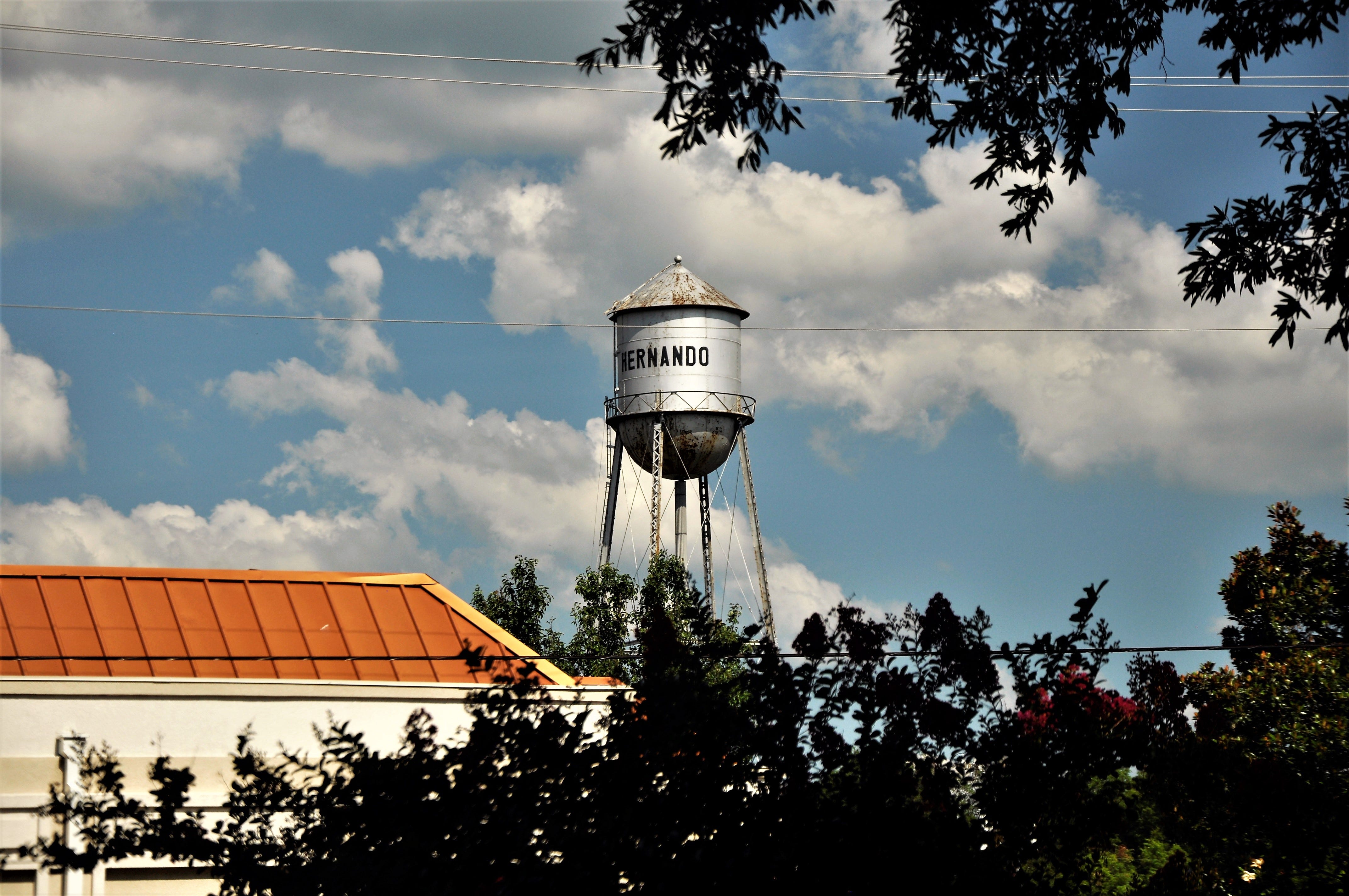
Image: Water tower in Hernando, seat of DeSoto County (via WikiMedia Commons)
