


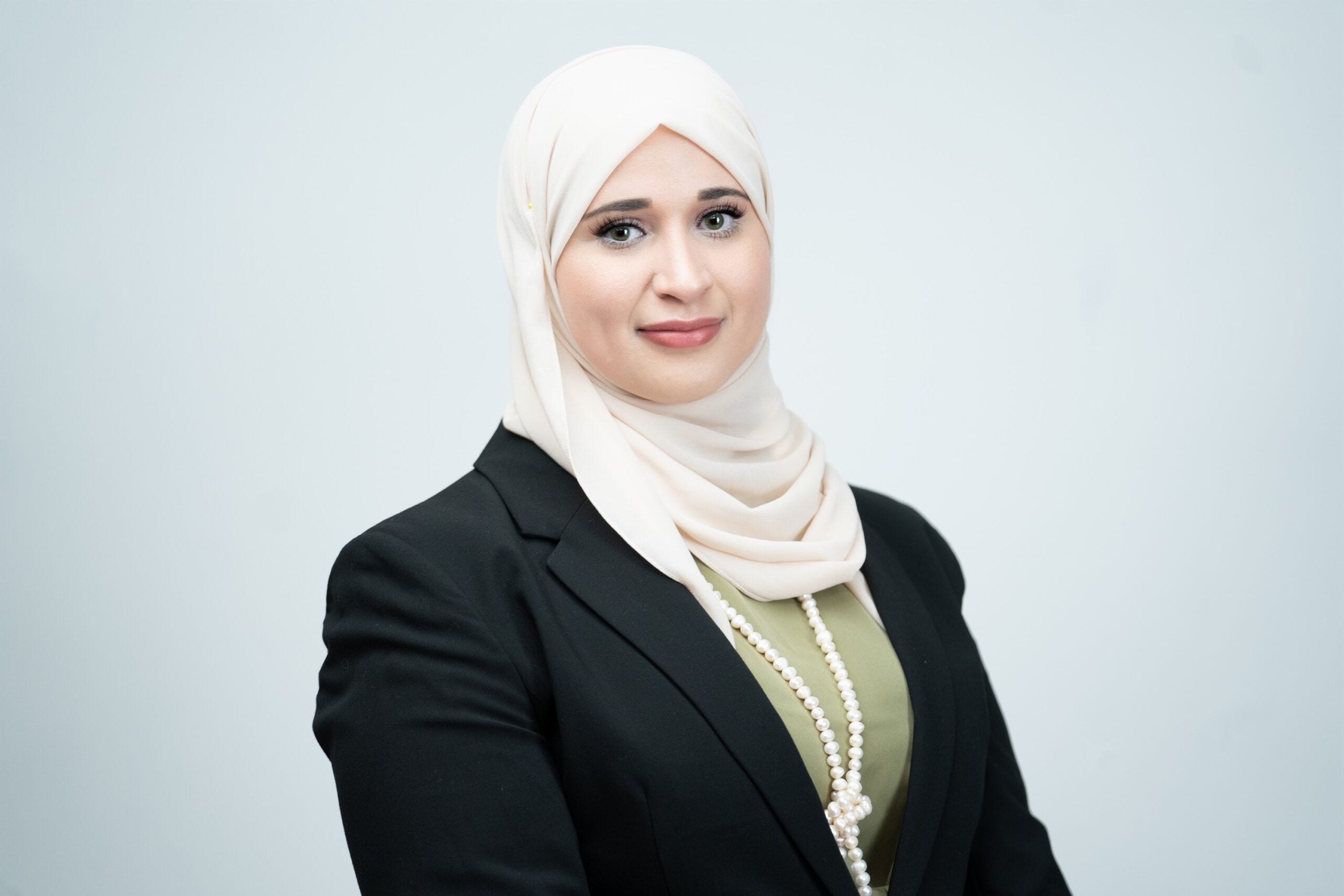
When Assma Ali was sworn in as municipal judge of Benoit on Aug. 5, 2026, she became a rare practicing Muslim holding judicial office in Mississippi. The town has fewer than 400 residents and sits in the Delta flatland of southwest Bolivar County. The office is small, handling municipal ordinance violations and misdemeanors.
The reaction to her appointment was not small.
Within days, a false claim spread online that Ali had been appointed in Ridgeland, 130 miles away, where her law office is located. The city of Ridgeland issued a release refuting the claim, noting that it had made no new judicial appointments. The correction accomplished little. Ali, who is Muslim and wears a hijab, said her office began receiving threats. State Sen. Michael McLendon, a Republican from Hernando, called for the town to remove her, posting that he believes “in God we trust not Mohamed.” Agriculture Commissioner Andy Gipson, a Republican running for governor, pledged to ban Sharia law in Mississippi if elected. “I only represent one law, and that’s the U.S. Constitution,” Ali said.
Mississippi has a very limited history of Muslims in public office (Ali Shamsiddeen, a former municipal judge in Jackson, is Muslim). The state’s other Muslim figures of note include Yazoo City-born journalist Askia Muhammad; McComb civil rights organizer Curtis Muhammad; activist Hollis Watkins Muhammad; and NBA player and activist Mahmoud Abdul-Rauf, a Gulfport native. None were officeholders.
Otherwise, the state’s closest parallel runs through a family whose story shows what acceptance once required. In 1911, a Lebanese immigrant named Hassan Mohamed, born Hussein Mohamed Asim Shuman in the Shiite village of Sir’een, settled in Belzoni and opened a dry-goods store. He was Muslim. In 1924, he married Ethel Wright, a Baptist woman from near Eupora, and together they raised eight children and ran the H. Mohamed general merchandise store in the Delta town. Their children were raised in their mother’s faith, as Baptists.
Their oldest son, Ollie Mohamed, went into politics. He was elected alderman of Belzoni in 1957, entered the Mississippi Senate in 1964, and served, across two stretches, into 1993. In 1992, his colleagues elected him president pro tempore of the Senate, one of the most powerful positions in state government, which is held by the senator who presides in the lieutenant governor’s absence. He was in all likelihood the highest-ranking Mississippi official of Muslim descent in the state’s history. He was also a Baptist, a Delta merchant and a Democrat, and his father’s religion drew no notice during his political career.
Hassan Mohamed brought Islam to the Delta, and his children took up the faith of the place the family had joined. The assimilated Baptist son, who was not a Muslim, rose to run the state Senate. What the family kept of its origins survived as heritage, in the surname and in the references to Syrian blood that appear in their obituaries, and not as a religion carried into the Capitol. For most of the last century, the Mississippians of Muslim origin who entered public life did so as converts to the state’s dominant faith.
Ali kept her faith and wears it visibly, and she reached office in a town most of the state could not place on a map. Much of the reaction has focused on that visibility. McLendon warned that Mississippi “will not become the next Dearborn, Michigan,” the Detroit-area city that in 2023 became the nation’s first with a Muslim-majority population. Gipson’s pledge to ban Sharia law addressed a change to Mississippi law that no one has proposed. Ollie Mohamed reached the top of the state Senate as a Baptist whose father’s religion stayed out of his politics. Ali entered a far smaller office as an openly Muslim woman and drew a statewide response.
Ali has said her ability to respond is limited by the office she now holds. In the few comments she has made, she has returned to the same point. “As a person born and raised in the U.S., why am I disqualified,” she said. “Just because I’m Muslim?”
It is tempting to see the backlash against her as a kind of political clickbait. Ali has never brought her personal religious beliefs into play nor expressed any interest in doing so. Despite that, a loud cacophony has been created by a conservative state senator, a candidate for governor and a national online campaign.
Image: Assma Ali (via Law Offices of Assma Ali)

As a white woman in MS, I could do without about 80% of the white people in MS. Someone should tell McClendon and the others that melanated people aren’t the problem. And I’m all for getting rid of the genocidal holiday.